Electric Baseboard Heaters Vs Gas Heat: Proven, Affordable Choice
For homeowners seeking a balance of affordability, comfort, and control, electric baseboard heaters often present a proven and cost-effective choice for supplemental or primary heating, especially in well-insulated spaces or moderate climates, compared to the upfront costs and potential maintenance of gas systems.
For portable-heater comparisons, Electric Space Heaters Vs Gas Heat gives readers another helpful angle before buying or using one.
Choosing the right heating system for your home can feel like a big decision. You want warmth, comfort, and a system that’s easy on your wallet. It’s natural to wonder about the best options! Many people find themselves debating between the trusty electric baseboard heaters and the more traditional gas heat. Don’t worry, you’re not alone in this! This guide is here to clear up the confusion. We’ll break down electric baseboard heaters and gas heat in simple terms, helping you understand which might be the best fit for your home and budget. Let’s make heating your home simple and stress-free together!
Understanding Your Heating Options: Electric Baseboard Heaters vs. Gas Heat
When it comes to keeping your home cozy, two popular contenders often come up: electric baseboard heaters and gas heating systems. While both aim to warm your living space, they work very differently and come with their own unique set of pros and cons. Deciding between them isn’t just about choosing a heater; it’s about choosing a comfortable, efficient, and affordable way to manage your home’s climate.
What are Electric Baseboard Heaters?
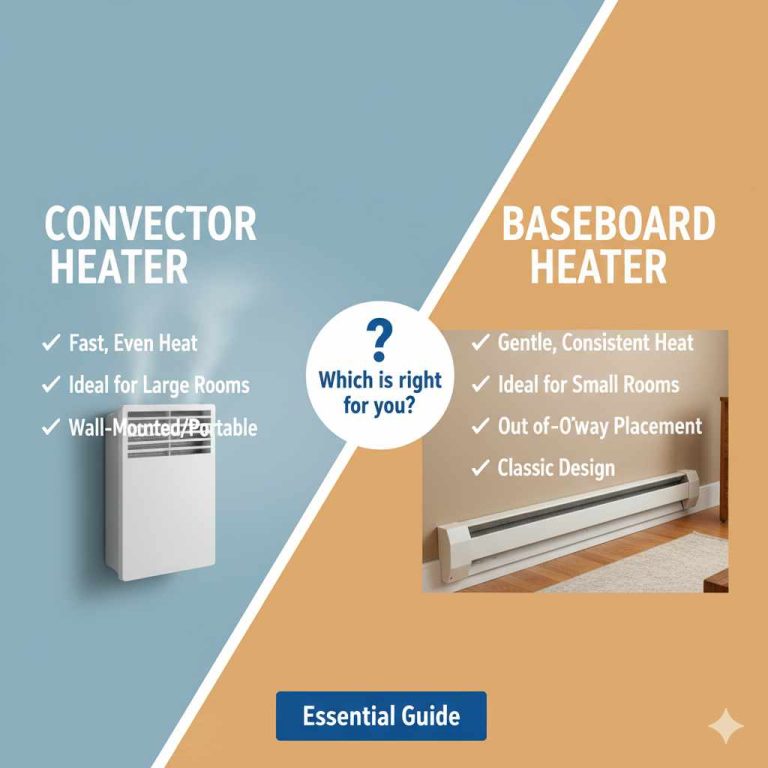
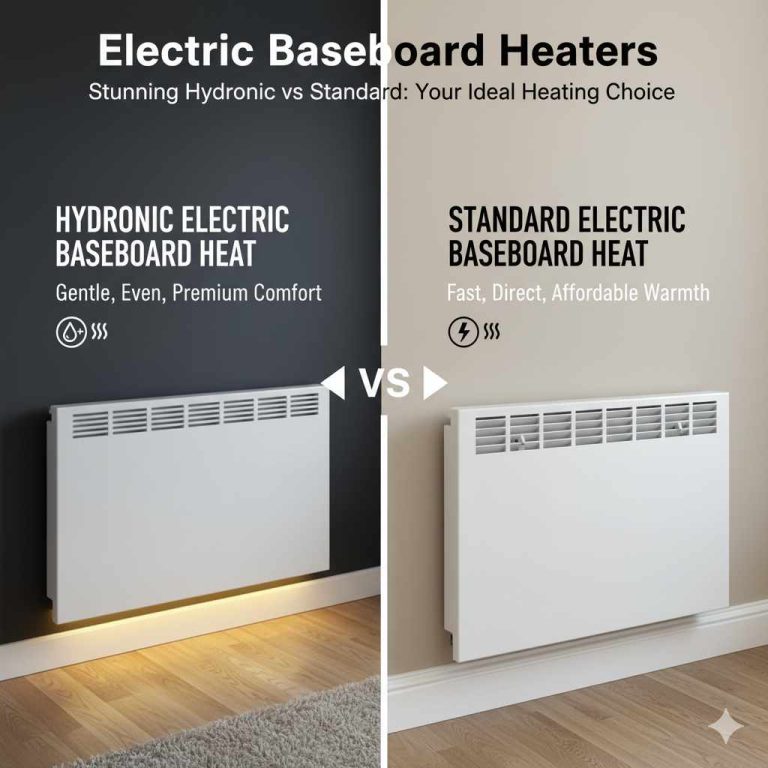
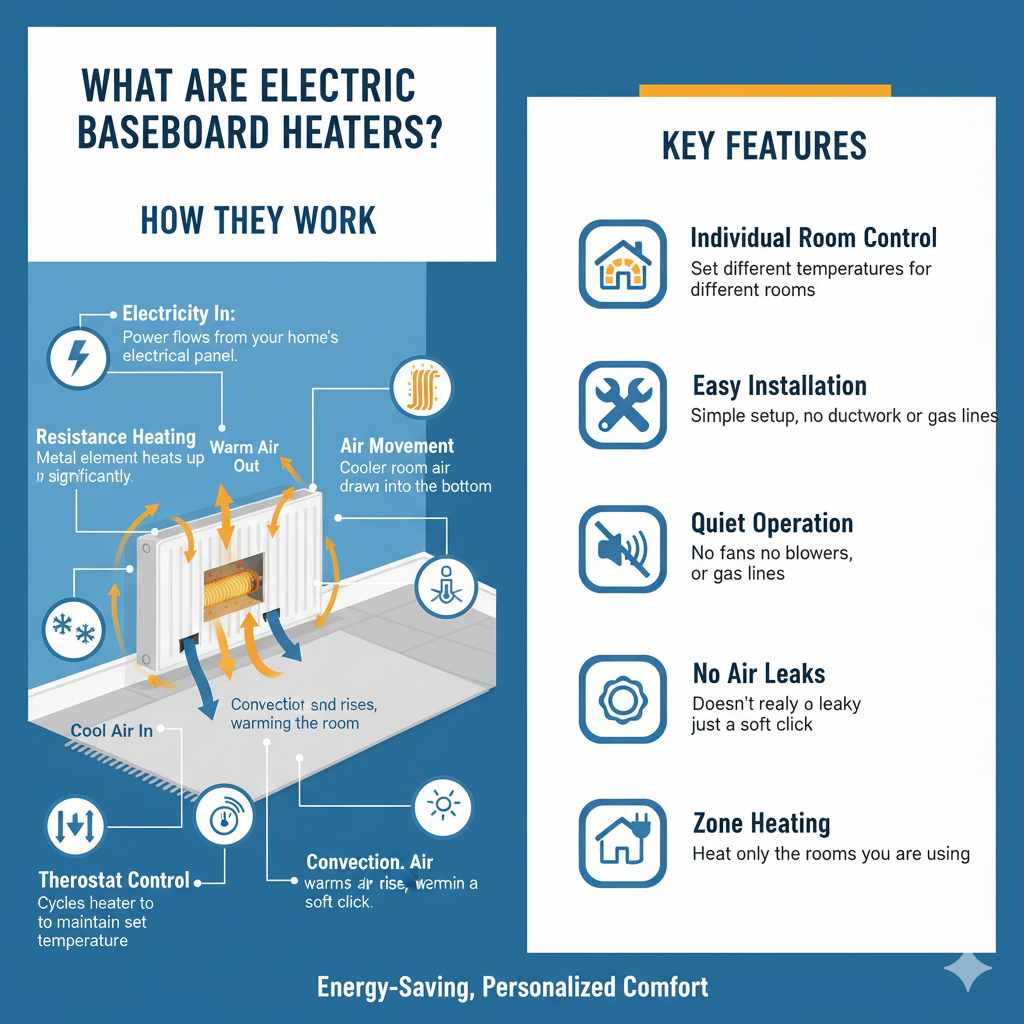
Electric baseboard heaters are simple devices that install along the bottom of your walls, similar to how a baseboard would. They work by using electricity to heat up a resistance coil. As the coil heats, it warms the air around it. This warm air then rises naturally (convection), circulating warmth throughout the room. Many rooms have their own thermostat, giving you precise control over the temperature in each specific area. This zone heating capability is a big advantage for energy savings and personalized comfort.
How They Work
The process is quite straightforward:
- Electricity In: Power flows from your home’s electrical panel to the heater.
- Resistance Heating: Inside the heater, a metal element (often a nichrome wire) heats up significantly when electricity passes through it due to its resistance.
- Air Movement: Cooler room air is drawn into the bottom of the heater.
- Convection: The air passes over the hot element, gets warmed, and then rises out of the top of the heater, slowly warming the entire room.
- Thermostat Control: A built-in or wall-mounted thermostat monitors the room temperature and cycles the heater on and off to maintain your set temperature.
Key Features of Electric Baseboard Heaters
- Individual Room Control: Typically, each heater has its own thermostat, allowing you to set different temperatures for different rooms. This is great for saving energy in unused areas.
- Easy Installation: Compared to central systems, baseboard heaters are relatively simple to install. They require electrical wiring but not ductwork or gas lines.
- Quiet Operation: They are generally very quiet, with no fans or blowers making noise. The only sound might be a slight click as the thermostat cycles.
- No Air Leaks: Since they don’t rely on ductwork, they don’t contribute to air leaks in your home’s envelope, which can be a problem with forced-air systems.
- Zone Heating: You only heat the rooms you are using, which can lead to significant energy savings.
What is Gas Heat?
Gas heating systems, most commonly natural gas furnaces, are central heating systems. They heat the air in one location (usually a utility closet, basement, or attic) and then distribute it throughout your home using a network of ducts and a fan. They are a very common and effective way to heat entire houses, especially in colder climates.
How They Work
A typical gas furnace operates in a cycle:
- Thermostat Call: When your thermostat detects the temperature has dropped below your set point, it signals the furnace to turn on.
- Ignition: A pilot light or an electronic igniter starts the combustion process.
- Gas Burners: Natural gas is fed to burners where it ignites, producing heat.
- Heat Exchanger: The hot combustion gases pass through a heat exchanger, warming the air from your home circulating around it.
- Blower Fan: A fan pushes this warmed air into your ductwork.
- Distribution: The heated air travels through the ducts to vents in various rooms.
- Return Air: Cooler air from your home is drawn back through return ducts to the furnace to be heated again.
Key Features of Gas Heating Systems
- Centralized Heating: Heats the entire home from a single point.
- Powerful: Capable of delivering a significant amount of heat quickly, making them ideal for very cold regions.
- Energy Efficiency Potential: Modern high-efficiency gas furnaces can be very efficient, converting a large percentage of fuel into heat. The ENERGY STAR program specifies efficiency standards for furnaces.
- Air Filtration: The duct system allows for whole-house air filtration, which can improve indoor air quality.
- Dehumidification: In many systems, central air conditioning can use the same ductwork, allowing for integrated cooling and dehumidification.
Electric Baseboard Heaters vs. Gas Heat: A Comparative Look
Now that we know what each system is, let’s dive into how they stack up against each other. This comparison will help you see where each system shines and where it might fall short depending on your needs.
Installation and Upfront Costs
This is often the first major difference homeowners notice. Gas heating requires a significant upfront investment. You’ll need the furnace itself, a gas line connection if you don’t already have one, and a comprehensive duct system running throughout your house. The installation of ductwork can be particularly intrusive and expensive, especially in existing homes.
Electric baseboard heaters, on the other hand, are much simpler to install. They require a dedicated electrical circuit for each unit or a series of units. If your home has sufficient electrical capacity, installation is usually just a matter of mounting the units and connecting the wiring. For a single room or a smaller space, this can be considerably less expensive than installing a full gas furnace and duct system. For a deeper dive into electrical work, consult resources from the National Fire Protection Association (NFPA) for safety guidelines.
Operating Costs
This is where the picture gets a bit more nuanced and often favors electric baseboard heaters for certain applications, especially when considering affordability. The cost of electricity versus natural gas varies significantly by region and over time. Historically, natural gas has often been cheaper per unit of energy (BTU) than electricity. However, this isn’t always the case, and the efficiency of the system plays a huge role.
Electric Baseboard Heaters:
- Pro: Excellent for zone heating. You only use energy to heat occupied rooms.
- Con: Electricity can be more expensive per BTU than natural gas in many areas. If used as a primary heat source for an entire home in a cold climate, electricity bills can be high.
- Pro: High efficiency at the point of use (nearly 100% of electricity becomes heat).
Gas Heat:
- Pro: Natural gas is often cheaper per BTU than electricity, leading to lower heating bills in many colder regions.
- Con: Energy is lost through ductwork (leaks, heat loss in unconditioned spaces) and not all the fuel is converted to heat in older or less efficient furnaces.
- Con: Requires ongoing maintenance for the furnace and duct system.
A detailed look at your local utility rates is crucial here. For example, if electricity rates are low in your region and natural gas prices are high, electric baseboard heaters might be more affordable to run. Conversely, in very cold climates where natural gas is abundant and cheap, a high-efficiency gas furnace could offer lower monthly bills.
Efficiency
When we talk about efficiency, it’s important to distinguish between the efficiency of the heating unit itself and the efficiency of the whole system delivering heat to your room.
Electric Baseboard Heaters: These are almost 100% efficient at converting electrical energy into heat at the unit. There’s no wasted energy through exhaust or duct losses because there’s no ductwork to lose heat from, and no combustion byproducts. This makes them very efficient for direct heating.
Gas Heat: Modern gas furnaces have Annual Fuel Utilization Efficiency (AFUE) ratings that tell you how much of the fuel consumed is converted into heat over a heating season. A 95% AFUE furnace means 95% of the gas energy becomes usable heat, and 5% is lost up the flue. While this sounds efficient, remember that ductwork can account for up to 30% of wasted energy due to leaks and heat loss before the warm air even reaches your rooms. The American Council for an Energy-Efficient Economy (ACEEE) highlights how crucial system-wide efficiency (including ductwork) is for reducing energy consumption.
Comfort and Control
This is where personal preference and the specific needs of your home come into play.
Electric Baseboard Heaters: Offer excellent zone control. If you only use your living room and bedroom, you can keep those rooms warm and turn down the heat in hallways, guest rooms, or basements. This precision heating can lead to greater comfort because you can set exact temperatures for each space, and the heat is delivered directly where you need it. Some people find the radiant heat they produce quite comfortable. They are silent, which many people prefer.
Gas Heat: Provides more powerful, rapid heating of entire spaces. The warm air from a central system can quickly raise the temperature of a large area. However, control is often less granular. While programmable thermostats allow for scheduling, you generally heat your whole house or specific zones with dampers. The fan can sometimes create drafts, and the noise of the fan can be noticeable to some. For people very sensitive to temperature fluctuations, the consistent, powerful heat of a gas furnace can be preferable, especially in very cold winter conditions.
Maintenance and Lifespan
Electric Baseboard Heaters: Are remarkably low maintenance. They have very few moving parts. Typically, all that’s needed is occasional dusting or vacuuming to keep them free of debris that could hinder airflow. They can last 15-25 years or even longer with minimal issues.
Gas Heat: Requires more involved maintenance. Furnaces need annual inspections and tune-ups to ensure they are running safely and efficiently. This includes checking burners, heat exchangers, filters, and safety controls. Ductwork also needs periodic cleaning. While furnaces can last 15-25 years, the need for annual professional servicing adds to the overall cost of ownership and requires scheduling appointments.
Environmental Impact
The environmental impact is largely tied to the energy source. Electricity generated from renewable sources (like solar, wind, or hydro) is much cleaner than electricity generated from fossil fuels. Natural gas is a fossil fuel. While it burns cleaner than coal in power plants, it still produces greenhouse gases and contributes to climate change. The overall environmental footprint of electric baseboard heaters depends heavily on how the electricity is generated in your region. If your grid relies heavily on renewable energy, electric heating can be a greener option. If it’s fossil fuel-heavy, the impact might be similar or even worse than gas, depending on efficiency.
When are Electric Baseboard Heaters the Proven, Affordable Choice?
Given the comparison, electric baseboard heaters often emerge as the proven and affordable choice in specific scenarios:
- Supplemental Heating: If you have a primary heating system but find certain rooms or areas that are consistently cold, electric baseboard heaters are an excellent, cost-effective way to add localized warmth without overhauling your main system.
- Mild Climates: In regions where winters are not extreme, electric baseboard heaters can be a primary heating source for an entire home, especially if the home is well-insulated. The lower demand on the system means electricity costs are more manageable.
- New Construction or Additions: For small additions or new rooms where extending ductwork from a central HVAC system is complex or expensive, installing individual baseboard heaters might be simpler and more budget-friendly.
- Rental Properties or Smaller Spaces: For landlords or owners of apartments, studios, or small cabins, the low upfront cost, minimal maintenance, and independent room control make electric baseboard heaters a very attractive option.
- Homes with No Existing Gas Line: If your home isn’t already equipped with a natural gas line, the cost to install one can be substantial. In such cases, electric heating (including baseboard units) is often a more economical choice.
- Focus on Precise Temperature Control: If having exact temperature settings in each room is a priority for comfort or energy saving, the zoned-control nature of electric baseboards is hard to beat.
Let’s summarize the cost implications in a table:
| Factor | Electric Baseboard Heaters | Gas Heat (Furnace) |
|---|---|---|
| Upfront Cost (System + Installation) | Lower to Moderate (depends on number of units) | Higher to Very High (furnace, ductwork, gas line) |
| Operating Cost (Monthly Bills) | Can be higher if used as primary heat in cold climates, but lower with smart zone heating. Highly dependent on local electricity rates. | Often lower in cold climates due to cheaper gas prices, but duct losses can reduce overall system efficiency. |
| Maintenance Costs | Very Low (occasional cleaning) | Moderate (annual professional servicing required) |
| Lifespan | 15-25+ years | 15-25 years |
| Energy Efficiency (at point of use) | Nearly 100% | 80-98% (AFUE rating for furnace only) |
| System-wide Energy Efficiency | Very High (no duct losses) | Variable (significant losses possible through ductwork) |
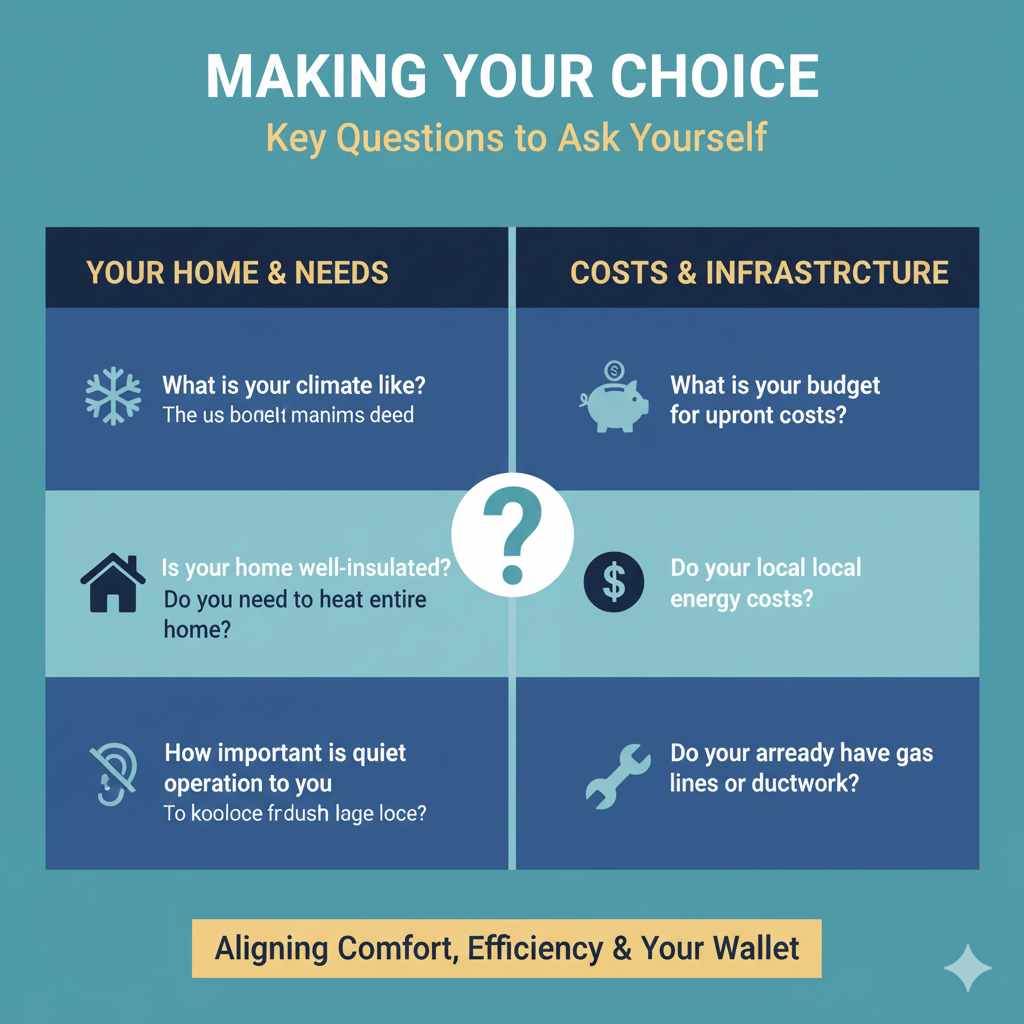
Making Your Choice: Key Questions to Ask Yourself
To help you decide which system is best for your situation, consider these practical questions:
- What is your climate like? Are your winters mild, moderate, or severe?
- What is your budget for upfront costs? Are you looking for the lowest initial investment, or can you afford a more comprehensive central system?
- What are your local energy costs? Research the price of electricity versus natural gas in your area.
- Is your home well-insulated? A well-insulated home will perform better with any heating system.
- Do you need to heat your entire home equally, or do you prefer to zone heat?
- Do you already have gas lines or ductwork installed? Upgrading or adding these can be very costly.
- How important is quiet operation to you?
Answering these will paint a clearer picture of which heating method aligns best with your home and your wallet.
Frequently Asked Questions About Electric Baseboard Heaters vs. Gas Heat
Are electric baseboard heaters expensive to run?
It depends! If you live in a very cold climate and use them as your primary heat source for an entire home, they can be, as electricity is generally more expensive per BTU than natural gas. However, they are very affordable to run for heating specific rooms you use, as a supplement to another system, or as a primary source in milder climates or well-insulated homes. Zone heating makes them very cost-effective for targeted warmth.
Is gas heat better for a whole house?
Gas heat is often considered a powerful and cost-effective solution for heating an entire house, especially in colder climates where natural gas is readily available and priced competitively. The central system can quickly warm large areas, and the overall cost per BTU is often lower than electricity. However, efficiency losses through ductwork can impact this. Electric baseboard heaters can also heat a whole house if it’s well-insulated and the climate isn’t extreme, offering superior zone control.
Which system is safer?
Both systems are generally very safe when properly installed and maintained. Gas furnaces involve combustion, so there’s a risk of carbon monoxide leaks if not serviced annually. Electric baseboard heaters pose a fire risk if flammable materials are placed too close to them or if they are overloaded or faulty.