
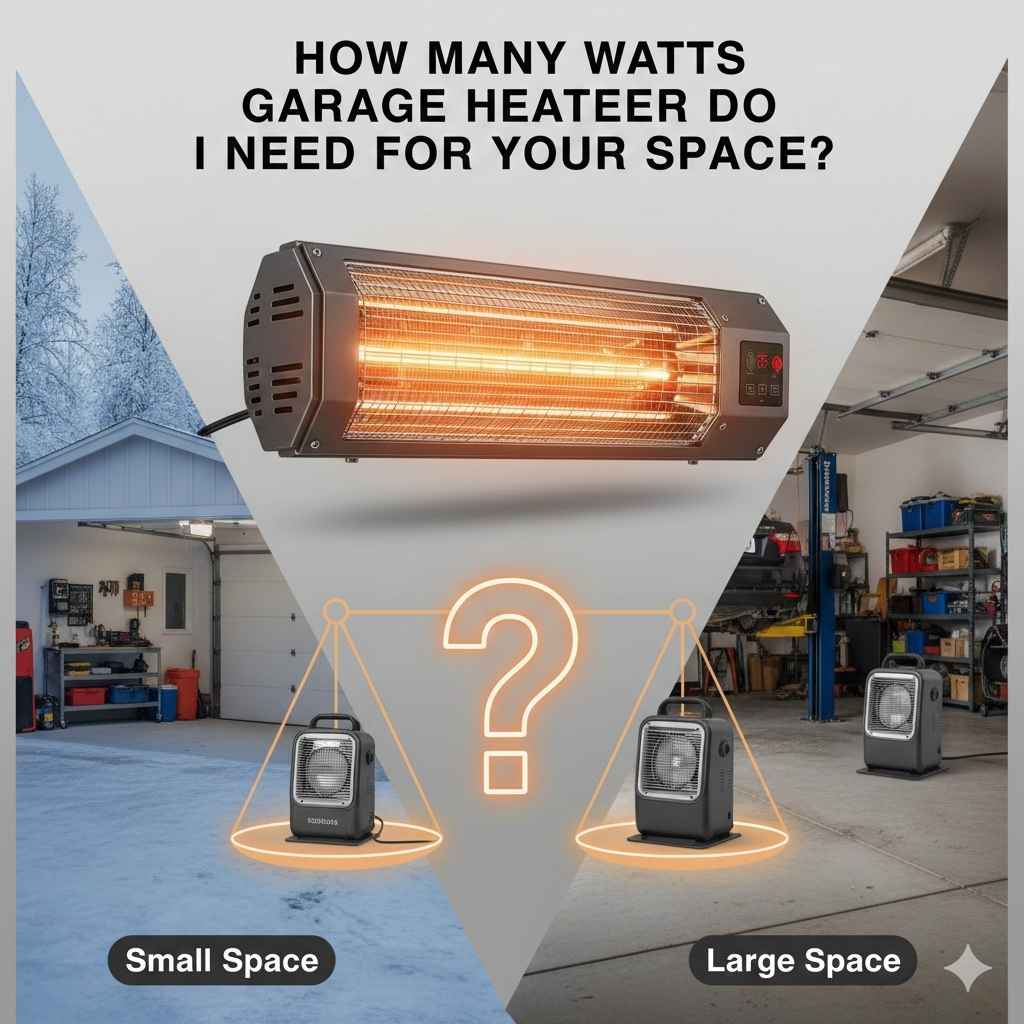
Figuring out How Many Watts Garage Heater Do I Need? can be tricky, especially if you’re just starting. It’s common to feel unsure about the right size for your garage, but don’t worry! This post breaks it down step-by-step, making it easy to determine the perfect heater for your needs. We’ll explore the main factors that impact your choice, and you’ll have a clear plan after reading. Let’s get started!
What Influences Heater Size?
Several things affect what size garage heater you should purchase. These factors are critical to consider to make sure your garage stays warm, and to avoid wasting energy (and money!). Ignoring these variables could lead to a heater that is too small (and doesn’t get the job done), or too large (and is inefficient). We’ll look at each one in detail.
Your Garage’s Dimensions
The size of your garage is the primary factor in calculating the heat needed. Bigger garages need more power. To calculate the size, you need to measure the length, width, and height. Multiply these numbers together to get the volume in cubic feet. This volume tells you how much space your heater will need to warm up. Most heaters are rated by the British Thermal Unit (BTU), which is a measurement of heat. The higher the BTU, the more heat the heater produces.
- Measure the Length, Width, and Height: Using a tape measure, carefully record the measurements of your garage. Be as accurate as possible.
- Calculate the Volume: Multiply the length by the width and height to get the cubic footage. For example, a garage that is 20 feet long, 12 feet wide, and 10 feet high has a volume of 2400 cubic feet (20 x 12 x 10 = 2400).
- Consider Insulation: If your garage is well-insulated, you will need less heating power because the heat won’t escape as quickly. If your garage lacks insulation, more heat is needed to compensate for heat loss.
- Determine Heat Loss Factors: Consider these factors when choosing a heater size: windows, doors, and the outside temperature. These features influence how quickly heat escapes from the garage.
A well-insulated garage in a moderate climate may need fewer BTUs compared to a poorly insulated garage in a colder climate. Therefore, knowing these details will affect the size of the heater you need.
Insulation’s Role
Insulation is like a warm blanket for your garage. Good insulation keeps heat inside and cold air outside. Without insulation, heat escapes quickly, making your heater work harder. This increases your energy costs and may not keep the garage warm enough. The type and amount of insulation used make a big difference. Insulation is measured by its “R-value.” The higher the R-value, the better the insulation. When picking a heater, always consider the level of insulation your garage has to make a proper decision.
- Check the R-value: Look for the R-value on your insulation. This number indicates how well it prevents heat transfer.
- Assess the Walls: Walls are usually insulated with fiberglass batts, blown-in cellulose, or spray foam. Check the walls for any gaps or missing insulation.
- Evaluate the Ceiling: The ceiling is a significant source of heat loss. Make sure the attic is properly insulated.
- Inspect the Doors and Windows: Doors and windows can also let heat escape. Consider adding weather stripping around doors and using insulated windows.
- Consider the Climate: In colder regions, you need more insulation to keep your garage warm compared to warmer regions.
Installing proper insulation can significantly reduce the size of the heater you need. It also saves you money on energy bills and makes your garage a more comfortable place to work or relax.
Climate Considerations
The climate where you live has a huge impact on the heating needs of your garage. A garage in Alaska will need a much more powerful heater than one in Florida. Colder climates require heaters with a higher BTU rating to counteract the heat loss. You have to also remember that even in areas with mild winters, you may still need a heater if you use your garage for a workshop or storage. Consider the average low temperatures during the winter and how often you will be using your garage. Choosing the right size heater depends on how cold it gets outside and the amount of time you will be spending inside the garage.
- Understand Your Local Climate: Research your area’s average winter temperatures and how cold it gets during the coldest months.
- Consider Temperature Fluctuations: Note how much temperatures change between day and night.
- Evaluate Wind Exposure: If your garage is exposed to strong winds, it will lose heat more quickly.
- Assess Sunlight: Garages that get direct sunlight may need less heating.
- Factor in Garage Usage: Will you use the garage often during winter, or just occasionally?
By considering your local climate when selecting a garage heater, you can ensure that you choose a model that is powerful enough to keep the space comfortable without wasting energy.
Calculating the Heater Size You Need
Calculating the exact power of the heater you need involves considering your garage’s size, level of insulation, and the climate. There are different methods, but a straightforward approach involves using a simple formula and making some adjustments based on the conditions. By following these steps, you can estimate the required heater size in BTUs.
The Basic Formula
The basic formula is a starting point for determining the correct heater size. It helps you get a general idea of how much heating power you’ll need based on the size of your garage. This initial calculation helps you create a starting point to look at more closely.
To use this formula:
- Calculate the Volume of Your Garage: Measure the length, width, and height, and then multiply them together to get the cubic feet.
- Determine the Basic BTU Requirement: As a starting point, you generally need about 10 BTUs per cubic foot of space. Multiply the cubic footage of your garage by 10.
- Example: If your garage is 20 feet long, 12 feet wide, and 10 feet high, the volume is 2400 cubic feet (20 x 12 x 10 = 2400). Using the formula, you would need roughly 24,000 BTUs (2400 x 10 = 24,000).
This is a starting point. Adjustments will be necessary based on insulation and climate.
Adjusting for Insulation
Insulation significantly impacts how quickly heat escapes from your garage. Good insulation reduces heat loss and therefore reduces the size of the heater required. To account for insulation, adjust the initial BTU calculation based on the quality of your insulation.
- Well-Insulated Garage: If your garage is well-insulated (with insulated walls, ceiling, and doors), you might reduce the BTU requirement by 10% to 20%.
- Moderately Insulated Garage: If your garage has moderate insulation, use the original BTU calculation without any adjustments.
- Poorly Insulated Garage: If your garage has little or no insulation, you might need to increase the BTU requirement by 10% to 20%.
This adjustment ensures you do not overheat a garage with good insulation. It ensures a poorly insulated garage gets the heat it needs.
Climate Adjustments
The climate where you live has a major effect on the heater’s necessary size. Colder climates call for more powerful heaters to fight the effects of the low temperatures. Adjusting the BTU calculation based on climate is necessary to guarantee sufficient warmth during the coldest months.
- Mild Climate: If you live in a mild climate, you might not need to adjust the BTU calculation significantly.
- Moderate Climate: In areas with moderate winters, you might need to increase the BTU requirement by 5% to 10%.
- Cold Climate: In cold climates with harsh winters, increase the BTU requirement by 10% to 25%.
Make these climate adjustments to match the estimated heater size to the typical weather conditions in your area, and provide enough heating capacity during the coldest times of the year.
Selecting the Right Heater Type
Selecting the right kind of heater for your garage can have a big effect on both your comfort and your energy costs. Different heater types have unique advantages and disadvantages, making them suitable for different needs and garage layouts. Considering the characteristics of each type, from fuel source to setup requirements, helps you pick the most efficient and practical solution for your space.
Electric Heaters
Electric heaters are very popular for garages due to their simple setup and clean operation. They are easy to install, generally just needing to be plugged into an outlet. They are also efficient, converting almost all the electricity into heat. However, electric heaters can be more expensive to operate, especially if you live in an area where electricity costs are high. Electric heaters come in various types, including portable space heaters and larger, mounted units. This makes them versatile for many garage situations.
- Ease of Use: Plug-and-play operation with no need for fuel lines or ventilation.
- Safety: Safe and clean operation with no combustion or exhaust fumes.
- Efficiency: High efficiency, as they convert nearly all electricity into heat.
- Cost: Can be more expensive to operate than fuel-based heaters, especially in areas with high electricity rates.
- Installation: Often requires a dedicated electrical circuit to prevent overloading.
- Types: Available in portable space heaters, baseboard heaters, and ceiling-mounted units.
Electric heaters are best for small to medium-sized garages where convenience and safety are priorities. They offer a clean, reliable, and straightforward solution for your garage.
Propane and Natural Gas Heaters
Propane and natural gas heaters offer a very efficient method to heat garages, particularly larger ones. They are generally more economical to run than electric heaters because of the cost of fuel. Propane heaters need a tank, while natural gas heaters connect to your home’s gas line. Both types generate a lot of heat, which makes them ideal for quickly heating larger spaces. These heaters do, however, need proper ventilation to safely remove exhaust gases. Installation also requires professional help, which adds to the initial cost. Because of their higher BTU outputs, these heaters are a good fit for larger garages or those needing constant heating.
- Heating Power: Offer higher BTU outputs, perfect for larger garages.
- Cost-Effective: Propane and natural gas are generally cheaper than electricity.
- Installation: Require professional installation and gas line connections.
- Ventilation: Need proper ventilation to remove exhaust gases.
- Fuel Source: Propane models need a tank, whereas natural gas models connect to your home’s gas line.
- Efficiency: Propane and natural gas heaters can be highly efficient, providing significant heating capacity for their fuel consumption.
For large garages or workshops, propane and natural gas heaters offer an effective, economical way to ensure a comfortable workspace.
Infrared Heaters
Infrared heaters use infrared radiation to warm objects directly instead of heating the air. They work much like the sun, heating people and objects in their path. This makes them highly effective in drafty spaces or garages that are not well-insulated, since they do not rely on heating the surrounding air. Infrared heaters are generally energy-efficient, as they target heat and are often a good option for spot heating specific areas of your garage. While they might not heat the entire garage evenly, they are efficient at warming the people and objects directly in their path.
- Direct Heating: Warm people and objects directly, rather than the air.
- Energy Efficiency: Highly efficient, especially in drafty or poorly insulated garages.
- Zoning: Good for spot heating and targeted warmth.
- Not as Effective: Not ideal for whole-garage heating, because they do not heat the air.
- Installation: Typically easy to install, often with wall- or ceiling-mounted options.
- Safety: Safe to use, with no open flames and quick heating capabilities.
Infrared heaters are perfect for garages where spot heating is key, providing fast, efficient warmth.
Safety and Installation Tips
Proper safety precautions and installation practices are critical when installing and using a garage heater. Following these guidelines helps keep your garage safe and ensures your heater functions correctly. Regardless of the heater type you choose, taking the necessary steps provides a safe and pleasant environment.
Safety First
Safety is the top priority when using any heater. There are numerous risks associated with heaters, so it’s critical to take these precautions to ensure a secure environment. Always be mindful of potential hazards and follow safety tips.
- Follow Manufacturer Instructions: Always follow the installation and operation instructions that come with your heater.
- Ensure Proper Ventilation: Propane and natural gas heaters need adequate ventilation to remove exhaust gases. Make sure you have proper ventilation systems.
- Maintain a Safe Distance: Keep flammable materials, such as paper, wood, and fabrics, away from the heater. Maintain a safe distance between the heater and any objects.
- Install Carbon Monoxide Detectors: Install carbon monoxide detectors, especially if using a propane or natural gas heater, as carbon monoxide is odorless and deadly.
- Inspect Regularly: Regularly check your heater for any signs of damage or wear and tear.
Taking precautions significantly reduces the risk of accidents and helps maintain a safe environment in your garage.
Installation Best Practices
Proper installation ensures your heater works effectively and safely. Improper installation can cause issues, so following the guidelines and taking precautions are critical for a safe, well-functioning heater.
- Hire Professionals: For propane and natural gas heaters, always hire a licensed professional for installation.
- Electrical Requirements: Make sure electrical heaters have the correct electrical circuit. Check the requirements and install any necessary upgrades.
- Mounting: Mount your heater securely on a stable surface, following the manufacturer’s instructions.
- Clearances: Maintain the recommended clearances around the heater to avoid fire hazards and to ensure efficient operation.
- Ventilation: Ensure any vents are clear and functioning correctly, especially for fuel-burning heaters.
Following installation best practices helps in the safe and efficient operation of your garage heater, protecting your property and family.
How to Maintain Your Garage Heater
Routine maintenance keeps your garage heater running efficiently and safely. Consistent care ensures the heater works at peak performance, extends its life, and prevents potential issues. Regular upkeep keeps your garage warm and your heater running smoothly.
Routine Maintenance Steps
Routine maintenance involves simple tasks to keep your heater in good condition. These actions help ensure reliable and efficient operation.
- Clean the Heater Regularly: Remove any dust, dirt, or debris that might build up on the heater’s surfaces and vents.
- Check the Electrical Connections: Ensure the power cords and connections are in good shape. Tighten loose connections.
- Inspect the Fuel Lines: If your heater uses propane or natural gas, periodically inspect the fuel lines for any leaks.
- Check the Vents and Flues: Confirm that the vents are clear and free from obstructions.
- Test the Safety Features: Test the safety shut-off switches and other safety mechanisms to confirm they work correctly.
By following these steps, you can help your heater run well and increase its lifespan.
Professional Servicing
Professional servicing is essential for more complex upkeep tasks. Routine maintenance often keeps the heater working, but periodic professional servicing can find any hidden problems.
- Annual Inspections: Have a professional inspect your propane or natural gas heater annually.
- Internal Component Checks: A professional can check internal components that are difficult to inspect without expertise.
- Safety Checks: Ensure all safety features function correctly.
- Gas Leak Checks: A professional can accurately test the gas lines and connections.
- Efficiency Testing: Professionals can test your heater’s efficiency and performance.
Regular professional servicing guarantees your garage heater’s performance and safety.
Frequently Asked Questions
Question: How do I know if my garage is well-insulated?
Answer: Check your walls, ceiling, and doors. If they have insulation with a high R-value (6+ in walls, 13+ in ceilings), and there are no gaps or drafts, your garage is likely well-insulated.
Question: What’s the difference between BTU and watts when it comes to heaters?
Answer: BTU (British Thermal Units) measures heat output, while watts measure electrical power consumption. You’ll see BTU ratings on heaters to tell you how much heat they produce.
Question: Can I use an extension cord with my electric garage heater?
Answer: It’s generally not recommended. Electric heaters draw a lot of power. Use a dedicated outlet and circuit to avoid overloading and fire hazards. If you must use one, make sure the extension cord is rated for high wattage.
Question: How often should I replace the propane tank for my garage heater?
Answer: The frequency depends on how much you use the heater, but propane tanks should be exchanged when empty. Always close the valve and safely handle the empty tank.
Question: What should I do if my heater isn’t working properly?
Answer: First, check the power source, make sure the fuel supply is active, and look for any obvious issues. If the problem persists, stop using the heater and contact a qualified technician. Never attempt to repair a heater yourself unless you’re qualified.
Final Thoughts
Determining How Many Watts Garage Heater Do I Need? involves careful measurement of your space, consideration of climate and insulation, and selection of the correct heater type. You now know how to calculate the right BTU output for your garage. You have also learned how to choose the right heater type, understand critical safety measures, and maintain your unit properly. With these insights, you are equipped to make an informed choice that will improve your garage’s warmth and comfort.
By understanding the elements of garage heating, you can be sure to pick the right heater to meet your needs. Begin by calculating your garage’s volume and adjusting the BTU requirements based on insulation and climate. Then, explore your options, and always prioritize safety during setup and operation. With the right heater in place, you can turn your garage into a welcoming and functional space, no matter the weather!
Last Updated on January 14, 2026 by Tanim