
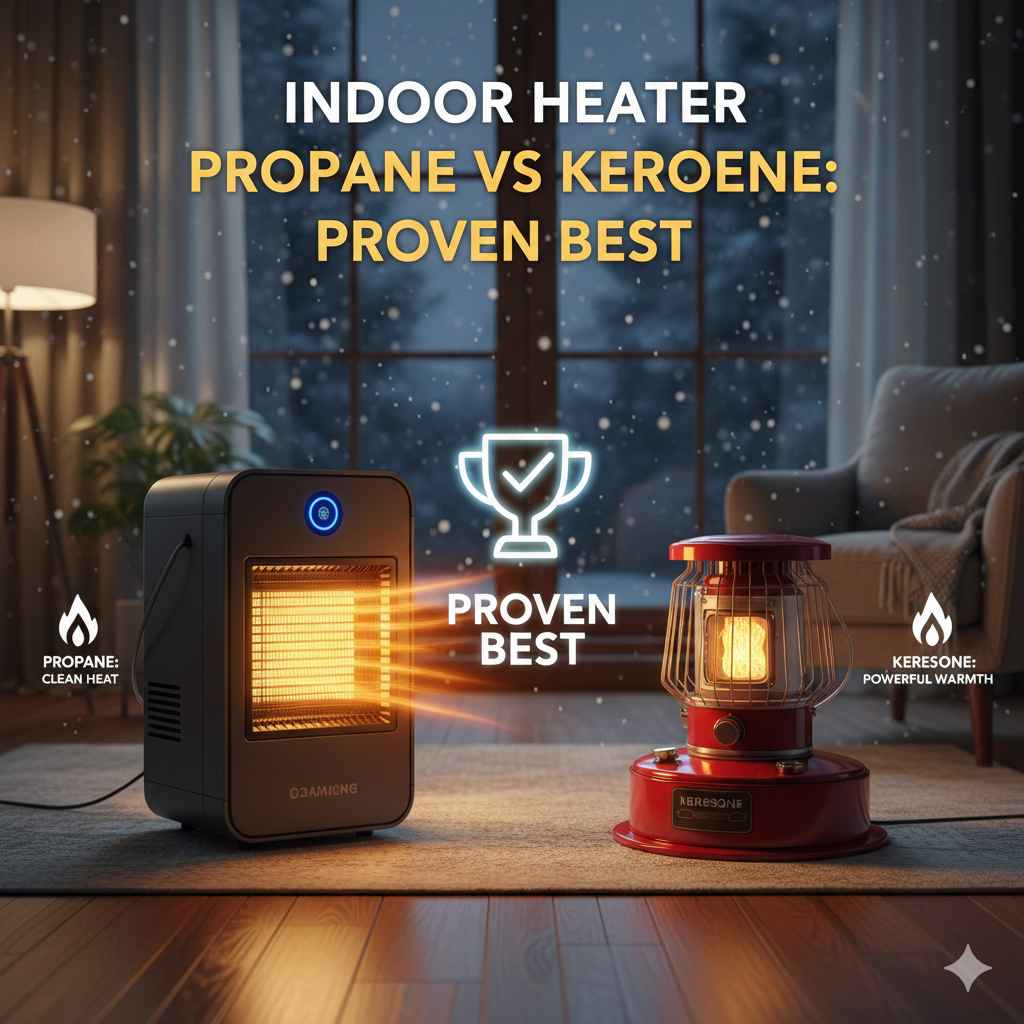
For most homeowners seeking safe, on-demand supplemental heat indoors, propane heaters generally offer a cleaner burn, superior convenience, and less odor than kerosene heaters, making propane the proven best choice for general indoor use.
Thinking about using a portable heater to chase away the chill in your garage, workshop, or maybe even during a power outage? That is a smart way to stay cozy without cranking up the whole furnace. But when you look at the fuel options, propane versus kerosene, it gets confusing fast. Which is safer? Which burns cleaner? Which one saves you more money?
Don’t worry, you are not alone in feeling stuck! Choosing the right fuel shouldn’t require an engineering degree. I’m Tanim, and I’m here to break down propane and kerosene heating in plain English. We will look closely at safety, cost, and convenience so you can pick the perfect heater with total confidence. Let’s look at what truly makes one fuel better suited for your cozy indoor needs.
Understanding Portable Fuel-Powered Heaters: Why Fuel Choice Matters
When we talk about needing extra heat indoors, we usually mean using an appliance that burns a fuel source to create warmth. Unlike electric resistance heaters, fuel-burning heaters release their heat directly into the space. This means the type of fuel—propane or kerosene—directly affects three main things:
- Safety and Emissions: How clean does the fuel burn, and what byproducts (like fumes or carbon monoxide) are released?
- Convenience and Storage: How easy is it to get the fuel, store it safely, and refill the appliance?
- Cost and Efficiency: How much does the fuel cost over time compared to the heat it produces?
The good news is that both fuels are excellent at producing high amounts of heat quickly. The difference lies in how they fit into your daily life and home environment. Let’s dive right into comparing these two heavy hitters.

Propane Heaters: The Definition of Clean Convenience
Propane (often called LP gas) is very popular for grilling and home heating backups. When discussing propane heaters for indoor use, we are usually talking about models designed for safety and ventilation in specific areas.
How Propane Works for Indoor Heating
Propane is stored under pressure as a liquid in tanks (like the ones used for BBQ grills). When it burns, propane converts cleanly into heat, water vapor, and carbon dioxide. Because modern propane heaters are engineered effectively, they produce very little odor when running correctly.
Pros and Cons of Using Propane
Propane shines in areas where easy setup and minimal mess are important. Here are the main upsides and downsides to consider:
- Pros of Propane:
- Cleaner Burn: Produces less soot and odor compared to kerosene.
- Easy Refuel: Tanks are easily swapped at most gas stations or hardware stores.
- Instant Heat: Heats up incredibly fast once ignited.
- Portability: Tanks are relatively easy to move around workspaces.
- Cons of Propane:
- Tank Size Limitations: Larger BTU output heaters require larger, heavier tanks.
- Cost Fluctuation: Fuel price can swing seasonally.
- Ventilation Required: Although cleaner, propane heaters still require an outside air source to burn safely, especially in smaller spaces.
Safety Note on Indoor Propane Use
While propane burns cleaner, you MUST ensure the heater is rated for indoor or unvented use and has an Oxygen Depletion Sensor (ODS). This safety feature automatically shuts the heater off if oxygen levels drop too low. Always follow the National Fire Protection Association (NFPA) guidelines regarding ventilation for any fuel-burning appliance.
Kerosene Heaters: The Workhorse for Extended Heat
Kerosene is a traditional choice, often favored for heating large spaces or during long periods without power. It’s a liquid fuel similar to diesel but refined for cleaner burning in heaters and lamps.
How Kerosene Works for Indoor Comfort
Kerosene heaters typically use a wick system that draws fuel up from a reservoir tank. The fuel is then vaporized and burned at the top of the wick. This vaporization process is key to the heat produced, but it’s also the source of its distinct characteristics.
Pros and Cons of Using Kerosene
Kerosene is known for its staying power but comes with a few mandatory compromises regarding indoor air quality.
Pros of Kerosene:
Long Run Times: Large built-in tanks can run for 10 to 24 hours easily on one fill.
Fuel Stability: Kerosene stores for a very long time without significant degradation.
High B.T.U. Output: Excellent for heating very cold, substantial areas like workshops or barns.
Cons of Kerosene:
Noticeable Odor: Even high-quality K-1 kerosene often produces a distinct smell, especially during startup and shutdown.
Soot and Maintenance: Requires more frequent wick trimming and cleaning than propane systems.
Refueling Mess: Pouring liquid fuel is inherently messier than swapping a clean tank.
The Importance of K-1 Kerosene
If you choose kerosene, ONLY use K-1 grade fuel. K-2 kerosene contains higher levels of sulfur and impurities, leading to much stronger odors and significantly more soot buildup, making it unsafe and unpleasant for home use.
Head-to-Head Comparison: Propane vs. Kerosene
To make your decision clear, let’s line up the key features in a direct comparison. This table is designed to focus on what matters most to a homeowner looking for safe, supplementary indoor heat.
Comparison Table: Propane vs. Kerosene Heaters
| Feature | Propane Heater | Kerosene Heater |
|---|---|---|
| Cleanliness/Odor | Very Clean Burn; Minimal Odor (if operating properly) | Noticeable Odor (especially sulfur smell); produces more soot |
| Fuel Storage & Handling | Uses pressurized tanks; easy to swap tanks. | Uses liquid storage tanks; refueling can be messy. |
| Startup Speed | Instant, rapid heating | Slight delay while the wick saturates and vaporizes fuel |
| Indoor Comfort Suitability | Better for occasional/intermittent indoor use (with ODS) | Can be used for longer durations, but odor is a factor |
| Maintenance | Low maintenance (checking connections, tank pressure) | Requires regular wick cleaning and inspection |
| Typical Cost (Per BTU) | Generally slightly higher hourly operating cost | Often lower hourly operating cost for long burns |
The Ultimate Verdict: Which Fuel is “Proven Best” Indoors?
When weighing indoor heater propane vs. kerosene, propane wins for typical home supplemental use. Here is why Tanim consistently recommends propane for the average homeowner seeking localized warmth:
- Superior Air Quality: For anything you use inside your living space or even a attached garage, cleaner air is paramount. Propane’s much lower odor and soot production mean less lingering smell and less scrubbing later.
- Ease of Use: Swapping an empty propane bottle for a full one takes 30 seconds and generates no spilled fuel. Dealing with liquid kerosene can lead to spills, tracking fuel smell, and is generally less convenient for quick heating needs.
- Safety Confidence: While both require strict compliance with safety standards, the simplicity of propane tanks often reduces homeowner error related to refueling procedures.
Kerosene remains king for long-duration, blackout scenarios in a detached, well-ventilated building like a large workshop, where the heat requirement is intense and constant, and odors are less of a concern.
Safety First: Essential Rules for Using Any Fuel Heater Indoors
The “best” heater is always the safest one. Whether you choose propane or kerosene, these mandatory safety rules apply to ALL unvented fuel-burning appliances used inside a home or enclosed space.
The Three Golden Rules of Fuel Heater Safety
Never treat these appliances like an electric space heater. They consume oxygen and produce exhaust gases. Follow these rules religiously:
- Ventilation is Non-Negotiable: Always provide fresh air. This usually means cracking a door or window—even just an inch or two—in the room where the heater is running. You need to replace the oxygen the heater consumes to prevent dangerous carbon monoxide build-up.
- Use an Approved Sensor: Purchase and use a reliable, tested Carbon Monoxide (CO) detector right near the heater. CO is colorless, odorless, and deadly. Treat it like your most important co-pilot.
- Refuel ONLY Outdoors: Never refill the fuel tank or reservoir inside your home, garage, or basement. Fuel fumes are heavy and flammable, and working near a pilot light or hot surface is extremely dangerous. Let the unit cool down completely before adding fuel outside.
Carbon Monoxide (CO) and Fuel Types
The risk of CO poisoning is present with any combustion. Propane tends to produce less relative CO than poorly maintained kerosene heaters, but the hazard remains if air supply is restricted. Learn how to spot the symptoms of CO poisoning—headache, dizziness, nausea—and have an escape plan.
Practical Application: Choosing Your Best Fuel Based on Need
Understanding the technical differences helps, but how does this translate to your specific heating challenge? Let’s look at common scenarios where one fuel typically outperforms the other.
Scenario 1: Workshop or Unheated Garage Spot Heating
If you are working on projects and need powerful, reliable heat for several hours a day, but the space is large with high ceilings:
- Recommendation: Kerosene (Higher BTU output can overcome the space faster, odor less bothersome in a dedicated shop).
- Caveat: Ensure you have excellent passive ventilation from a garage door being raised or a large exhaust fan running.
Scenario 2: Emergency Power Outage Heat for a Main Room
If you anticipate losing power for one or two days and need to keep one main living area warm efficiently:
- Recommendation: Propane (Cleaner, less odor means you can live with it for longer periods in proximity, and tanks are fast to swap if you run low).
- Caveat: Only use heaters explicitly rated for indoor emergencies with ODS.
Scenario 3: Quick, Intermittent Heat in a Cabin or RV
If you just need to quickly take the chill off a small, enclosed recreational space before heading out or running the main heat source:
- Recommendation: Propane (Fast startup time and no lingering fuel smell when the quick heat job is done).
- Caveat: Ensure the heater’s BTUs match the small space capacity to avoid overheating quickly.
Understanding Fuel Capacity and Runtime
How long a heater runs is often a deciding factor. Kerosene heaters typically have larger built-in tanks, but propane systems rely on external standard (like 20lb BBQ) tanks.
Runtime Table Example (Approximate)
This table demonstrates how runtimes look, assuming a medium heat setting (around 10,000 BTUs) for comparison. Actual runtimes vary greatly by heater model and heat setting.
| Fuel Type/Container | Typical Capacity | Approximate Runtime at 10k BTU/hr |
|---|---|---|
| Kerosene (Built-in Tank) | 1.5 Gallons | 12 – 18 Hours |
| Propane (Small Cylinder) | 1 lb disposable | 4 – 6 Hours |
| Propane (Standard BBQ Tank) | 20 lbs (approx. 4.7 Gallons) | 24 – 40 Hours |
Note: A standard 20lb LP tank holds roughly 4.7 gallons of liquid fuel, which converts to a significant amount of burn time when used in efficiency-focused portable heaters.
If you choose propane, investing in the larger 20lb tank connection kit is almost always worth it for extended runtimes without constant babying the fuel supply.
Maintenance Differences: Keeping Your Heater Healthy
A well-maintained heater is a safe heater. Propane heaters are generally easier to care for, but both systems require some attention.
Propane Heater Care Checklist
Because propane is a gas, maintenance focuses less on deposits and more on connections:
- Inspect hoses and connections for cracks or leaks before every use (a little soapy water can reveal slow leaks).
- Ensure the ODS chamber sensor is clean and free of dust or debris for accurate oxygen readings.
- Store tanks upright, cool, and away from ignition sources.
Kerosene Heater Care Checklist
Kerosene requires mechanical upkeep due to the wick system:
- Wick Trimming: Carbon deposits build up on the wick. You must periodically trim the carbon crust off the top of the wick according to the manufacturer’s instructions (usually using a special tool or gentle scraping).
- Burn-Off: Run the heater on high until it runs out of fuel occasionally to completely burn off any varnish or residue.
- De-Sludging: If fuel sits too long (over a year), it can degrade. Drain old fuel and run the heater until the reservoir is empty before refilling with fresh K-1.
This added maintenance step is a major reason why many beginners shy away from kerosene, opting instead for the simpler propane hookup.

Frequently Asked Questions (FAQ) About Propane and Kerosene Heating
Q1: Can I use kerosene in a heater designed only for propane?
Absolutely not! Never put kerosene in a propane heater, or propane in a heater designed for kerosene. The mechanics, pressure requirements, and combustion chambers are completely different and mixing fuels will cause dangerous malfunctions, explosions, or severe carbon monoxide production.
Q2: Which fuel is cheaper to operate hourly?
Generally, Kerosene has a slightly lower cost per BTU (heat unit) than propane, provided you are comparing clean fuels running in efficient units. However, this small savings can be instantly negated by the increased maintenance time and the potential costs associated with improper ventilation if you are sensitive to odor.
Q3: Do I need a chimney or vent for these heaters?
Most common portable heaters using propane or kerosene are “unvented” or “vent-free.” This means they vent combustion byproducts directly into the room. Because of this, they MUST be equipped with an ODS safety feature and require mandatory fresh air ventilation (cracked windows) as described in safety guidelines.
Q4: How long can I safely store propane compared to kerosene?
Propane stores almost indefinitely in its pressurized tank as long as the tank itself is sound and properly sealed. Kerosene, however, has a shelf life of about 1 to 3 years. After that, it can start to varnish and clog heater wicks, requiring disposal and replacement.
Q5: Are propane heaters safe to run overnight while sleeping?
ONLY use propane heaters specifically certified and approved for indoor, unattended, or overnight use, which will feature robust ODS systems and low operational BTU outputs. Even then, you must maintain fresh ventilation and have functioning CO detectors nearby. If you are unsure about a specific model’s safety rating, it is best practice to turn the unit off before falling asleep.
Q6: What is the smell associated with kerosene heaters?
The smell comes from trace impurities in the fuel or incomplete combustion. K-1 kerosene has much less sulfur than older grades, but the odor is often particularly noticeable when the heater is first lit, extinguished, or if the wick is dirty and burning inefficiently.
Making Your Final, Confident Choice
Choosing between propane and kerosene for indoor supplemental heat boils down to trusting your comfort needs against your tolerance for maintenance and fumes. As your heating guide, Tanim hopes this deep dive has clarified the landscape.
For the typical homeowner needing occasional burst of heat, easy setup, and the cleanest air possible, propane