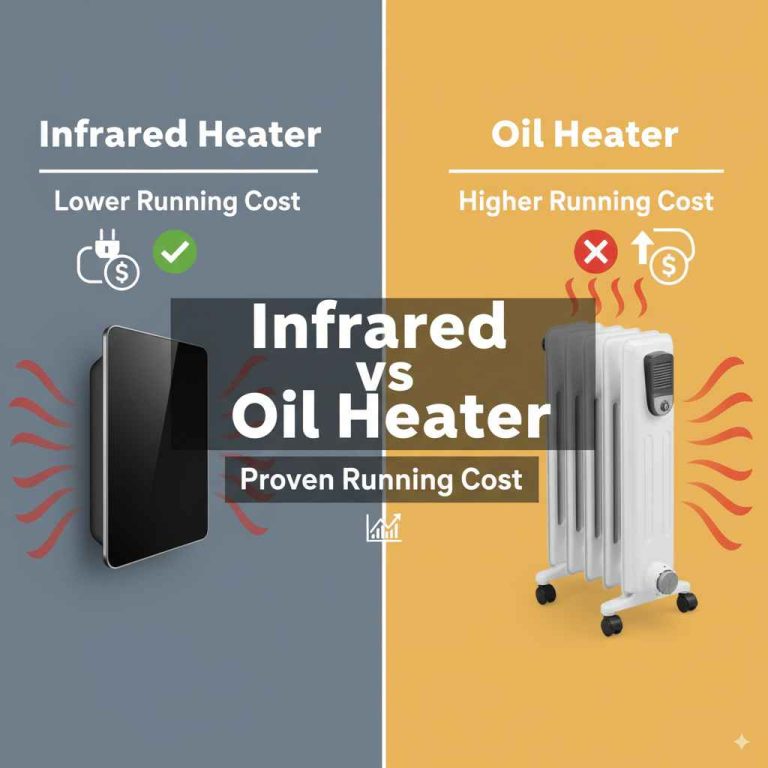
Is a Quartz Infrared Heater Worth It?
A quartz infrared heater is worth it when you want fast, directional warmth for one person or one seat, not for heating an entire room. For desk use, reading chairs, or a small bedroom zone, quartz can feel efficient because it warms people and objects directly. For broader comfort, ceramic or oil-filled is usually the better buy.
Verdict
For running cost, a simple example helps: at a sample electricity rate of $0.15 per kWh, a 400W heater costs about $0.06 per hour, an 800W heater about $0.12 per hour, and a 1500W heater about $0.23 per hour if it runs continuously. Actual cost depends on duty cycle and thermostat cycling, not just nameplate wattage. [DOE efficiency basics; utility rate examples]

- Dual heating systems for flexible room warmth
- Tip-over and overheat protection add safety
- Remote control and thermostat make it easy to use
Based on manufacturer manuals, quartz infrared heaters are best for direct heat in occupied zones, typically around a desk or chair rather than an entire room. If you want even room coverage or longer background warmth, ceramic or oil-filled heaters usually make more sense. That is the core tradeoff this guide helps you weigh. [Manufacturer manuals; DOE; CPSC]
For best results, think in zones, not square footage. A quartz infrared heater is strongest when the user stays close to the heat path and the room is not drafty. If you need even, whole-room warmth, a ceramic heater or oil-filled radiator is usually the better match. [DOE; manufacturer manuals]
Specs at a glance
| Spec | What to look for | Why it matters |
|---|---|---|
| Heating method | Quartz tube element with radiant infrared heat | Heats people and objects directly instead of waiting to warm air first |
| Common wattage bands | 400W, 800W, 1500W, dual heat settings | Lower settings suit personal heat; 1500W is common for stronger supplemental output |
| Controls | Simple rocker switches, adjustable thermostat, remote control, timer | Better control helps match heat to occupancy and reduce waste |
| Safety features | Tip-over switch, overheat protection, cool-touch housing, grill guard | These reduce risk, but the front grill can still get hot |
| Best use case | Spot heating within 1 to 2 meters | Works best when the heat can stay aimed at a seated person |
| Room fit | Small rooms, bedrooms, study rooms, work areas | Limited coverage makes it a poor fit for large or drafty rooms |
What is a quartz infrared heater?
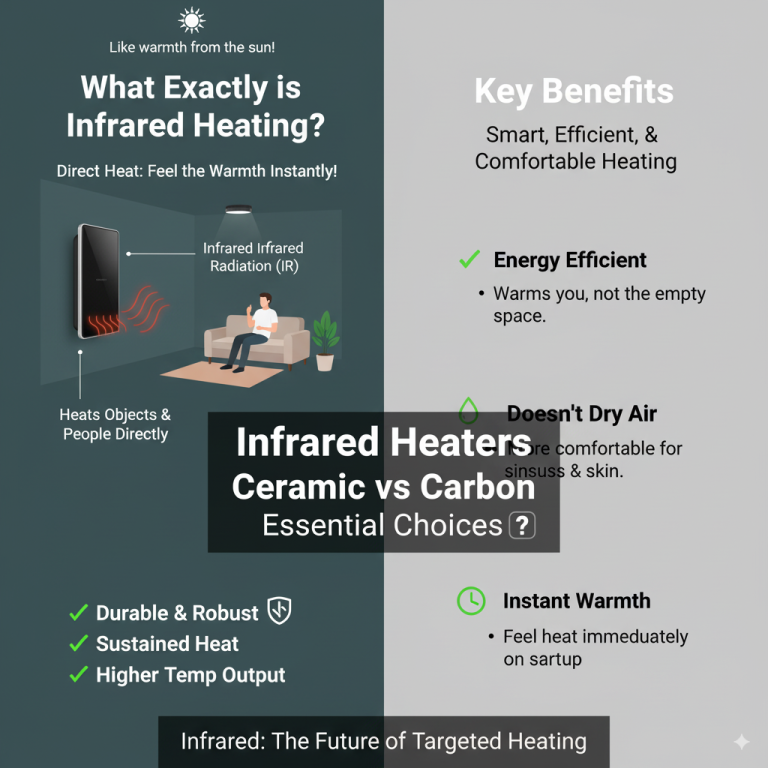
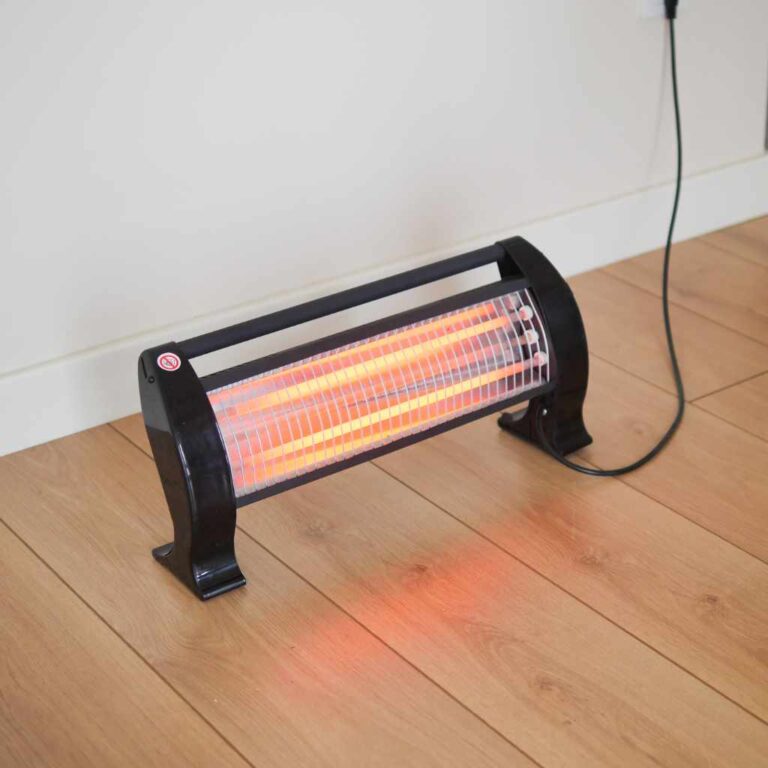
A quartz infrared heater uses a quartz tube heating element, usually a resistance wire inside high-temperature quartz glass, to emit infrared radiation. That radiant heat warms people and nearby objects first, rather than primarily heating the air. The result feels directional and fast, which is why these heaters are used for spot heating instead of whole-room heating. [Manufacturer manuals; DOE]
How does the heat work?
Infrared radiation does not depend on circulating warm air to create a sense of heat. It travels in a direct path and warms surfaces it reaches, including skin, furniture, and a desk area. That makes quartz heaters feel quick to the occupant, but it also means heat drops off as distance grows. [DOE infrared heating explanations]
If your chair sits about 1.5 meters from the heater, the warmth can feel useful within minutes, but the rest of a larger room may still feel cold because the heater is aimed at you, not the room as a whole.
Why does it feel different from a fan heater?
Fan heaters rely on moving warmed air around the space, while quartz infrared heat is more direct. There is less waiting for the air to build up, which can make quartz a better match for brief, seated use. It is also often quieter because it does not need strong airflow to do the job. [DOE]
Who is it for?
Quartz infrared heaters make sense for buyers who want direct heat at a desk, workbench, reading chair, or bedside area. They are also reasonable as supplemental heat in a small bedroom when the goal is to warm the occupied zone, not the whole room. They are a poor fit for anyone who wants steady heat across a drafty room or a larger open space.
Desk and personal heat users
If you sit in one place for long periods, quartz can be a practical choice. A 400W or 800W model can be enough for personal warmth, while 1500W units are common when the room is a little larger or the buyer wants more output. The key is that the heated zone stays close and targeted. [Manufacturer manuals]
Small bedroom supplemental heat
In a small bedroom, a quartz heater can work if it is used as a supplement near the bed or seating area. It is more useful for taking the chill off a corner than for warming the entire room evenly. If the bedroom is drafty or larger than expected, another heater type is usually the better buy.
Buyers who should choose another type
If you need primary heat for a whole room, or if you move around a lot, quartz is usually the wrong tool. Ceramic heaters spread heat more broadly, and oil-filled heaters hold warmth longer and suit longer occupancy better. A quartz unit can still help, but it should not be asked to do the whole job. [DOE; manufacturer manuals]
What works
Quartz infrared heaters do their best work when the use case is narrow and clear. They heat up fast, they aim warmth where it is needed, and they are often simple to operate. That combination can make them a smart buy for short sessions in a small, occupied space.
Fast heat and directional warmth
The main advantage is immediate perceived heat. Infrared quartz heating is built for direct warmth, so the comfort gain shows up quickly in front of the heater. That is why it often feels more effective than a room heater that needs time to circulate air first. [DOE]
Quiet operation and simple controls
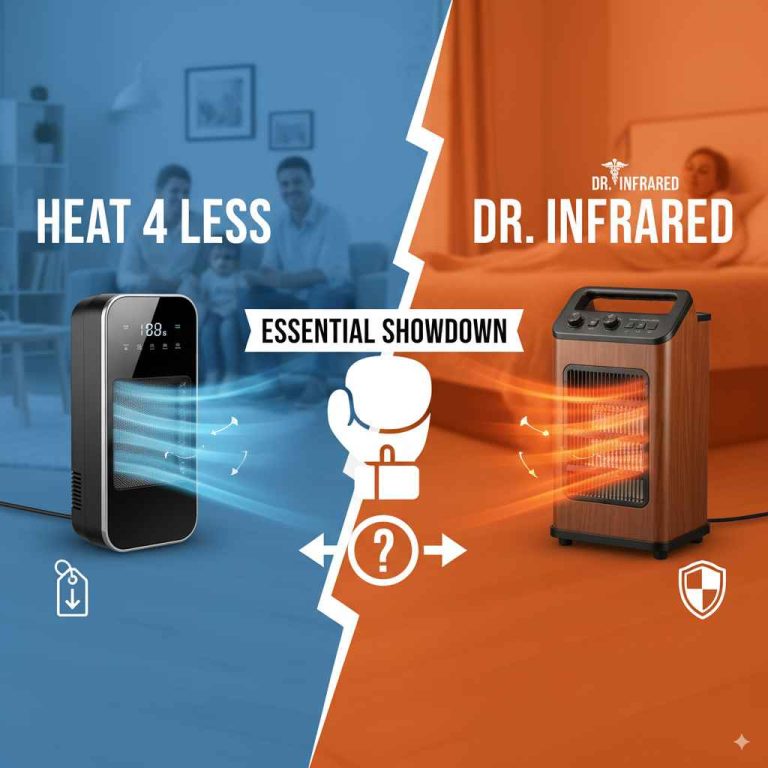
Many quartz heaters are low-noise or fanless, and some use simple rocker switches rather than complicated controls. Others add a thermostat, remote control, or timer. The BLACK+DECKER infrared tower heater, for example, lists Low and High settings of 750W and 1500W and includes an adjustable thermostat. The Dr Infrared Heater Original includes a 12-hour timer and a blower rated around 39 dB. [Manufacturer manuals]
Useful in small rooms and work areas
Quartz heaters can fit study rooms, bedside areas, and home office corners because they do not need to heat a large volume of air to feel useful. The Dr Infrared Heater Original is described as producing up to about 5200 BTU, and its dual heating system combines infrared quartz tubes with a PTC element. That mix can help with supplemental room warmth, but it still should not be treated as central heat. [Manufacturer manual; BTU conversion context]
What does not?
The biggest drawback is limited coverage. Quartz infrared heat falls off with distance, so a heater that feels strong at a desk can seem weak a few steps away. The other drawback is surface heat: the grill and front housing can get hot, so placement and clearance matter more than many buyers expect. [CPSC; NFPA; manufacturer manuals]
Coverage is the main limit
Quartz heaters are not a fix for large or drafty rooms. Heating Trends describes infrared heaters as working best in open spaces like bathrooms, garages, basements, hobby rooms, and workshops, but that still means localized or task-based heat rather than even whole-room warmth. In a drafty room, the heat you feel may leave as soon as you move.
Hot surfaces need real clearance
Safety features help, but they do not remove the burn risk. A tip-over switch and overheat protection are important, and cool-touch housing is better than a bare hot shell. Even so, the front grill can be hot enough to burn skin, so it should stay clear of bedding, curtains, and anything that can touch the heater. [CPSC; NFPA; manufacturer manuals]
A common first-timer mistake is placing a quartz heater too close to a bed skirt or chair arm. The room may feel warmer for a moment, but the setup raises the chance of contact with hot surfaces and reduces the free airflow or radiant path the heater needs. [CPSC; NFPA]
Pros and cons
Pros
- Fast warm-up for direct, seated heat
- Good for spot heating at about 1 to 2 meters
- Often quiet, with simple controls
- Lower wattage options can suit personal use
Cons
- Limited room coverage in larger spaces
- Hot grill and housing increase burn risk
- Poor fit for drafty rooms
- Not a replacement for central heating
Quartz infrared heater decision matrix
This table separates worth it from not worth it by use case, because that is where quartz heaters either earn their keep or fall short. The right answer depends less on wattage alone and more on how close you sit, how long you stay in the room, and how much of the room you expect the heater to cover.
| Buyer scenario | Warm-up speed | Coverage | Noise | Safety | Likely satisfaction | Worth it? | Key reason |
|---|---|---|---|---|---|---|---|
| Desk or personal heat | High | Low but targeted | Low to medium | Medium, if clearance is respected | High | Worth it | Fast radiant warmth is useful within 1 to 2 meters |
| Small bedroom supplemental heat | High | Medium, if the bed or chair is close | Low to medium | Medium, with tip-over and overheat protection | Moderate | Maybe worth it | Good as a supplement, not as the main source for the whole room |
| Large drafty room | High at the heater, low in the room | Low | Low to medium | Medium, but placement becomes harder | Low | Not worth it | Heat is too directional for a space that leaks warmth |
Quartz vs infrared space heater: which is better?
Quartz is one type of infrared space heater, so the real comparison is quartz infrared versus other heater types. Quartz wins when you want direct, fast, near-field warmth. Ceramic and oil-filled heaters are usually better when you need broader room heating or longer-lasting background heat.
Quartz infrared vs ceramic heater
Ceramic heaters heat air that is then moved through the room, so they usually do a better job of warming a small room more evenly. Quartz feels faster right in front of the heater, but ceramic is often the better choice if you want the whole room to feel less cold. For a bedroom, ceramic usually wins unless the goal is a warm spot near the bed. [DOE; manufacturer manuals]
Quartz infrared vs oil-filled heater
Oil-filled heaters warm more slowly, but they tend to hold heat and provide steadier background warmth. That makes them a better fit for long stays in one room. Quartz is better when you want quick relief for a limited time and can stay within the heater’s directional range. [DOE; manufacturer manuals]
When another heater type is the better buy
If your room is larger, drafty, or occupied for hours at a time, ceramic or oil-filled is usually the safer buy for comfort per dollar. Quartz makes more sense when the room is small, the person is seated, and the heat can stay aimed at one area. If those conditions are missing, the buy is usually not worth it.
Alternatives
The DR. INFRARED HEATER Original is a stronger alternative if you want quartz infrared heat plus extra room-heating flexibility. Its dual heating system combines infrared quartz tubes with a PTC element, and the published details list up to about 5200 BTU, a 12-hour timer, and a blower around 39 dB. The tradeoff is that it is still best viewed as supplemental heat, not whole-room coverage. [Manufacturer manual; BTU conversion context]

- Oscillating or stationary heat for flexible use
- Timer helps schedule heating to your routine
- Safer Plug technology adds peace of mind
The Duraflame Electric Tower Heater is the better fit if you want a heater aimed at a larger room or a more flexible placement style. Its published specs include oscillating or stationary operation, low and high settings of about 750W and 1500W, an adjustable thermostat, and Safer Plug technology. The drawback is that tower heaters are still electric space heaters, so a large or drafty room can outrun them. [Manufacturer manual]
Should you buy it?
Buy a quartz infrared heater if you want fast, direct warmth for a seated spot, a small bedroom corner, or a desk area. Skip it if you need broad room coverage, background heat for many hours, or better performance in a drafty space. The best quartz buy is the one that matches the size of the heated zone, not the size of the room on paper.
Before you buy, check wattage, controls, and safety features together. Look for a tip-over switch, overheat protection, and a grill or housing design that keeps hands away from hot surfaces. A thermostat or timer is useful if you plan to leave the room and return later. [CPSC; NFPA; manufacturer manuals]
- Measure the seating distance and make sure the heater can sit about 1 to 2 meters away.
- Match the wattage to the use case, not just the room label.
- Check for tip-over protection and overheat shutoff.
- Keep the heater clear of bedding, curtains, and paper.
- Choose ceramic or oil-filled if you need broader or steadier room heat.
Frequently asked questions
Is a quartz infrared heater worth it for a bedroom?
It can be, but only as supplemental heat in a small bedroom where you sit or lie close to the heater. If you want even warmth across the whole room, quartz is usually the wrong choice. Ceramic or oil-filled models are better for broader bedroom heating.
Are quartz infrared heaters good for small rooms?
Yes, if the room is small and the heater is used for a specific area rather than the full room. Their spot-heating design works well for a bedside zone, chair, or desk. They become less appealing as the room gets larger or more drafty.
Do quartz infrared heaters use a lot of electricity?
[DOE; utility rate examples]
How close can you sit to a quartz infrared heater?
Published guidance commonly places the effective range at about 1 to 2 meters. Closer is not always better, especially if the grill runs hot or the heater sits near fabrics. Keep the heater positioned for direct warmth, with clear space around it. [Manufacturer manuals; CPSC; NFPA]
What is infrared quartz heater?
It is a space heater that uses a quartz tube element to emit radiant infrared heat. That heat warms people and objects directly, which makes it fast for spot heating. It is not designed to heat air evenly across a large room. [DOE; manufacturer manuals]
Ceramic heater vs infrared quartz: which is better?
Ceramic is usually better for room heating because it spreads warmth more broadly. Quartz is better if you want quick, direct heat aimed at one seated spot. For a bedroom or office, the better choice depends on whether you need room-wide comfort or personal warmth. [DOE; manufacturer manuals]