Diesel Heaters Waterproof? What Buyers Need to Know
No, standard diesel heaters are not waterproof. While some components might have a degree of water resistance, they are not designed to be submerged or exposed to heavy rain without proper protection. Understanding their limitations is crucial for safe and effective operation. This guide explains why and how to protect your diesel heater.
Hello there, fellow homeowners! It’s Tanim, your friendly guide to all things cozy and warm. Are you thinking about a diesel heater for your home, workshop, or even your next adventure in a campervan? They’re super efficient and can save you money, which is fantastic! But with any new heating system, you’ve probably got questions. One that pops up quite a bit, especially if you’re considering an outdoor setup or a mobile unit, is: “Are diesel heaters waterproof?” It’s a great question, and it’s important to get a clear answer to keep your heater running smoothly and safely.
Don’t worry if it seems a bit technical; I’m here to break it all down for you. We’ll explore what ‘waterproof’ really means when it comes to these powerful heaters, why it matters, and what you can do to ensure yours stays protected, no matter where you use it. Let’s make sure your home stays warm and your heater stays in top condition!
Understanding Diesel Heater Basics: Why Water is a Concern
Diesel heaters are wonderfully practical devices that burn diesel fuel to create heat. They’re brilliant for spaces that are tricky to heat with traditional systems, like garages, workshops, sheds, RVs, and boats. Their efficiency and ability to provide significant warmth make them a popular choice. But like many electrical and mechanical appliances, they have components that can be sensitive to moisture.
The core of a diesel heater involves several key parts: a fuel pump, a combustion chamber, a fan, an exhaust system, and an electronic control unit. Water getting into these areas can cause all sorts of problems. Think of it like getting water into your car’s engine – it’s generally not a good thing! The electronics are particularly vulnerable, and the combustion process relies on precise air intake and exhaust, which can be disrupted by water.
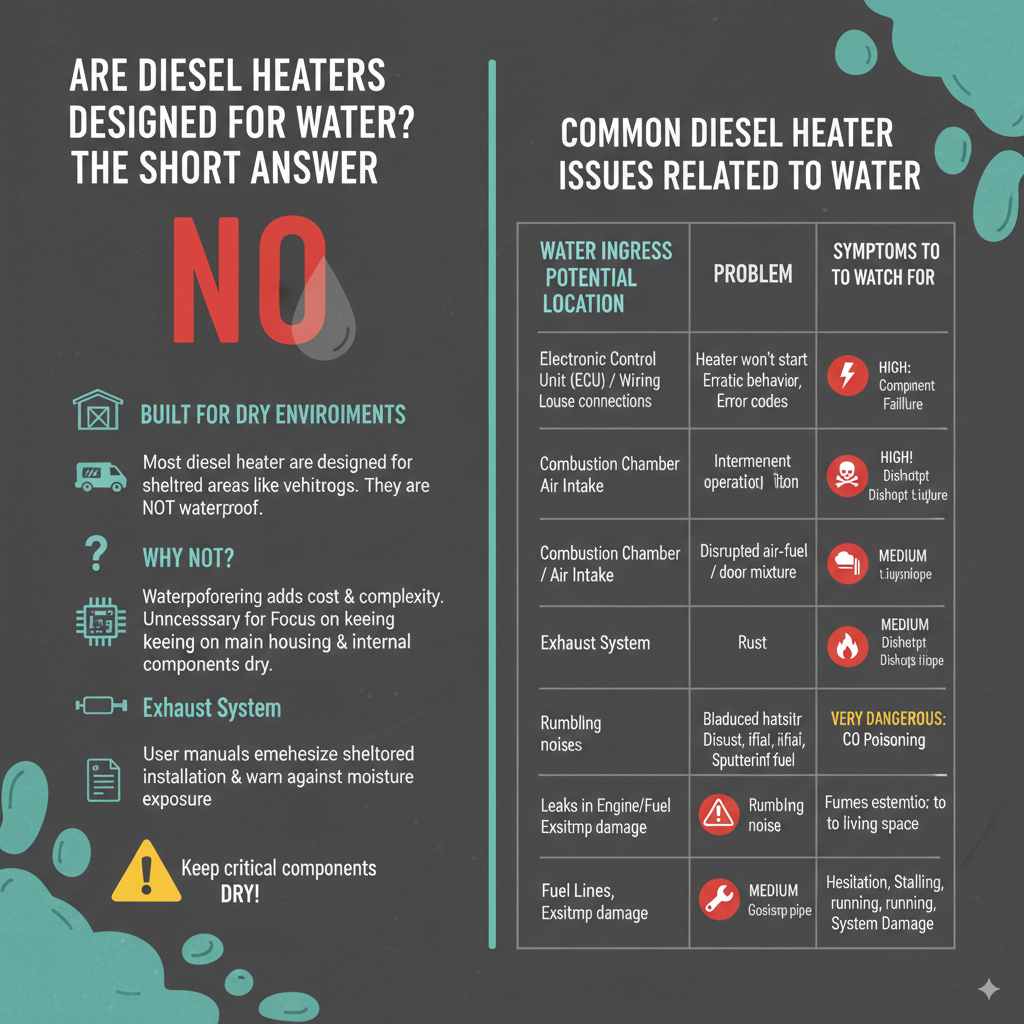
Are Diesel Heaters Designed for Water? The Short Answer
The straightforward answer is no, most diesel heaters are not designed to be waterproof. This doesn’t mean they’re fragile, but rather that they are built with specific operating conditions in mind. Manufacturers usually design these heaters for use in dry or relatively dry environments. They expect to be installed in places like the inside of a vehicle, a well-ventilated shed, or a garage where they are sheltered from direct rain and significant water exposure.
If you look at the user manuals for most common diesel heater brands, you’ll find instructions emphasizing installation in sheltered areas and warnings against exposing the unit to excessive moisture. This is simply good engineering practice; making every appliance fully waterproof adds significant cost and complexity, and it’s often unnecessary for the intended use. Your focus should be on keeping the main housing and critical internal components dry.

What “Waterproof” Actually Means for Heaters
When we talk about something being ‘waterproof’, it usually refers to a specific level of protection against water ingress. There are industry standards, like the Ingress Protection (IP) ratings, that classify how well a device is sealed against solids (like dust) and liquids (like water). An IP rating, such as IPX7, signifies that a device can withstand immersion in water up to a certain depth for a specific time. For example, IPX7 means protection against temporary immersion in water.
Most diesel heaters, especially those designed for DIY installation or common mobile applications, do not carry high IP ratings. They might have some components with a degree of water resistance, perhaps to protect against minor splashes or condensation. Their enclosures are typically designed to prevent dust and drafts rather than to create a watertight seal against submersion or heavy water spray. So, while your diesel heater won’t immediately fail if a tiny bit of water splashes on it, it’s certainly not submersible.
Why Water is a Hazard for Diesel Heaters
Let’s dive a little deeper into why keeping your diesel heater dry is so important. Water can cause several issues, ranging from minor performance hiccups to serious damage and safety concerns:
- Electrical Damage: At the heart of modern diesel heaters is an electronic control unit (ECU) that manages everything from ignition to fuel flow. Water is conductive, and any liquid getting onto the ECU or associated wiring can cause short circuits, corrosion, and component failure. This can render the heater useless and be expensive to repair.
- Combustion Problems: The heater relies on a precise mix of fuel and air for efficient combustion. If water enters the air intake, it can disrupt this mix, leading to incomplete burning, black smoke, and a significant loss of heating efficiency. In severe cases, it could even cause the flame to extinguish unexpectedly.
- Exhaust System Issues: While the exhaust is designed to vent hot gases and byproducts outside, water can pool in certain sections, especially if the exhaust pipe isn’t angled correctly. This can lead to corrosion within the exhaust system and potentially allow exhaust fumes to back up into the heated space, which is a serious safety hazard (carbon monoxide risk). For more information on combustion safety, the National Fire Protection Association (NFPA) provides valuable safety resources.
- Fuel Contamination: If water gets into the fuel tank or fuel lines, it can cause corrosion and blockages. Diesel and water don’t mix well, and water in the fuel can lead to poor engine performance, stalling, and damage to the fuel pump and injectors if your heater has them integrated.
- Corrosion and Rust: Metal components, especially those exposed to moisture over time, are prone to rust. This can weaken the heater’s structure, compromise seals, and lead to premature wear and tear.
Common Scenarios Where Water Exposure Is a Risk
Knowing where and how you plan to use your diesel heater is key to understanding its vulnerability to water. Here are some common scenarios where caution is needed:
- Outdoor Installations: If your heater is mounted externally on a food truck, caravan, or workshop, it’s more exposed. Rain, snowmelt, car washes, or even heavy dew can be a threat.
- Mobile Homes and RVs: While usually installed inside, RVs can experience leaks from roof seals, window seals, or plumbing. Moisture can also build up due to condensation, especially in less well-ventilated areas.
- Boats and Marine Use: Boats are inherently wet environments. While diesel heaters designed for marine use have better protection, standard units are highly risky. Saltwater spray is particularly damaging due to its corrosive nature.
- Workshops and Garages: These spaces can be damp, especially in older buildings or during wet seasons. Snow tracked in, leaks in the roof, or humidity can all contribute to moisture problems.
- Temporary Setups: If you’re setting up a heater in a tent, portable cabin, or under a temporary shelter, ensuring adequate protection from the elements is crucial.
Protecting Your Diesel Heater from Water: Practical Steps
So, if your diesel heater isn’t inherently waterproof, what can you do? The good news is that with a little planning and some simple protective measures, you can vastly improve its resilience and longevity. It’s all about creating a safe environment for it.
1. Strategic Installation Location
This is your first and most important line of defense. Always aim to install the main unit of your diesel heater in a dry, sheltered location.
- Inside a Vehicle/RV: Install it within the main cabin, under a seat, in a storage locker, or in a dedicated compartment that is sealed from external moisture.
- In a Workshop/Garage: Mount it on a wall or shelf, away from potential water drips from the roof or nearby plumbing. Ensure it’s not in a low-lying area where water might pool.
- Underneath/On the Side: If mounting externally on a vehicle or trailer, ensure it is positioned under an overhang or within a compartment that offers significant protection from rain and spray.
Referencing a reputable guide for vehicle installations, such as those provided by campervan conversion resources, can offer insights into best practices for component placement. While not directly about heaters, the principles of weatherproofing are similar.
2. Proper Exhaust and Air Intake Management
The exhaust pipe expels hot gases, but water can potentially enter if not managed correctly. The air intake needs to draw in air freely and without obstruction.
- Exhaust Angle: Ensure the exhaust pipe is angled downwards, especially at the tip, so that any rainwater or condensation runs off the pipe rather than entering the heater. Avoid installing the exhaust where it can become submerged in puddles.
- Exhaust Extension: If you need to extend the exhaust, use high-quality, heat-resistant piping and ensure all connections are secure and well-sealed to prevent leaks.
- Air Intake Placement: Position the air intake where it’s unlikely to suck in water. This might mean placing it higher up or within a shielded area.
3. Consider a Protective Cover or Enclosure
For heaters installed in exposed locations (like on the exterior of a vehicle or on a boat), a dedicated protective cover is a must.
- Custom-Made Covers: These can often be ordered or made from waterproof materials like heavy-duty vinyl or treated canvas. Ensure the cover allows for adequate ventilation to prevent overheating and doesn’t obstruct the exhaust.
- DIY Solutions: A simple sturdy plastic box or a marine-grade cover can offer good protection, provided it allows for proper airflow and exhaust.
Always ensure that any cover does not impede the crucial airflow needed for combustion or create a risk of trapping exhaust gases. Refer to resources like outdoor equipment suppliers for examples of robust, weatherproof materials.
4. Regular Maintenance and Checks
Consistent care is essential for spotting potential issues before they become major problems.
- Inspect Seals and Gaskets: Regularly check all seals around the heater housing, exhaust connections, and intake pipes for signs of wear or damage. Replace any that look cracked or degraded.
- Check for Corrosion: Look for any signs of rust or corrosion, especially around joins and fasteners, and address them promptly. A light coat of rust-inhibiting lubricant can help in damp environments.
- Clean Air Filters: A clogged air filter not only reduces efficiency but can also trap moisture. Keep it clean as per the manufacturer’s instructions.
- Drainage: If any part of the heater’s enclosure or mounting system could potentially collect water (unlikely for most units, but possible in custom setups), ensure there are small drainage holes to let any accumulated water escape.
5. Electrical Connection Protection
The wiring and electronic control unit are the most sensitive parts. Ensure these are always protected from moisture.
- Use Waterproof Connectors: When making any connections, use appropriate waterproof connectors or seal them with silicone sealant and heat shrink tubing.
- Secure Wiring Looms: Ensure all wiring is neatly routed, secured, and ideally run through protective conduit or grommets to prevent chafing and water ingress.
- Control Unit Placement: If the control unit or its wiring is external, ensure it is housed in a water-resistant junction box.
6. Fuel System Care
Water in the fuel can cause significant issues.
- Keep Fuel Tank Sealed: Ensure your main diesel tank is well-sealed.
- Use Fuel Additives: In very damp or cold environments, consider using a diesel anti-gel or water dispersant additive, following product instructions carefully. These can help prevent damage from moisture or cold temperatures.
Key Differences: Standard vs. Marine-Grade Diesel Heaters
It’s worth noting that some diesel heaters are specifically designed for marine applications and do have enhanced water resistance. These units often come with:
- More robust enclosures: Made from materials that resist saltwater corrosion and have tighter seals.
- Stainless steel components: To combat rust.
- Sealed electrical connections: Using marine-grade waterproof connectors.
- Specialized exhaust and air intake fittings: Designed to prevent water ingress in a marine environment.
If you are planning to use a diesel heater in an environment where significant water exposure is unavoidable, such as on a boat, investing in a marine-grade heater is highly recommended. Standard domestic or RV heaters simply aren’t built for those harsh conditions.
Table: Likelihood of Water Damage by Heater Type and Environment
To help you visualize the risks, here’s a breakdown:
| Heater Type | Environment | Risk of Water Damage | Actions Recommended |
|---|---|---|---|
| Standard Diesel Heater (e.g., for RVs, garages) | Indoors (sheltered garage, RV cabin) | Low (condensation, minor spills) | Occasional check for dampness. Ensure proper ventilation. |
| Outdoors (under overhang, protected vehicle mount) | Medium (occasional rain, splashes) | Install with downward-sloping exhaust. Consider a basic cover. Check seals regularly. | |
| Outdoors (exposed to direct rain/spray) | High | Not recommended without major protective measures (full enclosure, high-quality cover). Risk of electrical, combustion, and material damage. | |
| Marine-Grade Diesel Heater | Indoors (boat cabin) | Very Low | Standard maintenance. Designed for this. |
| Outdoors/Deck (exposed to sea spray) | Low | Regular cleaning to prevent salt buildup. Specific maintenance as per manufacturer. |
Table: Common Diesel Heater Issues Related to Water
Here’s a look at what can go wrong if water gets into your diesel heater and the symptoms to watch for:
| Water Ingress Location | Potential Problem | Symptoms to Watch For |
|---|---|---|
| Electronic Control Unit (ECU) / Wiring | Short circuits, corrosion | Heater won’t start, erratic behavior, error codes, no power, blown fuses. |
| Loose connections due to corrosion | Intermittent operation, complete failure. | |
| Combustion Chamber / Air Intake | Disrupted air-fuel mixture | Excessive black smoke, difficulty igniting, sputtering flame, smell of unburnt fuel, reduced heat output. |
| Rust forming on internal components | Similar symptoms to disrupted mixture, potentially more permanent damage if left unaddressed. | |
| Exhaust System | Pooling water, rust, blockages | Rumbling noises, reduced exhaust flow, potential for exhaust fumes to enter living space (very dangerous!). |
| Corrosion leading to leaks in the exhaust pipe | Similar to pooling water issues, potentially allowing fumes to escape into unintended areas. | |
| Fuel Lines/Tank | Water contamination, corrosion | Hesitation, stalling, rough running, potential fuel pump damage. |
Frequently Asked Questions (FAQs)
Q1: Can I leave my diesel heater on outside in the rain?
A1: It’s generally not a good idea to leave a standard diesel heater exposed to direct, heavy rain. While it might withstand a light drizzle for a short period, prolonged exposure can lead to water ingress into critical components like the electronics, leading to damage or failure. Always ensure it is adequately sheltered or fitted with a waterproof cover.
Q2: What kind of protection from water do RV diesel heaters usually have?
A2: RV diesel heaters are typically designed for installation inside the RV cabin, which protects them from direct weather. They are not usually waterproof themselves, but the installation location provides the protection. Manufacturers design them to handle potential interior condensation or minor spills, but not significant water intrusion from external sources unless the RV suffers a leak.