Are Diesel Heaters Safer Than Propane Indoors?
In most residential applications, propane heaters are generally considered safer for indoor use when operated and maintained correctly, primarily due to their cleaner burn and lower carbon monoxide output. However, diesel heaters can be a safe and efficient option, especially for workshops or off-grid living, with proper ventilation and safety precautions.
Choosing the right heater for your home or space can feel overwhelming. You want to stay warm and cozy, but safety is your top priority. Two popular choices are diesel heaters and propane heaters, and a common question is: “Are diesel heaters safer than propane?” This is a really important question for anyone looking to heat their space efficiently and, more importantly, safely. We’ll break down what makes each type tick, their safety features, and how to use them with complete peace of mind.
Understanding Diesel Heaters
Diesel heaters, often called “parking heaters” or “air heaters,” are incredibly popular in RVs, boats, workshops, and even some off-grid homes. They work by burning diesel fuel to heat air, which is then circulated into your living space. Unlike central heating systems that heat water, diesel heaters heat air directly.
How Diesel Heaters Work (The Simple Version)
Think of a diesel heater like a miniature, highly efficient engine dedicated just to making heat. Here’s a rundown of the basic process:
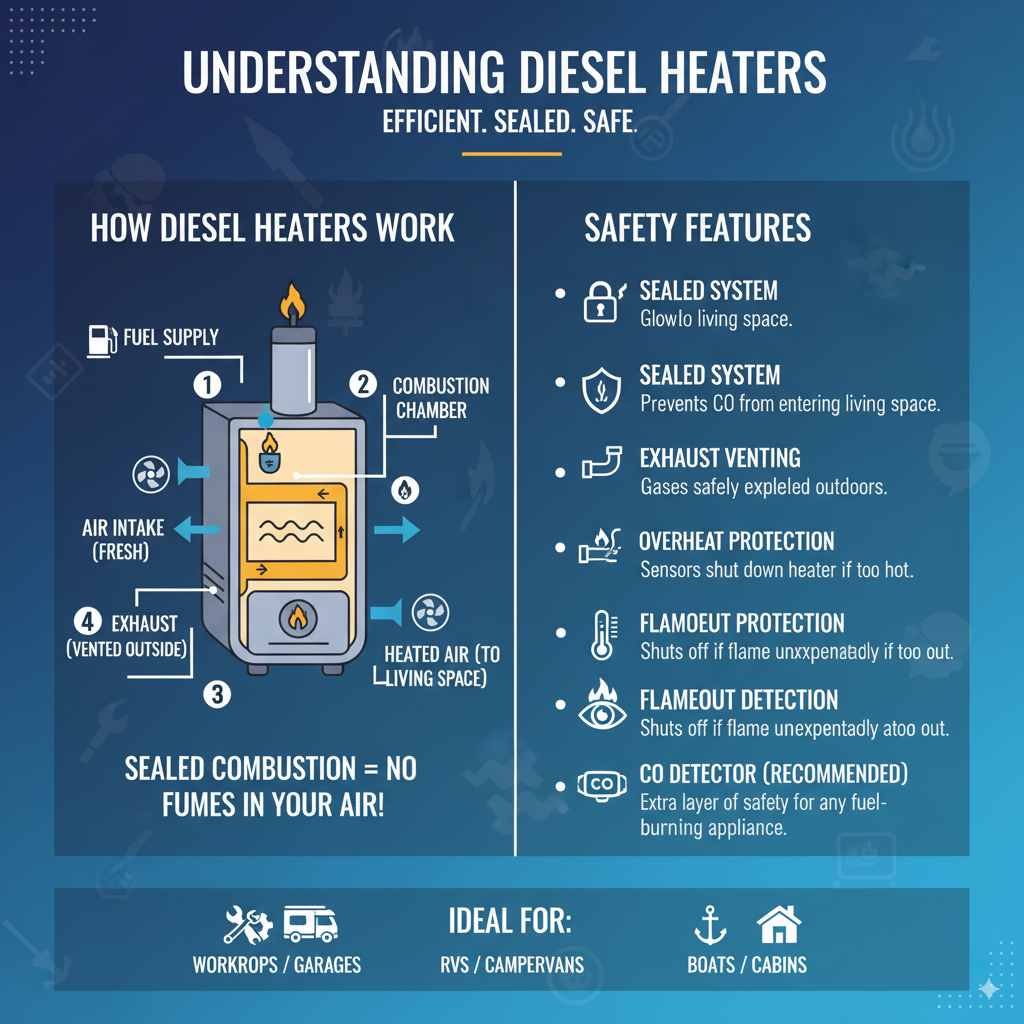
- Fuel Supply: A small fuel line draws diesel from a tank.
- Combustion Chamber: The diesel is sprayed into a specially designed chamber and ignited. A glow plug helps start the combustion, and then the burning is self-sustaining.
- Air Intake: Fresh outside air is drawn in.
- Heat Exchanger: The hot exhaust gases from combustion pass through a heat exchanger. This exchanger heats the fresh air that is drawn into your living space, without the exhaust fumes mixing with it.
- Exhaust: The spent exhaust fumes are safely vented outside your living area.
- Fan: A fan pushes the heated air into your room.
The key to their safety is that the combustion process is completely sealed from the air you breathe. The exhaust gases go out, and fresh air comes in to be heated and circulated.
Safety Features of Diesel Heaters
Modern diesel heaters come with several built-in safety mechanisms:
- Combustion Air System: This system is completely sealed, meaning exhaust byproducts like carbon monoxide (CO) cannot enter the heated space.
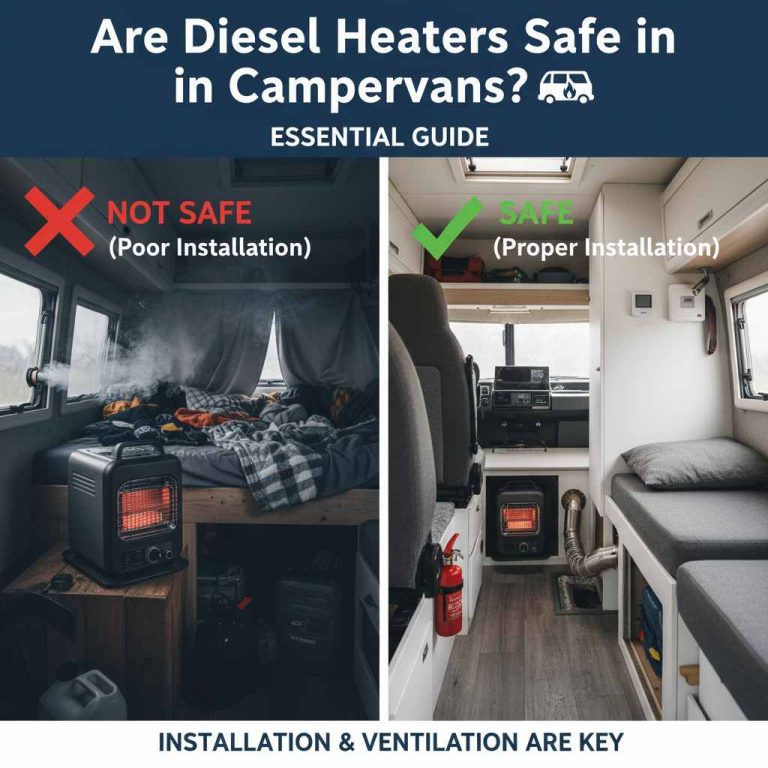
- Exhaust Venting: Proper installation is crucial, ensuring that all exhaust gases are expelled safely outdoors.
- Overheat Protection: Sensors will shut down the heater if it gets too hot.
- Flameout Detection: If the flame unexpectedly goes out, the heater will shut down safely.
- Carbon Monoxide Detectors: While the heaters are designed to prevent CO buildup, it’s always recommended to have a CO detector nearby, just like with any fuel-burning appliance.
When Are Diesel Heaters Ideal?
- Workshops and Garages: Excellent for keeping these spaces warm without needing propane tanks indoors.
- RVs, Campervans, and Toy Haulers: Very popular for their efficiency and ability to run off the vehicle’s diesel supply.
- Boats: A common heating solution where ventilation is good.
- Off-Grid Cabins: Especially if a diesel tank is already on-site.
Understanding Propane Heaters
Propane heaters are a household staple. You’ve likely seen them in patio setups, RVs, food trucks, or even as portable emergency heaters. Propane, a liquefied petroleum gas (LPG), is stored under pressure and vaporizes into a gas when released.
How Propane Heaters Work
Propane heaters vary greatly in design, from simple radiant heaters to more complex forced-air units. However, the core principle involves:
- Fuel Storage: Propane is stored in a tank (from small 1lb cylinders to large 20lb or bigger tanks).
- Gas Flow: When the valve is opened, propane flows through a regulator (to control pressure) and to the burner.
- Combustion: The propane mixes with air and is ignited at a burner assembly.
- Heat Output: The heat generated can be radiated directly, used to heat air that’s blown out (forced air), or used to heat water.
- Exhaust/Byproducts: Depending on the heater type, combustion byproducts, including carbon monoxide and water vapor, are released.
Types of Propane Heaters and Their Safety
It’s important to distinguish between types of propane heaters because their safety profiles differ significantly:
1. Unvented Propane Heaters:
- These are designed to release their combustion byproducts directly into the inside living space.
- They are highly efficient in terms of heat transfer (nearly 100% of the heat stays inside).
- Crucial Safety Note: Because they release CO and reduce oxygen inside, they MUST have an oxygen depletion sensor (ODS) and are only safe for intermittent use in well-ventilated areas or as emergency, short-term heat with open windows/doors. They are often forbidden for continuous use in RVs or enclosed spaces by manufacturers and insurance.
- Examples: Small portable cabinet heaters (Mr. Heater Buddy type), some older indoor space heaters.
2. Vented Propane Heaters:
- These heaters have a sealed combustion chamber and an exhaust vent that directs byproducts (including CO and water vapor) outside the living space.
- They are much safer for continuous indoor use than unvented types.
- Common Types: Direct-vent wall furnaces, some propane fireplaces, and tankless propane water heaters.
- Installation: Require a proper vent pipe leading outside.
3. Propane Patio Heaters:
- Specifically designed for outdoor use, often in open-air spaces like patios or decks.
- They are not designed or safe for enclosed indoors.
Safety Features of Propane Heaters
Reputable propane heaters typically include:
- Flame Lock: Shuts off gas if the pilot light or main burner goes out.
- Oxygen Depletion Sensor (ODS): A critical safety device found on unvented heaters that shuts off the gas if the oxygen level in the air drops below a safe threshold.
- Tip-over Switch: Shuts off the heater if it’s accidentally knocked over.
- Regulators: Ensure proper gas pressure for safe operation.
Direct Comparison: Diesel vs. Propane Safety
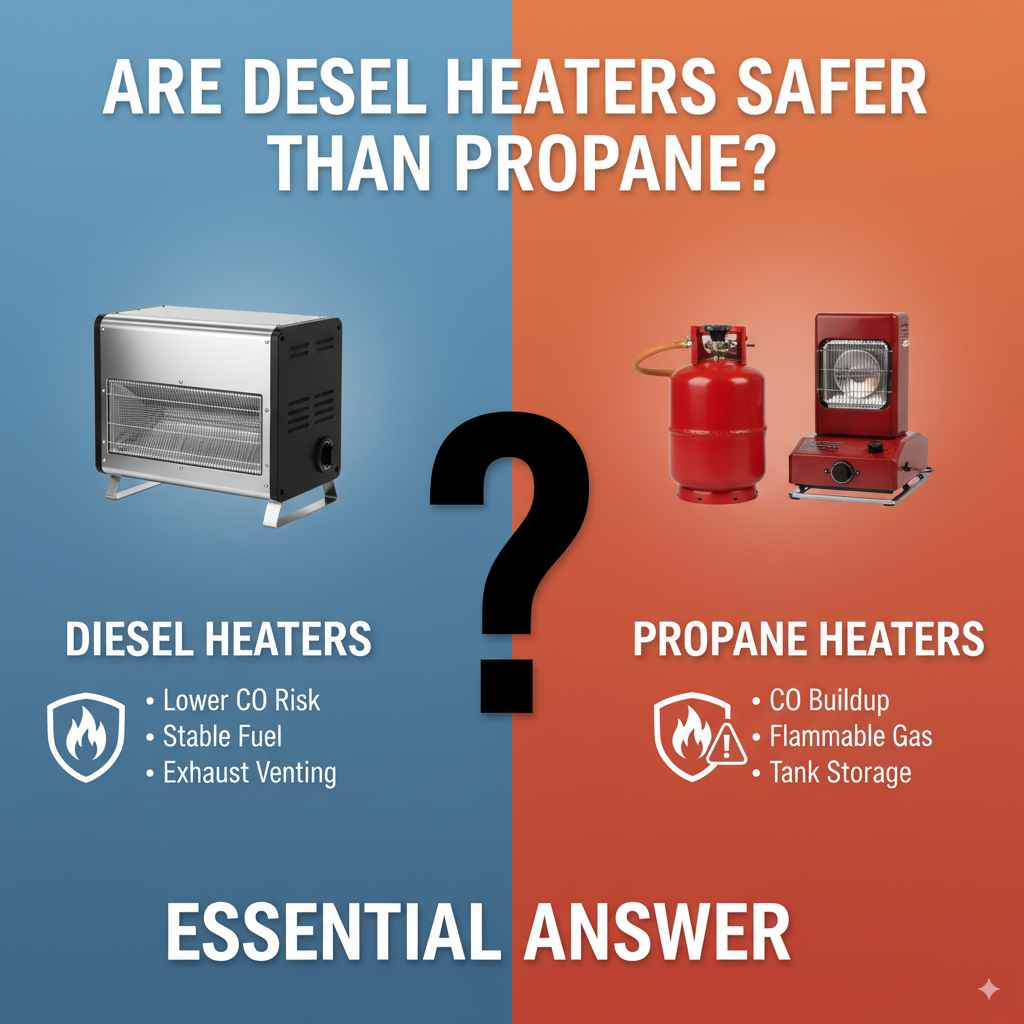
When we ask, “Are diesel heaters safer than propane?” the real answer depends on the specific type of propane heater and how each is used. Let’s compare them head-to-head for common scenarios.
Indoor Living Spaces (Homes, RVs):
For continuous indoor heating in a home or RV, a properly installed and vented propane heater or a properly installed diesel heater is generally safe. However, the common understanding favors propane for its typical cleaner burn indoors when vented equivalents are correctly installed.
- Diesel: Generally very safe for internal use if they are modern, sealed-combustion diesel air heaters (like those found in RVs) with their exhaust and air intake systems securely routed outside. The risk comes from improper installation where exhaust could leak back in, or if a unit is damaged.
- Propane: Vented propane heaters (like direct-vent wall furnaces or RV furnaces) are also very safe because they seal combustion and vent outside. However, unvented propane heaters, particularly the portable “buddy” heaters, are the main concern. While convenient, they consume indoor oxygen and release CO, making them unsuitable for continuous indoor use without significant attention to ventilation and CO monitoring.
Key Factor: Venting. A heated space is only as safe as its venting for combustion byproducts. Both diesel and propane heaters are safest when their combustion process is entirely separate from the air you breathe.
Workshops, Garages, and Non-Living Areas:
In these types of spaces, both can be viable options, but diesel often has an edge due to its fuel source.
- Diesel: A popular choice. You can easily connect a diesel heater to a dedicated tank or even a larger vehicle’s tank, providing heat without needing to store multiple propane cylinders in the workshop. The sealed combustion is ideal for these environments.
- Propane: Can be used, but you’ll need to manage propane tanks. It’s essential to ensure proper ventilation and have appropriate fire suppression measures in place, as with any fuel-burning appliance. Small, unvented propane heaters are not recommended for extended use in these semi-enclosed spaces due to CO buildup.
Portability and Ease of Use:
- Diesel: Often installed as permanent fixtures in RVs or vehicles but portable diesel air heaters are available. Refueling often means siphoning from a larger diesel supply.
- Propane: Portable propane heaters (like the Mr. Heater Buddy) are incredibly popular for their ease of use and portability. Swapping out small 1lb cylinders or connecting to a 20lb tank is straightforward.
Fuel Efficiency and Cost:
This isn’t strictly a safety factor, but it influences operational choices:
- Diesel: Diesel fuel is often cheaper per gallon/liter than propane. Diesel heaters are also known for being very fuel-efficient, meaning they can run for long periods on a small amount of fuel.
- Propane: Propane prices can fluctuate. The efficiency of propane heaters varies widely by model.
Emissions (Carbon Monoxide – CO):
This is a critical safety concern.
- Diesel: When burned cleanly, diesel combustion produces CO. However, modern, well-maintained diesel heaters with proper venting expel these fumes outside, minimizing indoor CO risk. Incomplete combustion from poor maintenance or faulty units can increase CO output.
- Propane: Propane burns more cleanly than diesel in ideal conditions, producing less soot. However, a significant risk with unvented propane heaters is direct CO emission into the living space. Vented propane heaters, like diesel, safely exhaust CO outdoors.
According to the U.S. Environmental Protection Agency (EPA), carbon monoxide is a colorless, odorless gas that can be deadly. Proper venting and CO detectors are essential for any fuel-burning appliance.
Table: Safety Comparison Summary
Here’s a quick look at how they stack up in common scenarios:
| Feature/Scenario | Diesel Heaters | Propane Heaters (Vented) | Propane Heaters (Unvented) |
|---|---|---|---|
| Indoor Living (RVs, Homes) | Safe with proper outdoor venting & sealed combustion. | Very Safe with proper outdoor venting. | Risky for continuous use due to CO/oxygen depletion. Intermittent use with ventilation ONLY. |
| Workshops/Garages | Excellent, especially with standalone fuel tank. | Good alternative, requires managing tanks. | Not recommended for extended indoor use. |
| Outdoor Use (Patios) | N/A (typically designed for enclosed spaces). | Designed for outdoor use, but often large & stationary (e.g., patio heaters). | Designed for outdoor use (e.g., portable patio heaters). |
| Carbon Monoxide Risk (Indoor) | Low with proper installation & maintenance. | Very Low with proper installation & maintenance. | High if not properly ventilated. |
| Oxygen Depletion Risk (Indoor) | Very Low (draws external air for combustion). | Very Low (draws external air for combustion). | High if not properly ventilated. |
| Fuel Storage Safety | Diesel is flammable liquid. Requires secure tank. | Propane tanks under pressure. Manage leaks & upright storage. | Propane tanks under pressure. Manage leaks & upright storage. |
Essential Safety Practices for ANY Fuel-Burning Heater
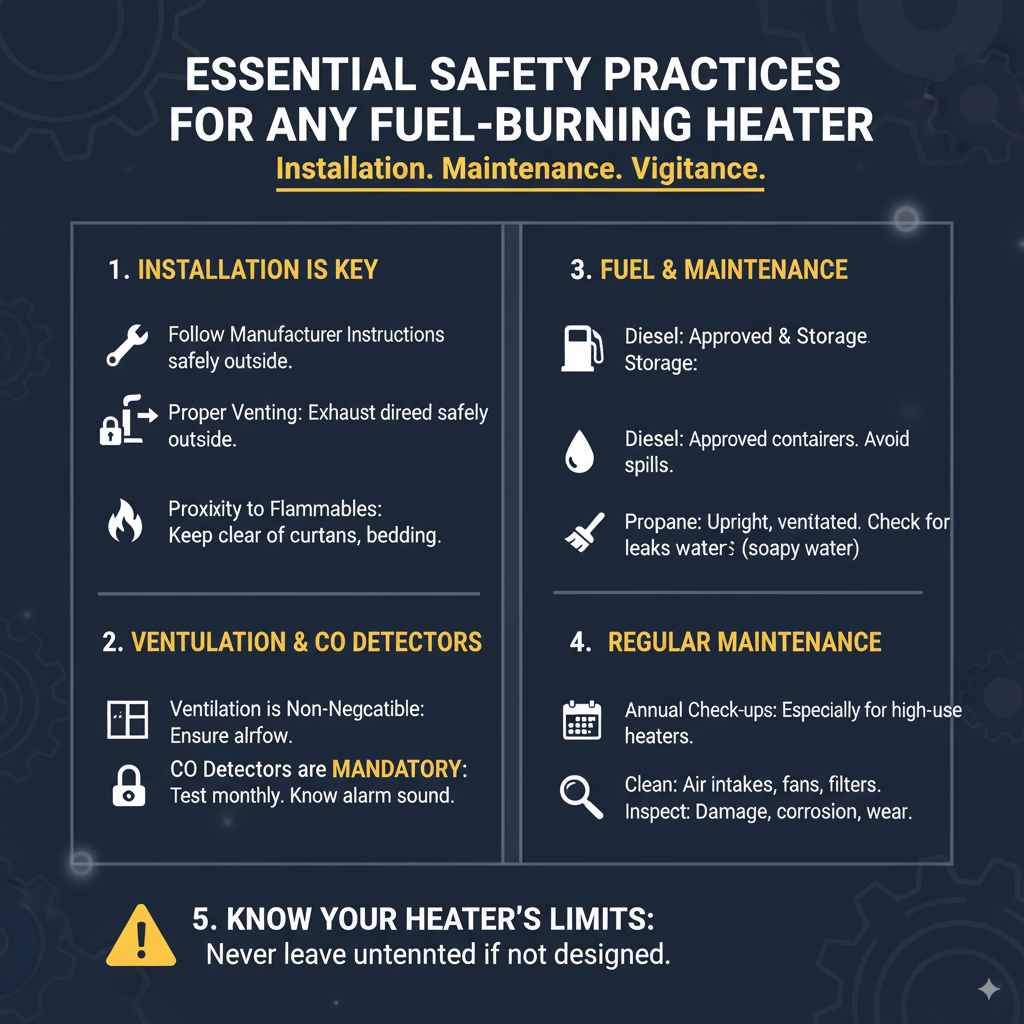
The make and model are only part of the safety equation. How you install, use, and maintain your heater is paramount. These rules apply whether you’re using diesel or propane:
1. Installation is Key:
- Follow Manufacturer Instructions: This cannot be stressed enough. Every heater is different.
- Proper Venting: Ensure all exhaust is directed safely outside. Check for leaks or blockages in vent pipes. For RVs and vehicles, ensure the exhaust outlet is clear and at least a safe distance from air intakes or living areas. Refer to resources like RV Industry Association guidelines for vehicle installations.
- Secure Mounting: Heaters should be securely mounted to prevent them from falling over.
- Proximity to Flammables: Keep all heaters a safe distance from curtains, bedding, paper, and other combustible materials. Check your manual for specific clearances.
2. Ventilation is Non-Negotiable:
- Even with vented heaters, some minimal airflow can be beneficial.
- For unvented propane heaters, opening a window or door slightly is mandatory.
- Ensure any air intakes on diesel or vented propane heaters are not blocked.
3. Carbon Monoxide Detectors are MANDATORY:
- Install CO detectors that are specifically designed for the environment (e.g., RV-rated, home-rated).
- Test them regularly (monthly is good practice).
- Replace batteries as recommended by the manufacturer, or annually if using sealed units.
- Know the sound of your CO alarm and what to do if it sounds (evacuate immediately, call emergency services from outside).
4. Fuel Handling and Storage:
- Diesel: Store diesel fuel in approved containers. Avoid overfilling tanks or spilling fuel, as diesel fumes are flammable.
- Propane: Store propane tanks upright in a well-ventilated area, away from ignition sources. Turn valves off when not in use. Inspect hoses and connections for leaks regularly using soapy water (bubbles indicate a leak).
5. Regular Maintenance:
- Schedule annual check-ups for high-use heaters, especially if you are not comfortable with the internal workings.
- Clean off dust and debris from air intakes, fans, and burners.
- Inspect for any signs of damage, corrosion, or wear.
- For diesel heaters, ensure the fuel filter is clean or replaced as recommended.
6. Know Your Heater’s Limits:
- Do not use a heater designed for outdoor use inside.
- Understand whether your heater is intended for continuous or intermittent use.
- Never leave a heater running unattended if it’s not designed for that purpose.
Frequently Asked Questions (FAQ)
Q1: Can I use a diesel heater inside my house?
A: Typically, no. Most diesel heaters described here are designed as air heaters for vehicles, RVs, or workshops. They require an external exhaust. Central heating systems are designed for whole-house heating. If you’re considering a diesel appliance for home heating, ensure it’s specifically designed and approved for indoor domestic use, with a robust and safe venting system.
Q2: Are portable propane heaters safe to use overnight in an RV?
A: This depends heavily on the type. Unvented portable propane heaters (like a Mr. Heater Buddy) are generally NOT recommended for overnight use, even with ventilation, due to the risk of oxygen depletion and CO buildup. Dedicated RV furnaces (which are vented propane heaters) are designed for safe operation in RVs, including overnight, as they seal the combustion and vent outside.
Q3: What’s the biggest safety risk with diesel heaters?
A: The biggest risk is improper installation leading to exhaust leaks into the heated space, which can cause carbon monoxide poisoning. Always ensure the exhaust pipe is correctly fitted, sealed, and routed outdoors, and that the unit is not damaged.
Q4: How often should I replace my carbon monoxide detector battery?
A: Most manufacturers recommend replacing batteries annually, even if they are still working. Some units will chirp to indicate a low battery. For plug-in models with battery backup, test the batteries monthly.