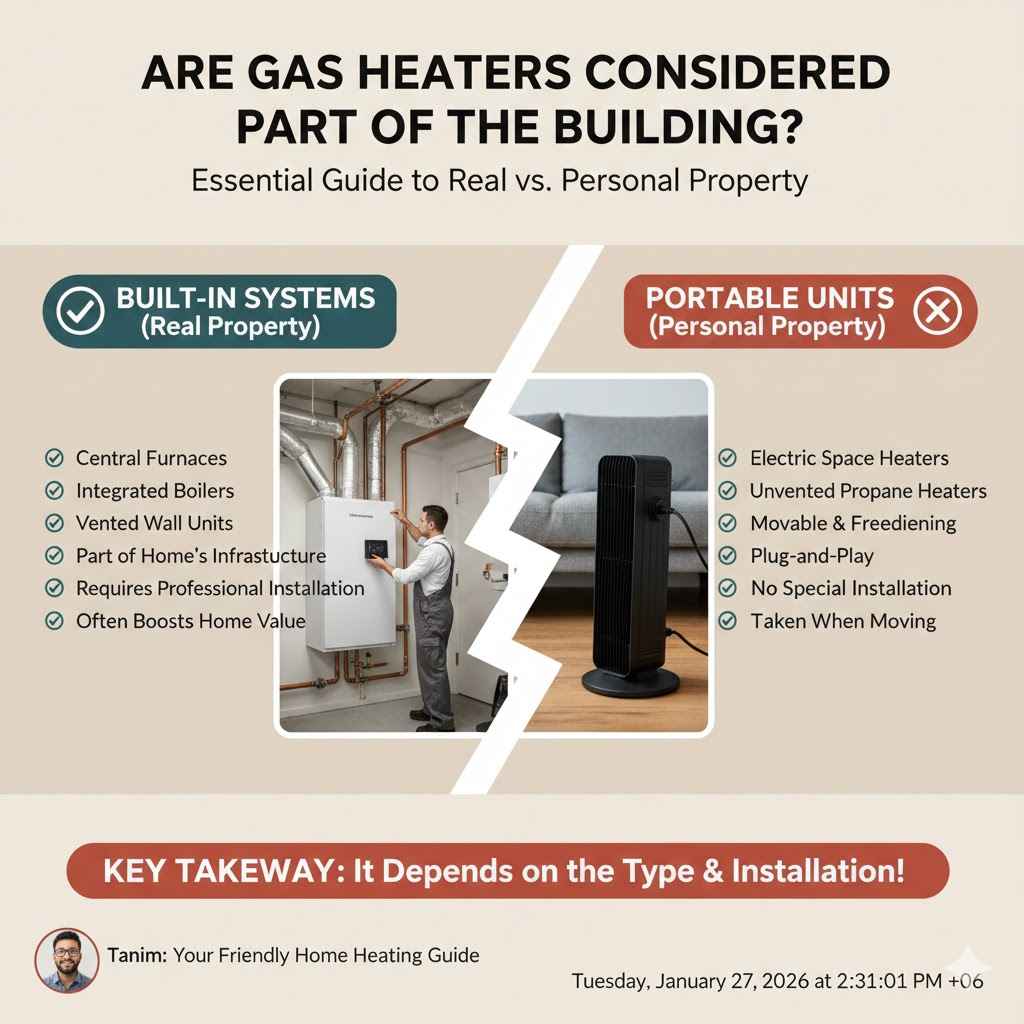
Are Gas Heaters Considered Part of the Building?
Determining if a gas heater is considered part of a building depends on its permanence. Generally, a gas heater is part of the building if it’s permanently attached and intended to be a lasting fixture, like a central furnace. Portable units, however, are typically personal property. This distinction is vital for buying, selling, renting, or insuring a home.
Ever wondered if that gas heater is yours to take when you move, or if it stays with the house? It’s a common question that can cause confusion for homeowners, buyers, sellers, and renters alike. The line between what’s “part of the building” and what’s personal property isn’t always clear, especially with heating systems. Understanding this helps you avoid surprises, whether you’re signing a lease, closing a sale, or just planning your home improvements. Let’s break down this puzzle together and make sure you know exactly where your gas heater stands.
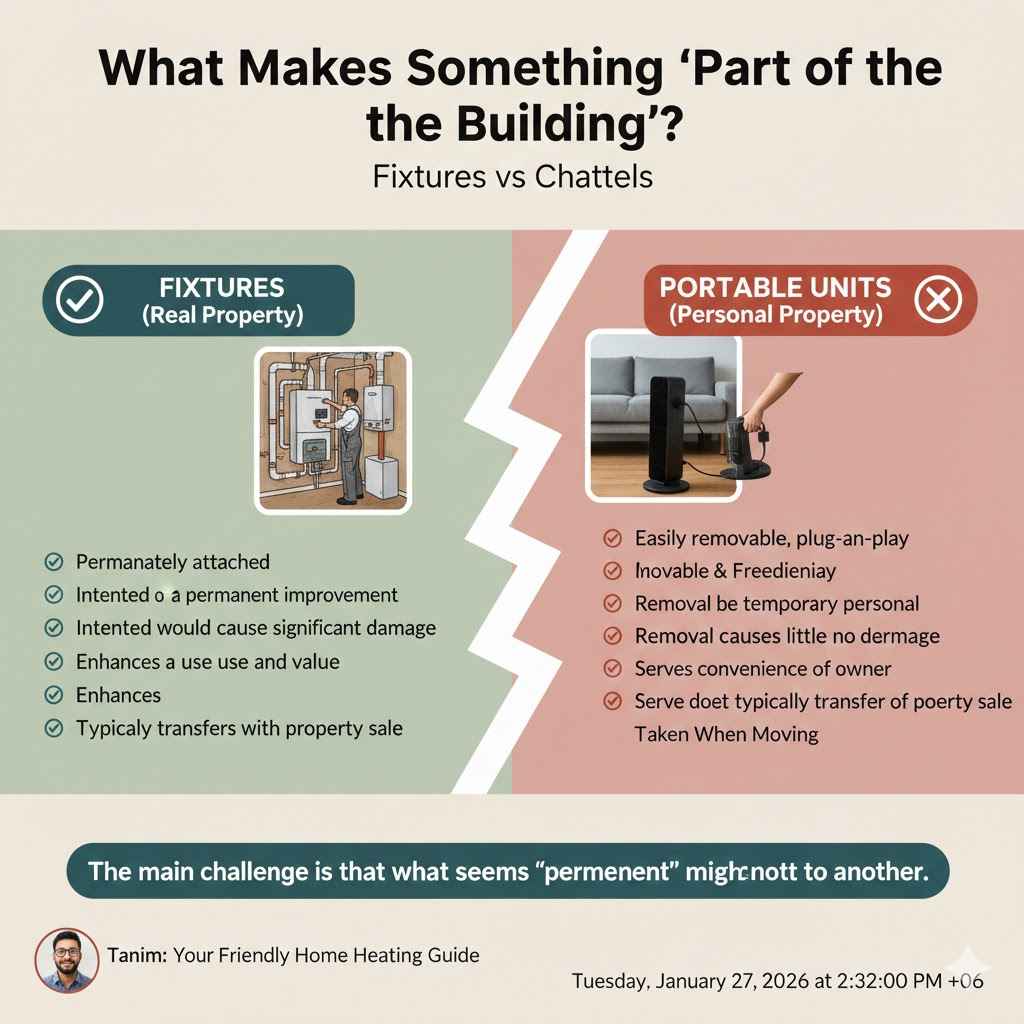
What Makes Something “Part of the Building”? Fixtures vs. Chattels
To figure out if a gas heater is part of a building, we need to understand two key terms: “fixtures” and “chattels.” These legal terms help us decide if an item belongs to the property itself or to the person who owns it.
Fixtures: These are items that were once personal property but have been attached to a building in a permanent way, with the intention that they become a lasting part of the property. Think of them as things that become “stuck” to the house. When you sell the house, fixtures usually go with it.
Chattels (or Personal Property): These are items that are not permanently attached to the building and can be easily removed without causing damage. They are considered movable and belong to the person, not the property. When you sell or move, chattels go with you.
The main challenge is that what seems “permanent” to one person might not to another. Courts often look at several factors to decide if something is a fixture or a chattel. This helps keep things fair and clear for everyone involved.
Here’s a simple table to show the difference:
| Feature | Fixture | Chattel (Personal Property) |
|---|---|---|
| Attachment | Permanently attached, integrated into the building structure (e.g., bolted, plumbed, wired). | Easily removable, sits on its own weight, plug-and-play. |
| Intent | Intended to be a permanent improvement to the property. | Intended to be temporary or personal; can be taken away. |
| Damage upon Removal | Removal would cause significant damage to the property. | Removal causes little to no damage to the property. |
| Purpose | Enhances the use and value of the property itself. | Serves the convenience or personal preference of the owner. |
| Transfer | Typically transfers with the property sale. | Does not typically transfer with the property sale unless specified. |
Types of Gas Heaters: Fixed vs. Portable
Gas heaters come in many shapes and sizes, and how they are installed often hints at whether they are considered part of the building. Let’s look at the main types:
Fixed Gas Heaters: These are built into the home’s structure and are designed for long-term use in a specific location. Examples include:
Central Gas Furnaces: These are the heart of many home heating systems, typically located in a basement, utility closet, or attic. They are connected to a network of ducts that distribute warm air throughout the house.
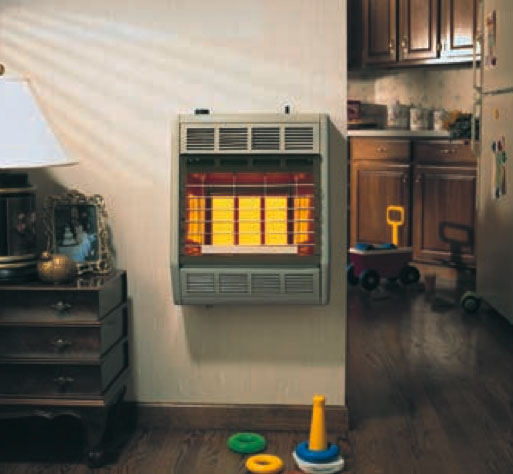
Wall-Mounted Gas Heaters: Often found in older homes or specific rooms, these heaters are permanently installed into a wall, requiring gas lines and venting through the wall.
Gas Fireplace Inserts: These are installed into existing fireplace openings, connecting to a gas line and venting through the chimney. They are designed to stay put.
Boilers (for hydronic heating): While not strictly “heaters” in the traditional sense, gas boilers that heat water for radiators or radiant floor systems are definitely fixed installations.
Portable Gas Heaters: These units are designed to be moved from room to room or stored away when not in use. They don’t have permanent connections to the home’s gas lines or venting systems. Examples include:
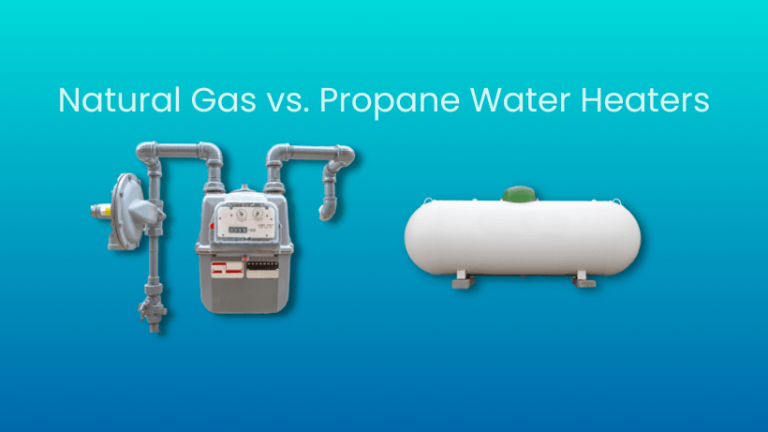
Vent-Free Portable Gas Heaters: These units run on small propane tanks or connect to a natural gas line with a quick-disconnect hose. They are not permanently fixed and can be unplugged or disconnected and moved.
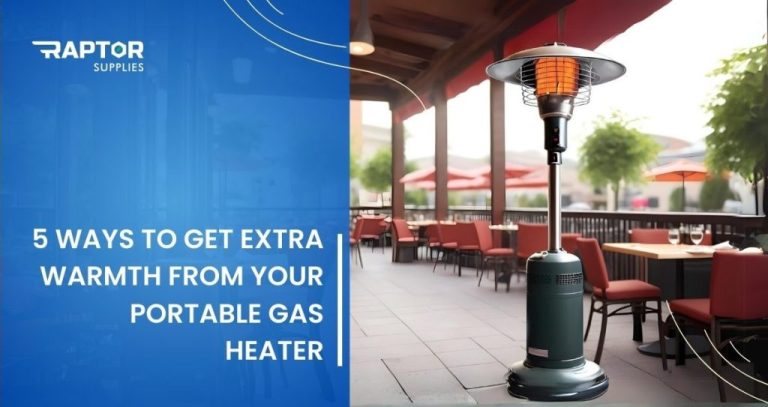
Outdoor Patio Heaters: Often freestanding and powered by propane tanks, these are clearly designed for mobility and outdoor use.
The type of gas heater you have is the first big clue in deciding if it’s a fixture or a chattel. Fixed systems are almost always considered part of the building, while portable ones usually are not.
When is a Gas Heater a “Fixture”? Key Factors
While the type of heater gives us a strong hint, determining if a gas heater is truly a fixture involves looking at several factors. These are often what courts consider when there’s a dispute.
Attachment Method (Permanence)
How the heater is connected to the building is crucial. Is it just plugged in or sitting on the floor, or is it permanently integrated?
Strong Indicator of Fixture: If the heater is hard-wired into the electrical system, directly plumbed into the gas lines of the house, bolted to the floor or wall, or connected to permanent venting systems (like a chimney or dedicated exhaust vent). Removing it would typically require tools, professional help, and might leave holes or damage.
Strong Indicator of Chattel: If the heater uses a standard electrical outlet, connects to a portable propane tank, or uses a quick-disconnect gas hose. If it simply rests on the floor or uses non-permanent mounts, it’s likely a chattel.
For instance, a central furnace is clearly plumbed into gas lines and ductwork. A wall-mounted heater is often screwed into studs and has a dedicated gas line running to it. These are very permanent.
Intention of the Installer
This is often the most important factor. What was the purpose behind installing the heater? Was it meant to be a permanent improvement to the property, or was it just for temporary convenience?
Fixture Intent: If the heater was installed by a licensed contractor as part of a home renovation or new construction, or if it’s the primary heating system for the entire home, the intent was likely to enhance the property permanently. For example, a homeowner replacing an old furnace with a new, more efficient one intends for it to be a permanent improvement to their property’s value and functionality.
Chattel Intent: If a tenant brings in a portable gas heater to supplement their heating, or if a homeowner buys a small unit for occasional use in a detached garage, the intent is usually temporary and for personal use.
Even if an item is not strongly attached, if the intent was for it to be a permanent part of the property, it might still be considered a fixture. This intent can be shown through contracts, installation records, or even the common understanding of such items in a home.
Adaptation to the Building
Does the heater uniquely fit or modify the space where it’s installed? Has the building been altered specifically to accommodate the heater?
Fixture Adaptation: If the heater is custom-built into a space, requires special venting cutouts, or if the house’s ductwork or gas lines were specifically designed or modified for that particular heater. For example, a gas fireplace insert perfectly fitted into a custom-built hearth is adapted to the building.
Chattel Adaptation: If the heater simply occupies an open space and doesn’t require any structural changes or unique adaptations to the room. A portable heater that you just roll into a room and plug in doesn’t adapt to the building.
Impact of Removal
What kind of damage or change would occur if the gas heater were removed?
Fixture Impact: If removing the heater would cause significant structural damage to the walls, floors, or utility connections, or if it would render a part of the building unusable or incomplete (e.g., leaving a gaping hole in a wall or disconnected gas pipes). Removing a central furnace would leave the house without a primary heating system and a large empty space with exposed ducts and pipes.
Chattel Impact: If the heater can be removed without causing any lasting damage, leaving only a standard wall outlet or no trace at all. Taking a portable heater away leaves no impact on the building itself.
These four factors work together to provide a clear picture. No single factor is usually enough on its own; they are weighed collectively.
Common Scenarios: What About Your Heater?
Let’s look at specific types of gas heaters and how these factors typically apply, to give you a clearer idea for common situations.
Central Gas Furnaces
These are the workhorses of home heating for many. They are typically installed in a dedicated utility space, basement, or attic. They are permanently plumbed into the home’s natural gas supply, hard-wired into the electrical system, and connected to extensive ductwork that distributes heat throughout the entire house. Removal would involve disconnecting gas lines, electrical wiring, and ductwork, leaving a significant void and rendering the home without its primary heating source.
- Verdict: Almost always considered a fixture.
Wall-Mounted Gas Heaters (e.g., Gas Wall Furnaces)
These heaters are installed directly into a wall cavity, often requiring an opening cut into the wall for the unit itself and for venting. They are connected to the home’s gas lines and usually vented directly outside through the wall. They are designed to heat a specific room or zone and are a permanent part of that room’s setup. Removal would leave a large hole in the wall and disconnected gas pipes.
- Verdict: Typically considered a fixture.
Gas Fireplace Inserts
A gas fireplace insert is a self-contained unit installed within an existing fireplace opening. It connects to the home’s gas line and typically vents through the chimney. While you might slide it into a prepared opening, it’s generally secured and integrated with the chimney system. It significantly alters the function of the fireplace. Removing it would leave an altered fireplace opening and disconnected gas lines.
- Verdict: Generally considered a fixture.
Portable Gas Heaters
These are designed for flexibility. They might run on propane tanks or connect to a gas outlet with a flexible, quick-disconnect hose. They are not bolted down, hard-wired, or permanently plumbed. You can pick them up and move them to another room, or store them away. Their removal causes no damage to the property.
- Verdict: Almost always considered a chattel (personal property).
Outdoor Gas Heaters (Patio Heaters)
Most outdoor patio heaters are freestanding units that connect to a portable propane tank. They are designed for easy setup and movement, often on wheels. They do not connect to the home’s utility lines or structure. Even if large, their mobility defines them.
- Verdict: Typically considered a chattel (personal property).
Here’s a summary table for quick reference:
| Gas Heater Type | Common Classification | Key Reasons |
|---|---|---|
| Central Gas Furnace | Fixture | Permanently plumbed, wired, connected to ductwork; primary heating; removal causes significant void/damage. |
| Wall-Mounted Gas Heater | Fixture | Permanently installed into wall, connected to gas line & vent; removal leaves wall damage. |
| Gas Fireplace Insert | Fixture | Integrated into fireplace, connected to gas line & chimney; intended as permanent upgrade. |
| Portable Gas Heater | Chattel | Mobile, quick-disconnect gas/electric, no permanent attachment; removal causes no damage. |
| Outdoor Patio Heater | Chattel | Mobile, often propane-powered, freestanding; no connection to home utilities. |
Why This Matters: Practical Implications
Understanding whether a gas heater is a fixture or a chattel isn’t just a fun legal exercise; it has real, practical consequences for homeowners and renters.
Real Estate Transactions (Buying/Selling)
This is where the distinction matters most. When you buy or sell a home, everything that’s considered a “fixture” is usually included in the sale price. “Chattels,” however, are assumed to be removed by the seller unless explicitly stated otherwise in the purchase agreement.
Seller’s View: If you’re selling, you want to be clear about what you’re leaving behind. If you remove a central furnace (a clear fixture), you could face legal trouble. If you want to take a wall-mounted heater you love, you must specify it in the sales contract. Otherwise, the buyer expects it to stay.
Buyer’s View: As a buyer, you expect all fixtures, including permanent heating systems, to remain with the property. If you see a gas fireplace insert during a viewing, you assume it’s included. Always check the purchase agreement to ensure specific items you want are listed.
Disputes often arise when an item’s status isn’t clear. To avoid misunderstandings, always clarify ambiguous items in writing during negotiations.
Rental Agreements
For renters, the rules are slightly different but the fixture/chattel concept still applies.
Tenant’s Rights: Any heating system provided by the landlord as part of the rental unit (like a central furnace or wall heater) is a fixture and must remain. If you bring a portable gas heater, it’s your personal property, and you can take it when you move out.
Landlord’s Property: Landlords are generally responsible for maintaining and repairing fixtures. If a fixture breaks, it’s their job to fix it. If you install a new heater and intend for it to be a permanent improvement, it might become the landlord’s property. Always check your lease agreement and discuss any permanent installations with your landlord first.
Insurance Coverage
Your homeowner’s or renter’s insurance policy often differentiates between what’s covered as part of the “dwelling” (fixtures) and “personal property” (chattels).
Homeowner’s Insurance: Covers fixtures as part of the structure. If your central gas furnace is damaged in a fire, your homeowner’s policy would typically cover its repair or replacement.
Renter’s Insurance: Primarily covers your personal property. Your portable gas heater would be covered under your personal property limits. The landlord’s insurance covers the building’s fixtures.
Understanding this distinction helps ensure you have appropriate coverage for all your heating equipment. It’s wise to review your policy or speak with your insurance provider to clarify what exactly is covered.
Property Taxes
In some areas, fixtures can influence your property tax assessment. Permanent improvements that add value to your home (like a new, high-efficiency central heating system) can increase the assessed value of your property, and thus your property taxes. Chattels, being personal property, are not usually factored into real estate assessments.
Installation & Removal Responsibility
Who pays for what, and who can remove what?
Fixtures: For homeowners, installation and maintenance are your responsibility. When selling, you generally cannot remove fixtures without buyer consent. If a tenant installs a fixture without permission, they might not be able to remove it upon moving out.
Chattels: You are responsible for your own portable heaters, including their safe operation and maintenance. You can remove them freely. If you’re installing a gas line to a quick-disconnect for a portable heater, ensure it’s done professionally and safely, but the heater itself remains yours.
Tips for Homeowners and Renters
Navigating the fixture vs. chattel issue can be straightforward if you take a few proactive steps.
Document Everything
Whether you’re buying, selling, or renting, good documentation is your best friend. Take photos, keep receipts for installations, and make sure any agreements about specific items are in writing.
For Sellers: If you plan to take an item that might be considered a fixture (e.g., a high-end gas wall heater), state it clearly in the listing and the sales contract. Conversely, if you are leaving something that might be ambiguous, also note it.
For Buyers: If there’s an item you really want (e.g., a specific gas patio heater), make sure it’s itemized and included in the purchase agreement.
For Renters: Before moving in, take photos or videos of the property and its existing appliances, including heating units. If you bring your own heater, keep proof of purchase. If you install anything semi-permanently (with landlord permission), get that agreement in writing.
Read Your Lease or Purchase Agreement
These documents are legally binding and often include specific clauses about fixtures and personal property. Don’t skim these sections! They often list items that are included or excluded from a sale or rental.
Lease Agreements: Look for clauses about modifications, appliances, and what items are provided by the landlord. If you’re thinking of installing anything permanent, get landlord approval in writing.
Purchase Agreements: Standard real estate contracts often have sections for personal property that will be included or excluded from the sale. Always fill these out carefully for any items that might be unclear, like outdoor heaters or specialized indoor units.
Consult Professionals
When in doubt, get expert advice.
Real Estate Agent: Your agent can guide you on local customs and standard practices for what is considered a fixture in your market. They can also help ensure clear language in your contracts.
Lawyer: For complex situations or significant investments, a real estate lawyer can provide definitive legal advice and review your documents to protect your interests.
Home Inspector: A home inspector can identify permanent installations versus portable units, which can be useful during a home purchase.
Understanding Local Laws and Regulations
It’s important to remember that while the general principles of fixtures vs. chattels are common, specific interpretations can vary by state, province, or even local municipality. Building codes, property laws, and court precedents can influence these definitions. For example, some areas might have specific regulations regarding how certain appliances must be installed, which could influence their classification.
For detailed legal guidance on property law in your specific area, you can often consult government resources or reputable legal aid sites. For instance, the Legal Information Institute at Cornell Law School provides general definitions of legal terms like “fixture.” Always check with local authorities or a legal professional for advice tailored to your exact location and situation.

FAQ: Are Gas Heaters Part of the Building?
Q1: What’s the biggest difference between a “fixture” and “chattel” for a gas heater?
The biggest difference is permanence. A fixture is permanently attached and intended to be part of the building, like a central furnace. A chattel (personal property) is easily movable and not permanently attached, such as a portable space heater.
Q2: If I bought a gas wall heater and installed it myself, is it a fixture or a chattel?
If you installed it permanently into a wall, connected it to the house’s gas lines and venting, and intended it to be a lasting part of the home, it’s likely a fixture, even if you did the work yourself. The method of attachment and your intent are key.
Q3: Does a gas fireplace insert count as part of the building when selling my house?
Yes, generally a gas fireplace insert is considered a fixture. It’s integrated into the fireplace structure, connected to the gas line, and often vents through the chimney, making it a permanent improvement to the home.
Q4: Can I take my portable gas heater with me when I move out of a rental apartment?
Absolutely! Portable gas heaters are considered your personal property (chattels). As long as you didn’t permanently alter the apartment to install it, you are free to take it with you.
Q5: What should I do if I’m not sure if a gas heater is a fixture or chattel during a home purchase?
Always clarify in writing! Work with your real estate agent to include a specific clause in your purchase agreement that states whether the particular gas heater (or any other item in question) is included or excluded from the sale. Don’t assume anything.
Q6: Does a gas grill connected to a permanent outdoor gas line count as part of the building?
This can be a tricky one! If the grill head itself is custom-built into an outdoor kitchen counter and hard-plumbed to a dedicated gas line, it’s more likely to be considered a fixture. However, a freestanding gas grill that just connects to a gas line with a flexible, quick-disconnect hose is typically a chattel, even if the gas line is permanent.
Q7: How does this affect my home insurance?
Homeowner’s insurance typically covers fixtures as part of the dwelling’s structure. Personal property like portable heaters would be covered under your personal property coverage, which usually has separate limits. It’s good to know the difference to ensure you have adequate coverage for all your heating equipment.
Conclusion
Understanding whether a gas heater is a fixture or a chattel is more than just legal jargon; it’s practical knowledge that impacts important decisions about your home. From buying and selling property to navigating rental agreements and even understanding your insurance, knowing the status of your heating systems can save you from unexpected costs or disagreements. Remember, the key factors are usually how permanently an item is attached, the intent behind its installation, any adaptations made to the building for it, and the impact of its removal.
Central furnaces and wall-mounted units are almost always fixtures, while portable heaters remain personal property. When in doubt, always rely on clear documentation and professional advice to ensure peace of mind. Keeping your home warm and cozy is important, and knowing what stays and what goes helps you do it with confidence.