Mr. Heaters Safe for Indoor Use and Peace of Mind
Mr. Heater products designed for indoor use, like vent-free models, can be safe when operated strictly according to manufacturer instructions and with proper ventilation. Always verify the specific model’s intended use and install safety devices like carbon monoxide detectors.
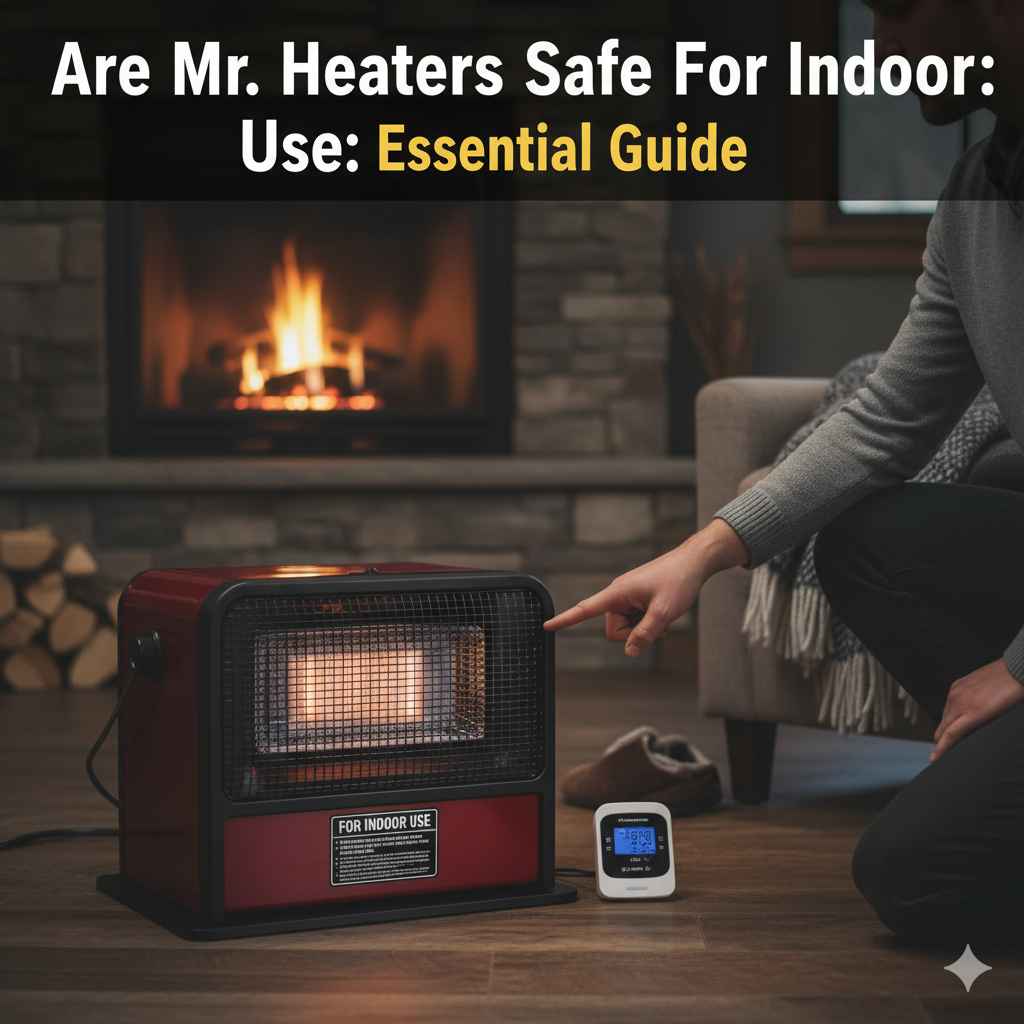
Mr. Heater is a well-known name when it comes to staying warm, but a common question pops up: “Are Mr. Heaters safe for indoor use?” It’s a really important question, especially when you’re feeling a chill and want to make your home cozy. Many people worry about having heaters inside their living spaces.
You want to be sure that bringing warmth into your home doesn’t bring any hidden dangers. We’re here to clear up the confusion. This guide will walk you through everything you need to know about using Mr. Heaters safely indoors.
We’ll cover which models are suitable, what safety steps to take, and answer your most pressing questions. By the end, you’ll feel confident and prepared to use your heater safely and effectively.
Undefrstanding Mr. Heater Indoor Safety
It’s easy to feel overwhelmed by product manuals, but understanding the basics of Mr. Heater safety for indoor use is simpler than you think. The key lies in knowing which heaters are designed for indoor spaces and using them correctly. Not all Mr. Heaters are created equal, and using the wrong type indoors can be dangerous.
Which Mr. Heater Models Are Safe Indoors?
Mr. Heater offers a range of products, and it’s crucial to distinguish between those intended for outdoor/construction use and those approved for residential indoor spaces.
Indoor-Suitable Mr. Heater Types
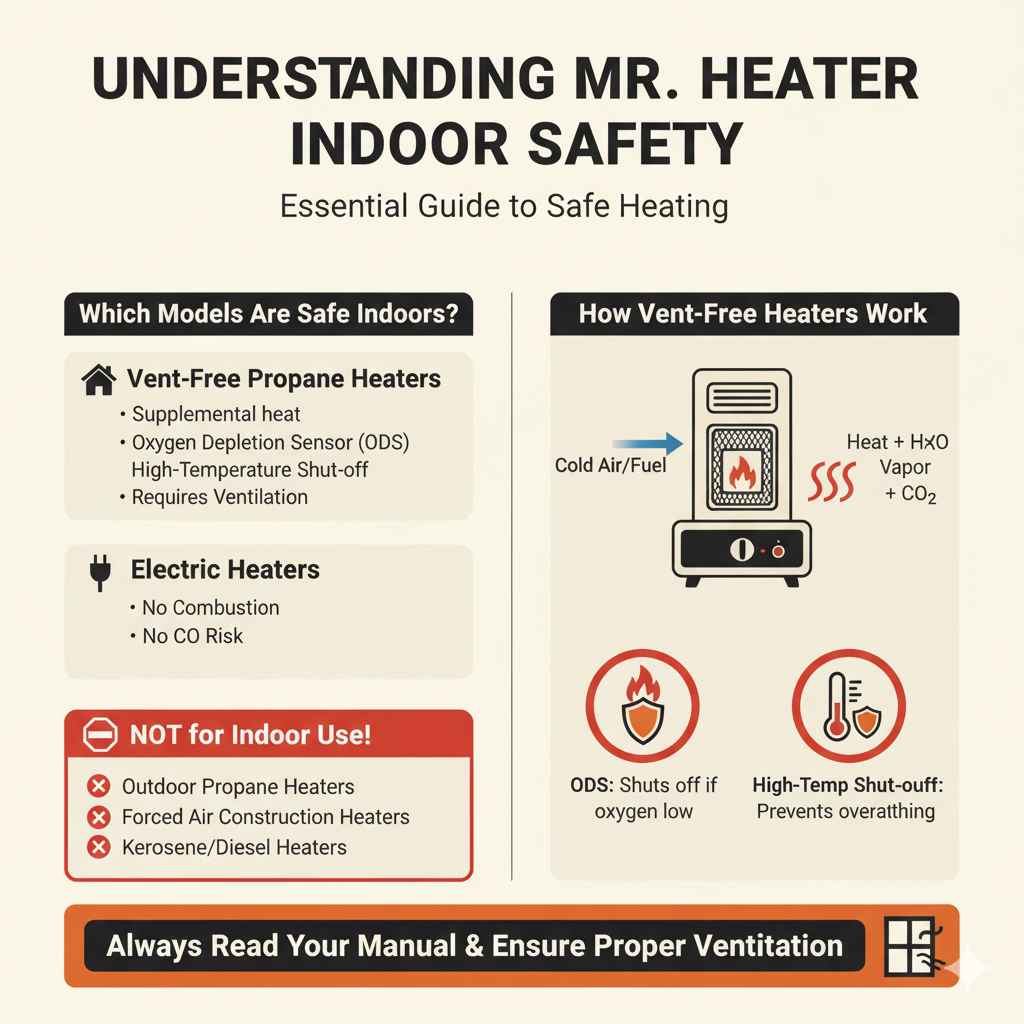
The models most commonly considered for indoor use are the vent-free propane heaters. These heaters are designed to burn fuel with high efficiency, minimizing the release of harmful byproducts into your home. However, “vent-free” doesn’t mean “air-free.” These units still require adequate air circulation.
Vent-Free Propane Heaters: These are the most popular choices for supplemental indoor heating. They come in various sizes and heat outputs. They are designed to operate in enclosed spaces, but proper ventilation is still essential.
Electric Heaters: Mr. Heater also offers electric heaters, which are generally considered very safe for indoor use as they don’t involve combustion and therefore don’t produce carbon monoxide.
Heaters NOT for Indoor Use (Even in Garages)
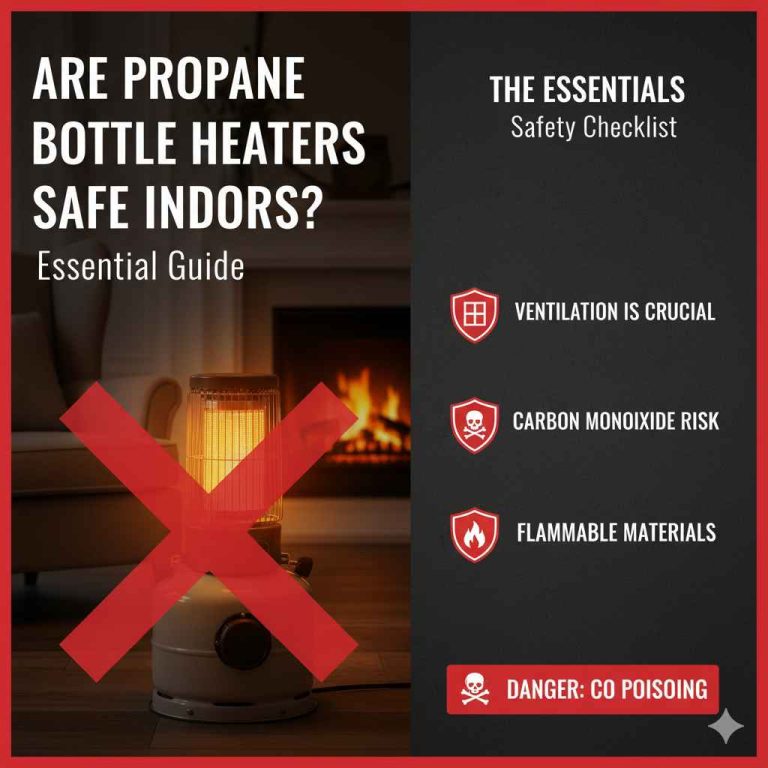
It’s vital to understand that heaters designed for garages, patios, or construction sites are not safe for primary indoor living spaces.
Outdoor Propane Heaters: These are designed for open-air environments where ventilation is plentiful. Using them indoors can lead to dangerous build-ups of carbon monoxide and other fumes.
“Forced Air” Construction Heaters: These powerful heaters often run on kerosene or propane and are meant for large, unoccupied spaces where ventilation is extreme. They are never safe for homes.
The Science Behind Vent-Free Heaters
Vent-free heaters work by burning fuel and releasing the heat directly into the room. The “vent-free” aspect means they don’t require a chimney or external vent. The technology behind them is designed to ensure that combustion is as complete as possible, meaning most of the fuel is converted to heat, water vapor, and a very small amount of carbon dioxide.
However, even with advanced technology, there are still byproducts of combustion. This is why oxygen depletion sensors and high-temperature shut-off features are critical safety mechanisms.
Oxygen Depletion Sensor (ODS): This safety feature automatically shuts off the heater if the oxygen level in the room drops to a potentially dangerous level. This is a crucial safeguard.
High-Temperature Shut-off: This feature activates if the heater gets too hot, preventing overheating and potential fire hazards.
Understanding Fuel Types
Most indoor Mr. Heater models use propane. Propane is a clean-burning fuel, but it still requires careful handling and adequate ventilation.
Propane: When used in approved indoor models, propane is generally safe. However, it’s heavier than air and can accumulate in low-lying areas if leaks occur. Always ensure propane tanks are upright and sealed properly.
Natural Gas: Some Mr. Heater models can be converted to run on natural gas, which is delivered to your home via a gas line. This conversion should only be performed by a qualified professional.
Kerosene/Diesel: These fuels are typically used in construction heaters and are not safe for indoor residential use due to their exhaust byproducts.
Essential Safety Features and Practices
No matter which Mr. Heater model you have, safety should always be your top priority. This involves understanding the built-in safety features and adopting safe operating practices.
Built-in Safety Features
Mr. Heater units designed for indoor use come equipped with several safety systems to protect you and your home.
Oxygen Depletion Sensor (ODS): As mentioned, this is a critical component that monitors oxygen levels. If oxygen drops below safe limits (typically 18% or 19.5%), the ODS will trigger the heater to shut off.
Tip-Over Switch: Most portable Mr. Heaters have a safety switch that cuts off the gas supply if the heater is accidentally knocked over.
Thermostat Control: This allows you to set and maintain a desired temperature, preventing over-heating and unnecessary fuel consumption.
Ignition System: Modern Mr. Heaters often feature an auto-igniter, making it easier and safer to light the pilot, reducing the risk of gas build-up before ignition.
Crucial Indoor Use Practices
Even with advanced safety features, responsible operation is key.
1. Read the Manual! This cannot be stressed enough. Every model is slightly different. The manufacturer’s manual is your definitive guide for safe operation, installation, and maintenance.
2. Ensure Proper Ventilation: This is the most critical step for vent-free heaters.
How Much Ventilation? The manual will specify the minimum room size and any required ventilation (e.g., cracking a window). For typical rooms, you might need a window slightly open, or a well-ventilated space.
Never Block Vents: Ensure the heater’s air intake and exhaust ports are completely unobstructed.
3. Install Carbon Monoxide (CO) Detectors: This is non-negotiable. CO is an odorless, colorless gas produced by incomplete combustion. A reliable CO detector is your primary line of defense.
Placement: Install CO detectors on every level of your home, especially near sleeping areas. Follow the manufacturer’s recommendations for placement.
Testing: Test your detectors regularly and replace batteries as needed.
Response: If your CO detector alarms, evacuate everyone immediately and call emergency services from a safe location.
4. Keep Flammable Materials Away: Maintain a safe distance between the heater and anything that can burn – curtains, furniture, bedding, paper, etc. The manual will specify clearance distances. Typically, this is around 1 to 3 feet depending on the heater model.
5. Use Correct Fuel: Always use the fuel type specified by the manufacturer. For propane heaters, ensure tanks are the correct size and in good condition.
6. Operate on a Level Surface: Place the heater on a stable, flat, and non-flammable surface to prevent tipping.
7. Never Sleep with Heater On: Don’t run a portable heater in a bedroom while you’re sleeping, especially not unattended.
8. Supervise Children and Pets: Keep them at a safe distance. The heater’s surface can get very hot.
9. Regular Inspection and Maintenance: Before each heating season, inspect your heater for any signs of damage or wear. Check hoses, connections, and the pilot light assembly.
Ventilation Requirements Comparison
To further emphasize the importance of ventilation, let’s look at common guidelines.
| Heater Type | Minimum Room Size (Example) | Ventilation Requirement Examples | Safety Note |
|---|---|---|---|
| Mr. Heater Vent-Free Propane (Indoor) | 150 sq ft (for common 10,000 BTU models) | Cracked window 1-2 inches, or 30 sq inches of open vent area per 10,000 BTU/hr. (Always check manual) | Requires ODS; CO detector mandatory. High efficiency, but byproducts exist. |
| Mr. Heater Buddy (Portable Indoor/Outdoor) | 200 sq ft (for 9,000 BTU model) | Minimum 4 sq ft of open vent area. (Always check manual) | Equipped with ODS and tip-over switch. Designed for supplemental heat, not primary. |
| Mr. Heater Forced Air Construction Heater (Outdoor/Garage Only) | N/A – Designed for ventilation | Requires EXTREME ventilation; not for enclosed living spaces. | Direct-fired – exhausts all byproducts outside. NEVER for indoor residential use. |
Note: These are general examples. Always refer to your specific heater’s manual for precise requirements.
Step-by-Step Guide to Safe Indoor Operation
Let’s break down the process of setting up and using your Mr. Heater safely for indoor spaces.
Step 1: Choose the Right Heater
Verify “Indoor Safe”: Double-check the product packaging or manual. It must explicitly state it’s approved for indoor use in residential settings.
Match Output to Room Size: Don’t get a heater that’s too powerful for your space, as this can lead to overheating or inefficient operation. A 10,000 BTU heater is often suitable for a medium-sized room (around 150-250 sq ft).
Step 2: Select a Safe Location
Level Surface: Place the heater on a firmly level, stable, and non-combustible surface. Avoid carpets or rugs if possible; a tile or concrete floor is ideal.
Clearance: Ensure there is ample space around the heater, free from any flammable materials like curtains, blankets, furniture, or paper. Refer to your manual for specific distances.
Ventilation Access: Position it near a slightly open window or vent if required by the manual.
Away from High Traffic: Place it where it’s less likely to be bumped or tripped over.
Step 3: Install and Connect Properly
Propane Tank Connection:
Ensure the propane tank valve is closed.
Connect the regulator hose securely to the tank and the heater inlet. Hand-tighten is usually sufficient, followed by a gentle snug with a wrench if recommended.
Check for leaks using a soap and water solution (apply to connections; if bubbles appear, there’s a leak). Do not operate if leaks are detected.
Electrical Connection (for Electric Models): Use an appropriate, grounded outlet. Do not use extension cords unless specifically rated for the heater’s wattage, and even then, it’s generally best practice to plug directly into the wall.
Step 4: Prepare the Heater and Room
Ventilation: If your manual requires a slightly open window or vent, ensure this is in place before lighting.
CO Detector Check: Confirm your carbon monoxide detector is functioning correctly and has fresh batteries.
Step 5: Lighting and Operation
Follow Manual Instructions: Each Mr. Heater model will have specific lighting instructions.
Typically, this involves turning the control knob to “pilot” or “light,” pressing and holding it down, and igniting the pilot light (often with a built-in igniter).
Once the pilot is lit and stable, continue holding the knob for about 30-60 seconds before releasing it.
If the pilot light stays lit, turn the knob to the desired heat setting.
Monitor Initial Operation: Watch the heater for the first few minutes. Ensure the flame is steady and blue, with possibly a yellow tip. A sputtering or uneven flame can indicate an issue.
Adjust Thermostat: Set the thermostat to your desired comfortable temperature. The heater should cycle on and off automatically.
Step 6: Shutdown Procedure
Turn Off: Turn the control knob to the “off” position.
Close Propane Valve: Close the valve on the propane tank completely.
Disconnect (if necessary): If storing the unit, disconnect the propane tank and store it in a well-ventilated area away from living spaces and ignition sources.
Troubleshooting Common Issues
Even with careful use, you might encounter minor hiccups. Here’s how to address them.
Pilot Light Won’t Stay Lit
Not Holding Knob Long Enough: Ensure you’re holding the control knob down for at least 60 seconds after the pilot ignites.
Drafts: Light the heater in a draft-free environment. Winds or strong air currents can blow out the pilot.
Low Gas Pressure: The propane tank may be nearly empty, or the regulator might be faulty.
Dirty Pilot Assembly: The small opening for the pilot light can get clogged with dust or debris. Refer to your manual for cleaning instructions (often involves compressed air).
Heater Smells Like Gas (When Not Lighting)
Check Connections: Ensure all propane connections are tight and leak-free.
Tank Valve: Make sure the propane tank valve isn’t fully open initially.
Heater Smells During Operation (Strong Odor)
New Heater Odor: New propane heaters can have a slight “new appliance” smell during the first few uses due to manufacturing oils burning off. This should dissipate.
Incomplete Combustion:
This is a serious sign and requires immediate attention. It could be due to lack of ventilation or a malfunctioning ODS.
If you smell strong, unusual odors while the heater is running, turn it off immediately, open windows and doors for ventilation, and do not use it again until it has been inspected by a qualified technician.
Dust/Debris: Dust or debris being drawn into the unit can create odors when heated. Ensure the unit is clean.
Heater Won’t Ignite
No Gas: Check that the propane tank is connected and has fuel.
Igniter Issue: The built-in igniter might be faulty. You may need to attempt manual lighting (following specific safety steps for manual lighting outlined in your manual, if applicable).
Gas Flow Issue: The control valve or regulator might be malfunctioning.
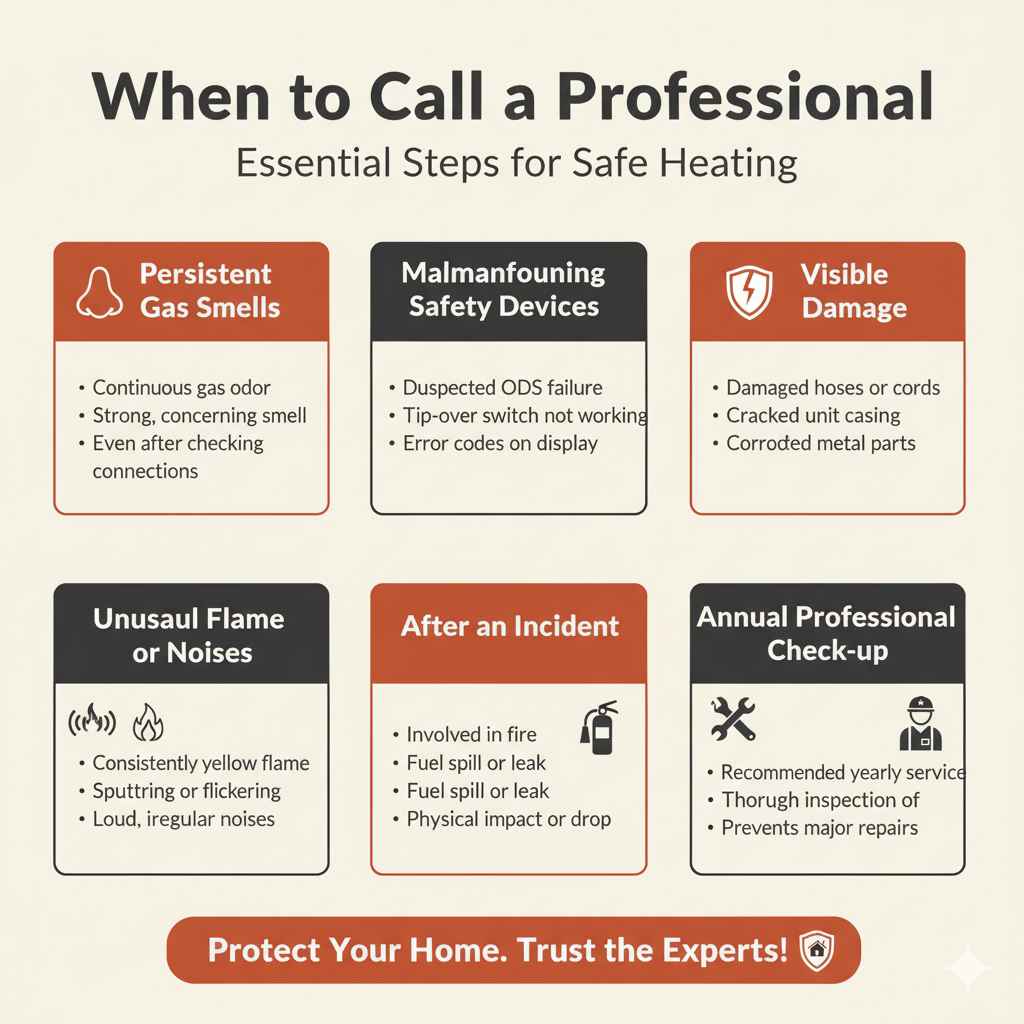
When to Call a Professional
While many issues can be resolved with basic troubleshooting, some situations require expert help.
Persistent Gas Smells: If you continuously smell gas even after checking connections, or if the smell is strong and concerning.
Malfunctioning Safety Devices: If you suspect the ODS or tip-over switch isn’t working correctly.
Visible Damage: Any signs of damaged hoses, cracked casings, or corroded parts.
Unusual Flame or Noises: If the flame is consistently yellow, sputtering, or the heater makes loud, irregular noises.
After an Incident: If the heater was involved in a fire, fuel spill, or other incident.
A qualified technician can properly diagnose and repair your Mr. Heater, ensuring it’s safe to operate again. You can often find certified propane appliance repair services through your local gas supplier or Mr. Heater’s customer support.
Frequently Asked Questions (FAQ)
Here are answers to some common questions about Mr. Heater indoor safety.
Is it safe to use a Mr. Heater portable propane heater in my garage?
Garages can be tricky. While some portable heaters like the Mr. Heater Buddy are often used in garages, it’s crucial that the garage is well-ventilated. Attached garages require even more care when using propane appliances due to the risk of carbon monoxide seeping into the living space. Check your local building codes, as regulations vary, and always ensure robust ventilation and a CO detector are present. Many manufacturers specifically list garages as suitable, but always verify with the product manual.
How much ventilation do I really need for indoor Mr. Heaters?
The exact ventilation needed depends on the heater’s BTU output and room size. Generally, for vent-free propane heaters, you need to ensure adequate air exchange. This might mean opening a window slightly (1-2 inches) or having a dedicated ventilation opening of a certain square footage per BTU. Don’t guess; always consult your specific heater’s instruction manual for the precise ventilation requirements.
Can I use a Mr. Heater in my basement?
Basements can be used with Mr. Heaters, provided* they are adequately ventilated and large enough for the chosen heater. Because basements are often enclosed spaces with limited airflow, proper ventilation practices are paramount. Ensure you meet or exceed the minimum room size and ventilation requirements stated in your heater’s manual, and always have working carbon monoxide detectors.
What happens if the ODS on my Mr. Heater fails?
If the Oxygen Depletion Sensor (ODS) fails to detect low oxygen levels, the heater will continue to operate, potentially leading to a dangerous build-up of carbon monoxide. This is why it’s critical to have independent carbon monoxide detectors installed on every level of your home. These act as a crucial backup safety measure. If you suspect your ODS is not working, stop using the heater immediately and have it inspected.
Can I convert my Mr. Heater to natural gas?
Some Mr. Heater models can be converted to run on natural gas, but this conversion must only be performed by a qualified and certified professional. Attempting to do this yourself is extremely dangerous and can lead to leaks, explosions, or improper fuel combustion, resulting in carbon monoxide poisoning. This voids warranties and can compromise safety certifications.