Are Propane Wall Heaters Efficient Proven to Be Best?
Propane wall heaters are generally very efficient, often achieving up to 99.9% efficiency for vent-free models, making them excellent for targeted warmth. While not always the “best” for whole-home heating, they shine in zone heating, supplemental warmth, and off-grid reliability, offering a cost-effective and powerful solution for specific spaces when safely installed and maintained.
If running cost or sizing is part of the decision, Are propane wall heaters efficient: Essential Facts explains the numbers from a related angle.
Choosing a heater for your home can feel like a big puzzle, right? You want to be warm and cozy, but you also want to save money and stay safe. It’s a common worry for many homeowners and renters who just want to make the right choice without all the complicated talk. You might be looking at propane wall heaters, wondering if they’re a smart pick. Are they truly efficient? Will they keep your home comfortable without draining your wallet? Don’t worry, we’re here to break it all down for you, step by step, so you can make a confident decision for your home’s warmth.
Understanding Efficiency: What Does it Really Mean for Your Heater?
When we talk about a heater being “efficient,” we’re really asking how much of the fuel it uses actually turns into usable heat for your room, instead of getting wasted. Think of it like a car’s gas mileage: you want more miles per gallon, right? With heaters, you want more warmth for every bit of propane burned.
For most heaters, efficiency is measured as a percentage. If a heater is 90% efficient, it means 90% of the energy from the fuel becomes heat for your home, and only 10% is lost, often as exhaust or through the heating system itself. For propane wall heaters, especially the vent-free kinds, these numbers can be remarkably high, which is a big part of their appeal.
How Propane Wall Heaters Deliver High Efficiency
Propane wall heaters are designed to put almost all the heat they create directly into the room where they are located. Here’s why they tend to be so efficient:
- Direct Heat Delivery: Unlike a central furnace that sends heat through ducts, a wall heater radiates and circulates warmth right where it’s needed.
- Minimal Heat Loss: Vent-free models don’t have a flue or chimney, so almost no heat escapes outside your home. The combustion byproducts (like water vapor and a tiny bit of carbon dioxide) are released directly into the room.
- Optimized Combustion: Modern propane heaters are engineered to burn propane very cleanly and completely, maximizing the energy conversion to heat.
This direct approach means less energy is lost in transit, resulting in higher efficiency ratings. You’re paying for heat that stays in your home, which is fantastic for keeping your energy bills in check.

Propane Wall Heater Efficiency: The Numbers Speak for Themselves
So, let’s get to the core question: are propane wall heaters efficient? In short, yes, they are remarkably efficient, especially specific types. Most modern propane wall heaters boast impressive efficiency ratings, which translate directly into more warmth for your dollar.
There are two main types of propane wall heaters, and their efficiency differs slightly due to how they handle exhaust:
- Vent-Free Propane Heaters: These are often called “unvented” or “ventless” heaters. They don’t have a flue or chimney to vent combustion gases outside. Instead, they are designed to burn propane almost perfectly, releasing very small amounts of combustion byproducts (mainly water vapor and carbon dioxide) directly into the room. Because virtually no heat escapes, their efficiency ratings are typically astounding, often reaching up to 99.9%. This means almost all the energy from your propane tank turns into heat for your home.
- Direct-Vent Propane Heaters: These heaters have a sealed combustion system that draws in outside air for combustion and vents exhaust gases directly outside through a dedicated wall or roof vent. Because some heat can escape with the exhaust, their efficiency is slightly lower than vent-free models, but still very good, typically ranging from 80% to 85% AFUE (Annual Fuel Utilization Efficiency). While not 99.9%, this is still considered highly efficient compared to many older heating systems and electric resistance heaters.
Here’s a quick look at how these types compare:
| Heater Type | Efficiency Rating | How It Works | Best For |
|---|---|---|---|
| Vent-Free Propane Wall Heater | Up to 99.9% | Burns propane, releases heat and small byproducts directly into room. No outside vent needed. | Supplemental heat, smaller well-ventilated rooms, workshops. |
| Direct-Vent Propane Wall Heater | 80-85% AFUE | Sealed combustion system. Draws outside air, vents exhaust gases directly outside. | Primary heat for a room, bedrooms, areas needing sealed combustion for safety/comfort. |
As you can see, both types offer strong efficiency. The high efficiency of vent-free models is a major selling point, making them incredibly cost-effective for the heat they provide. However, the choice between the two often comes down to safety considerations and local regulations, which we’ll discuss next.
Comparing Propane Wall Heaters to Other Heating Options
To truly understand if propane wall heaters are “best,” it helps to see how their efficiency stacks up against other common heating methods:
Electric Resistance Heaters (Baseboard, Portable Electric)
Electric heaters are 100% efficient at converting electricity into heat at the point of use. However, the generation and transmission of electricity often involve significant energy losses at the power plant and along the grid. So, while they convert electricity to heat perfectly in your room, the overall energy efficiency from the original fuel source (like natural gas or coal at the power plant) is much lower. More importantly, electricity is typically a more expensive fuel source per BTU than propane in many regions, making electric heaters more costly to run despite their 100% on-site efficiency. This is a crucial point for your wallet.
Learn more about overall energy efficiency from sources like Energy.gov’s heating systems guide.
Central Furnaces (Natural Gas, Oil)
Modern natural gas furnaces typically have AFUE ratings between 80% and 98%. High-efficiency models are very good. However, central heating systems distribute heat through ducts, and some heat can be lost as it travels through these ducts, especially if they are uninsulated or in unheated areas. Propane wall heaters, by heating a specific zone directly, can often provide more targeted and efficient warmth in that specific area than a central system trying to heat an entire home.
Wood Stoves and Fireplaces
Traditional wood fireplaces are notoriously inefficient, often losing more heat up the chimney than they provide to the room (sometimes as low as 10-20% efficient). Modern wood stoves and inserts are much better, with efficiencies ranging from 60% to over 80%. However, they require more effort (splitting wood, loading, cleaning) and produce ash and smoke, which isn’t for everyone. Propane wall heaters offer clean, consistent, and automatic heat without the manual labor.
Heat Pumps
Heat pumps are incredibly efficient for both heating and cooling, often achieving efficiencies of 200-400% by moving heat rather than generating it. However, their efficiency can drop in very cold climates. They are a much larger investment than a wall heater and are designed for whole-home heating. For a specific room or supplemental heat, a propane wall heater can be a much simpler and more affordable solution.
When considering propane wall heaters, their high on-site efficiency, combined with the energy density and cost of propane, often makes them a very attractive and cost-effective option for specific heating needs, especially for zone heating or in areas without natural gas access.
The Benefits of Choosing Propane Wall Heaters
Beyond their impressive efficiency numbers, propane wall heaters offer a host of practical benefits that make them a popular choice for many homes. As your trusted home heating guide, I want you to feel confident about what makes these heaters a truly smart option.
1. Incredible Efficiency and Cost Savings
As we’ve discussed, vent-free propane wall heaters can reach up to 99.9% efficiency. This means nearly every bit of energy in the propane you burn is converted into usable heat for your room. For you, this translates directly into:
Lower Fuel Bills: You’re getting maximum heat from your propane, minimizing wasted energy and keeping more money in your pocket.
Targeted Heating: Instead of heating your whole house when you’re only using one or two rooms, a propane wall heater allows you to “zone heat.” You can turn down your main thermostat and only heat the specific area you’re in, leading to significant savings over time.
2. Independence and Reliability
Propane is stored on-site in a tank, making your heating system independent of the electrical grid. This is a huge advantage:
Power Outage Protection: Many propane wall heaters, especially those with manual ignition or battery-powered thermostats, will continue to operate during a power outage. This provides invaluable peace of mind, knowing you can keep warm even when the lights go out.
Off-Grid Living: For cabins, workshops, or homes in rural areas without access to natural gas, propane is a readily available and reliable fuel source.
3. Flexible and Easy Installation
Compared to installing a central heating system, propane wall heaters are relatively straightforward to set up:
Space-Saving Design: They mount directly to your wall, taking up minimal floor space – perfect for smaller rooms, apartments, or workshops.
No Ductwork Needed: Since they heat locally, there’s no need for complex and costly duct installation. This makes them ideal for additions, garages, or older homes not originally designed for central heating.
Various Venting Options: Choose between vent-free (no exterior vent) or direct-vent (simple through-wall vent) depending on your needs and local codes.
4. Powerful and Consistent Heat
Propane has a high energy content, meaning it can produce a lot of heat. Wall heaters are designed to deliver that warmth effectively:
Quick Warm-Up: They can rapidly warm up a specific space, providing comfort quickly after you turn them on.
Adjustable Heat: Most models come with thermostats or multiple heat settings, allowing you to fine-tune the temperature for optimal comfort.
5. Clean Burning Fuel
Propane is a clean-burning fossil fuel. When combusted properly, it produces fewer greenhouse gas emissions than other fossil fuels like heating oil. This makes it a more environmentally friendly choice compared to some other options, contributing to better indoor air quality compared to, say, a wood-burning fireplace.
All these benefits combine to make propane wall heaters a highly practical, efficient, and reliable choice for targeted heating in your home.

Are Propane Wall Heaters “Best”? A Balanced Look
Now, while propane wall heaters are incredibly efficient and offer many advantages, calling them universally “best” depends entirely on your specific needs, your home, and your lifestyle. Let’s look at when they truly shine and when you might consider other options.
When Propane Wall Heaters ARE Best:
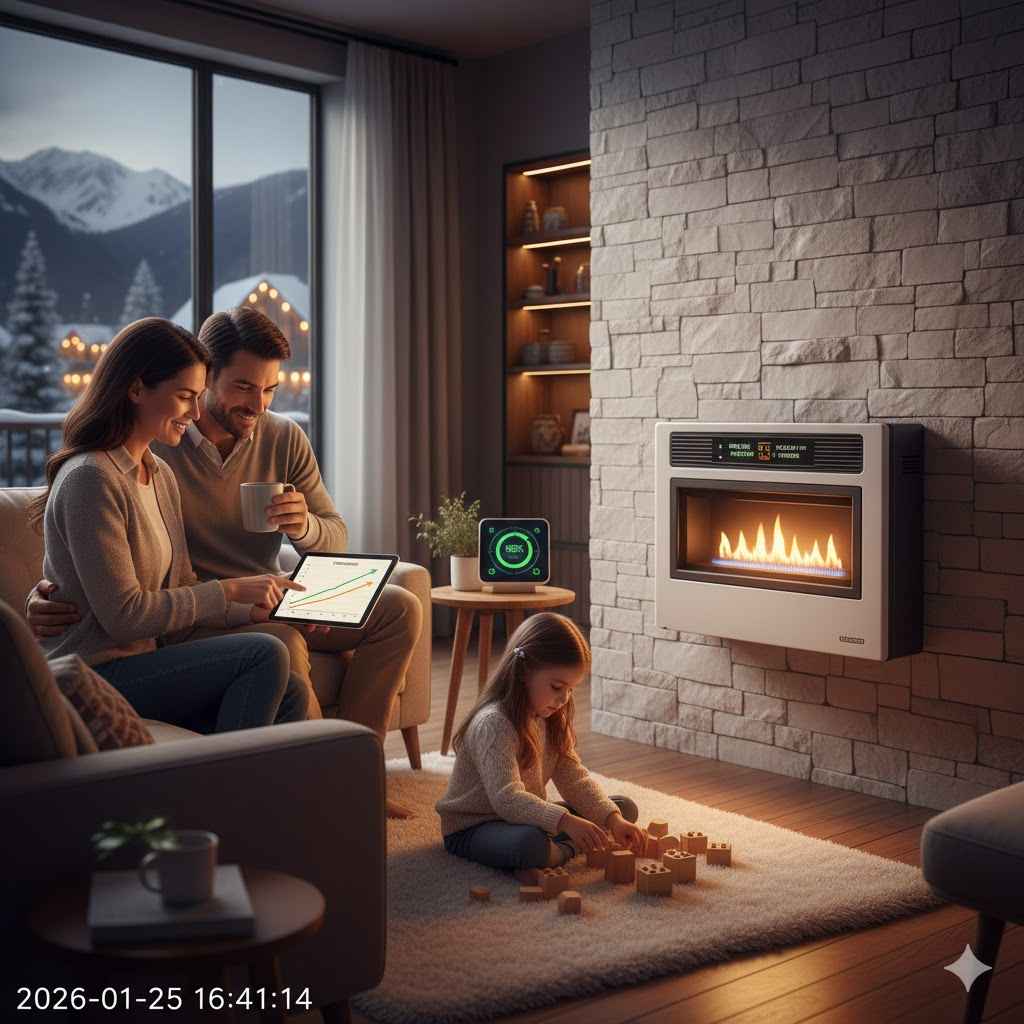
- Zone Heating: This is where they excel! If you spend most of your time in a living room, bedroom, or home office, you can use a propane wall heater to keep that specific area warm and turn down your central thermostat for the rest of the house. This saves a lot of energy and money.
- Supplemental Heat: Do you have a chilly room that your main heating system just can’t quite warm up? A propane wall heater can be the perfect supplement to bring that extra bit of comfort without overworking your primary system.
- Workshops, Garages, & Sheds: These often uninsulated spaces are perfect candidates. A wall heater can provide powerful, direct heat when you’re working, making these spaces usable year-round.
- Cabins, Vacation Homes, & Remote Properties: If you don’t have natural gas access or want an independent heat source, propane is a fantastic solution. It’s stored on-site and can operate without electricity, providing reliable warmth in off-grid situations.
- Power Outage Backup: Many models operate without electricity, making them a lifeline for warmth during winter power outages.
- Small Spaces: Apartments, single rooms, or small additions can be efficiently heated entirely by a well-sized propane wall heater.
When They Might NOT Be Best:
- Whole-Home Primary Heat for Large Homes: While possible, relying solely on wall heaters for a very large, multi-room home can be less convenient and potentially more costly than a well-maintained central heating system. Spreading heat through a large space might require multiple units, and managing them all could be a hassle.
- Very Poorly Ventilated Spaces (especially for vent-free models): While vent-free heaters are safe when used correctly, they introduce combustion byproducts and moisture into the air. In extremely small, airtight spaces without any air exchange, this could potentially lead to comfort issues or, in rare cases, safety concerns if not monitored. Always ensure adequate ventilation and use a carbon monoxide detector.
- Strict Local Regulations: Some jurisdictions have restrictions on vent-free heaters due to concerns about indoor air quality. Always check your local building codes and regulations before purchasing and installing any heating appliance.
Safety Considerations: A Must-Know for Tanim’s Readers!
No matter how efficient, safety is always our top priority. When using any propane appliance, it’s vital to follow these guidelines:
- Ventilation: For vent-free models, always ensure the room has adequate air circulation. This doesn’t mean leaving a window wide open, but ensuring normal air leakage through doors and windows or occasional airing out of the room. Refer to the manufacturer’s instructions for specific room size and ventilation requirements.
- Carbon Monoxide Detectors: Install UL-listed carbon monoxide (CO) detectors in any room with a fuel-burning appliance and on every level of your home. CO is an odorless, colorless gas that can be deadly. These detectors are non-negotiable!
- Proper Installation: Always follow the manufacturer’s installation instructions precisely. If you’re not comfortable doing it yourself, hire a qualified professional to install the heater and connect the propane lines.
- Clearances: Maintain specified clearances from walls, furniture, draperies, and any combustible materials to prevent fire hazards.
- Never Use for Drying Clothes: Never place clothing or other items on or near the heater to dry.
- Regular Maintenance: Keep the heater clean and have it inspected annually by a qualified technician to ensure it’s operating safely and efficiently.
When used responsibly and safely, propane wall heaters can be an outstanding and efficient choice for many homes. They’re not a one-size-fits-all solution, but for targeted, reliable, and cost-effective heat, they are often a top contender.
To help you weigh your options, here’s a quick summary:
| Pros of Propane Wall Heaters | Cons of Propane Wall Heaters |
|---|---|
| ✅ High efficiency (up to 99.9% for vent-free) | ❌ Requires propane tank and delivery |
| ✅ Excellent for zone heating | ❌ Vent-free models release moisture into air |
| ✅ Independent of electrical grid (power outages) | ❌ Some local regulations may restrict vent-free use |
| ✅ Relatively easy and flexible installation | ❌ Not always ideal for whole-home primary heating in large homes |
| ✅ Quick, powerful, and consistent heat | ❌ Requires proper ventilation & CO detectors for safety |
| ✅ Clean-burning fuel | ❌ Propane prices can fluctuate |
| ✅ Space-saving, wall-mounted design | ❌ Can introduce combustion byproducts into room (vent-free) |
Types of Propane Wall Heaters: Choosing Your Warmth
Understanding the two main types of propane wall heaters is key to making the right choice for your home. Each has unique features, installation requirements, and safety considerations. Let’s look closely, so you can pick the best fit.
1. Vent-Free (Unvented) Propane Wall Heaters
These heaters are often called “ventless” because they don’t have a flue or chimney to vent combustion gases outside. They are designed to burn propane with incredibly high efficiency, often up to 99.9%. The small amounts of combustion byproducts (primarily water vapor and carbon dioxide, along with trace amounts of other gases) are released directly into the heated space.
Key Features & Benefits:
- Maximum Efficiency: Almost all the heat stays in the room, leading to minimal fuel waste and lower heating bills.
- Easy Installation: No need for external venting, simplifying the installation process.
- No Power Required: Many models operate without electricity (using a standing pilot or battery-powered ignitor), making them perfect for power outages.
- Two Common Styles:
Blue Flame: Heats primarily through convection, warming the air that then circulates throughout the room. Great for even, widespread heat distribution in an open space.
Infrared (Radiant): Heats objects and people directly, similar to sunlight. This provides a very immediate and focused warmth, excellent for workshops or spaces where you want to feel warm quickly.
Important Safety & Considerations:
- Oxygen Depletion Sensor (ODS): All modern vent-free heaters are required to have an ODS, which automatically shuts off the heater if oxygen levels in the room drop to unsafe levels. This is a critical safety feature.
- Carbon Monoxide (CO) Detector: Even with an ODS, a CO detector is a MUST. It provides an extra layer of protection against this odorless, colorless gas.
- Ventilation: While “vent-free,” these heaters still require adequate air circulation. This means not using them in extremely small, unventilated, or tightly sealed rooms (like bedrooms in some areas, or very small bathrooms) where fresh air exchange is minimal. Manufacturer instructions will specify minimum room sizes.
- Moisture: They produce water vapor as a byproduct, which can increase humidity in the room. This is usually not an issue in larger, naturally leaky homes but could be a concern in very small, sealed spaces, leading to condensation.
- Local Codes: Some local building codes or jurisdictions may restrict or prohibit the use of vent-free heaters in certain spaces (e.g., bedrooms, bathrooms). Always check with your local authorities before purchasing.
2. Direct-Vent Propane Wall Heaters
Direct-vent heaters operate with a sealed combustion system. They draw outside air for combustion and vent all exhaust gases directly outside through a concentric pipe that passes through an exterior wall or roof. This completely isolates the combustion process from your indoor air.
Key Features & Benefits:
- Superior Indoor Air Quality: Since combustion air is drawn from outside and exhaust gases are vented outside, there are no combustion byproducts released into your living space. This makes them ideal for bedrooms, sealed homes, or individuals sensitive to indoor air quality.
- Safety: The sealed system eliminates any concern about oxygen depletion or accidental CO spillage into the room.
- High Efficiency (80-85% AFUE): While slightly lower than vent-free, they are still very efficient, especially considering no indoor air quality concerns.
- Consistent Heat: Often include blowers to circulate heat efficiently throughout the room.
Important Safety & Considerations:
- Requires Exterior Venting: Installation involves creating a hole in an exterior wall (or roof) for the vent pipe. This adds a bit more complexity to installation than a vent-free unit.
- Often Requires Electricity: Most direct-vent heaters have a blower fan and electronic ignition, meaning they will not operate during a power outage unless you have a backup power source (like a generator).
- Placement: Must be installed on an exterior wall to accommodate the venting.
For more detailed information on heating and ventilation standards, you can often consult resources from organizations like the National Fire Protection Association (NFPA) or your local building department.
Choosing between these two depends on your comfort with indoor air quality, the need for power outage reliability, and your local building codes. Both offer efficient, effective heating, but cater to slightly different priorities.
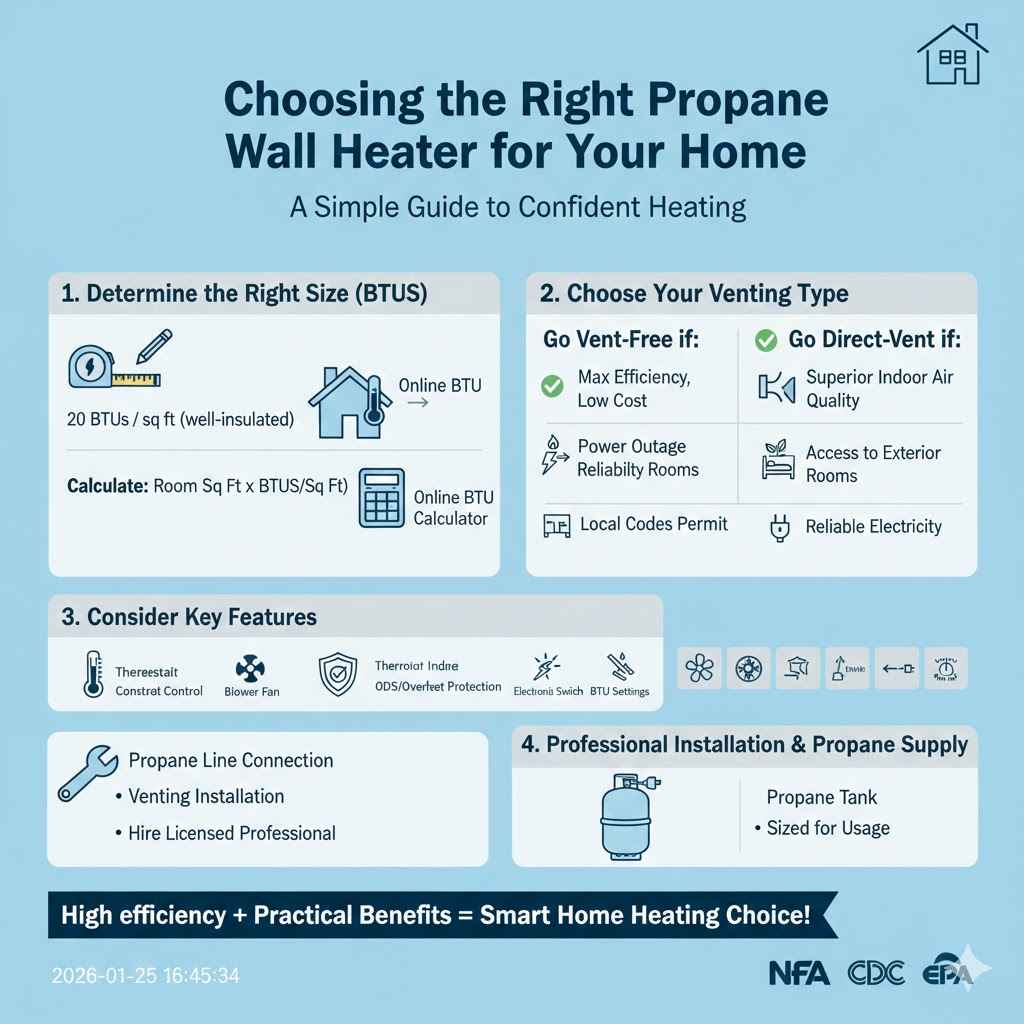
Choosing the Right Propane Wall Heater for Your Home
With a better understanding of efficiency and types, you’re ready to pick the best propane wall heater for your specific needs. Here’s a simple guide to help you make a confident decision, Tanim-style!
Step 1: Determine the Right Size (BTUs)
This is crucial! An undersized heater won’t warm the room effectively, and an oversized one will cycle on and off too frequently, which is less efficient and less comfortable. Heat output is measured in British Thermal Units (BTUs). A common rule of thumb is:
- 20 BTUs per square foot for well-insulated spaces.
- 25-30 BTUs per square foot for moderately insulated spaces.
- 30-40 BTUs per square foot for poorly insulated spaces or very cold climates.
To calculate: Measure your room’s length and width to get the square footage. Multiply that by the appropriate BTU per square foot. For example, a 10×15 foot (150 sq ft) well-insulated room would need about 3,000 BTUs (150 x 20). If that room is an uninsulated garage, you might need closer to 6,000 BTUs (150 x 40).
For a more precise calculation, consider using an online BTU calculator or consulting a heating professional. Reputable manufacturers often provide sizing guides, like those found on Rinnai’s sizing guide for similar heating products, which can give you a general idea.
Step 2: Choose Your Venting Type: Vent-Free or Direct-Vent?
As we explored, both have their merits:
- Go Vent-Free if:
- You need maximum efficiency and lowest upfront installation cost.
- You prioritize power outage reliability (many models are electric-free).
- You’re heating an open-concept living area, workshop, or moderately sized room with adequate ventilation.
- Your local codes permit their use in your intended space.
- Go Direct-Vent if:
- You prioritize superior indoor air quality (no combustion byproducts released inside).
- You’re heating a bedroom, tightly sealed room, or have occupants with respiratory sensitivities.
- You have access to an exterior wall for venting and don’t mind the added installation step.
- You have reliable electricity for the fan/ignition (or a backup power source).
Step 3: Consider Key Features
Modern propane wall heaters come with various features that enhance comfort, safety, and convenience:
- Thermostat Control: Essential for maintaining a consistent temperature. Look for built-in or optional wall-mounted thermostats.
- Blower Fan: Circulates the warm air more effectively throughout the room, especially beneficial for larger spaces or direct-vent models.
- Oxygen Depletion Sensor (ODS): Mandatory for vent-free models, ensuring safety.
- Overheat Protection: Automatically shuts off the heater if it gets too hot.
- Electronic Ignition (Piezo or Spark): More convenient than a manual match-lit pilot. Some require electricity, others use batteries.
- Tip-Over Safety Switch: Shuts off the heater if it’s accidentally knocked over (though wall-mounted units are generally stable).
- BTU Settings: Multiple heat settings (e.g., low, medium, high) allow you to adjust the heat output.
- Aesthetics: Some models are designed to be more discreet or have a more appealing look to blend with your home decor.
Step 4: Professional Installation and Propane Supply
- Propane Line Connection: Unless you are experienced and qualified, always have a certified professional install the propane gas line from your tank to the heater. This is not a DIY task for beginners due to safety risks.
- Venting Installation (for Direct-Vent): If choosing a direct-vent model, ensure the venting is installed according to manufacturer specifications and local codes.
- Propane Tank: You’ll need an outdoor propane tank, sized appropriately for your usage. Your propane supplier can help you determine the best size.
By following these steps, you’ll be well on your way to selecting a propane wall heater that provides efficient, comfortable, and safe warmth for your home!
Maintaining Your Propane Wall Heater for Optimal Efficiency and Safety
Just like your car, your propane wall heater needs a little care to keep running smoothly, efficiently, and safely. Good maintenance doesn’t just prolong the life of your heater; it ensures you get the most warmth for your money and keeps your home secure. Don’t worry, most of it is pretty easy!
1. Keep it Clean!
- Exterior Cleaning: Use a soft, damp cloth to wipe down the outside of your heater regularly. This prevents dust and grime from building up and keeps it looking fresh.
- Dusting Vents and Grilles: Dust can block the heat output and reduce efficiency. Gently vacuum or brush away dust from the air intake and heat outlet grilles. Make sure the heater is completely off and cool before doing this.
- Pilot Light Area (if applicable): If your heater has a pilot light, make sure the area around it is free from dust and debris. A clean pilot light ensures proper ignition.
2. Regular Inspections
- Visual Check: Periodically look for any visible signs of wear and tear, damage, or rust. Check the gas lines for kinks or cracks.
- Flame Appearance: When the heater is running, the flame should be a steady blue color (for blue flame models). Yellow or flickering flames can indicate an issue with combustion and warrant a professional inspection.
- Gas Leaks: If you ever smell rotten eggs, that’s the distinct smell of propane. Immediately turn off the heater, evacuate your home, and call your propane supplier and the fire department from a safe distance. Never ignore a gas smell!
3. Propane Tank Management
- Monitor Levels: Keep an eye on your propane tank gauge. Don’t let it run completely empty, especially in cold weather, as this can lead to issues like air getting into the lines.
- Schedule Deliveries: Plan your propane deliveries in advance, particularly during peak heating season, to avoid running out.
- Tank Condition: Ensure your outdoor propane tank is clear of snow, ice, and debris, and that its vents are unobstructed.
4. Carbon Monoxide Detector Checks
- Test Regularly: Test your CO detectors monthly by pressing the test button.
- Replace Batteries: Change the batteries in your CO detectors at least once a year (a good reminder is when you change your clocks for daylight saving time).
- Replace Units: CO detectors don’t last forever. Most have a lifespan of 5-7 years; check the manufacturer’s date on the back of the unit and replace it when expired.
5. Professional Servicing
Even with good DIY maintenance, an annual check-up by a qualified propane technician is highly recommended. A professional can:
- Clean Internal Components: They can access and clean parts you can’t, like the burner assembly and heat exchanger.
- Check Gas Pressure: Ensure the gas pressure is correct for optimal efficiency and safe operation.
- Inspect Safety Controls: Verify that the Oxygen Depletion Sensor (ODS), thermostat, and other safety mechanisms are working properly.
- Identify Potential Issues: Catch small problems before they become major, costly repairs.
By following these simple steps, you’ll ensure your propane wall heater continues to provide efficient, reliable, and safe warmth for years to come. Remember, a well-maintained heater is a happy heater (and a happy homeowner)!
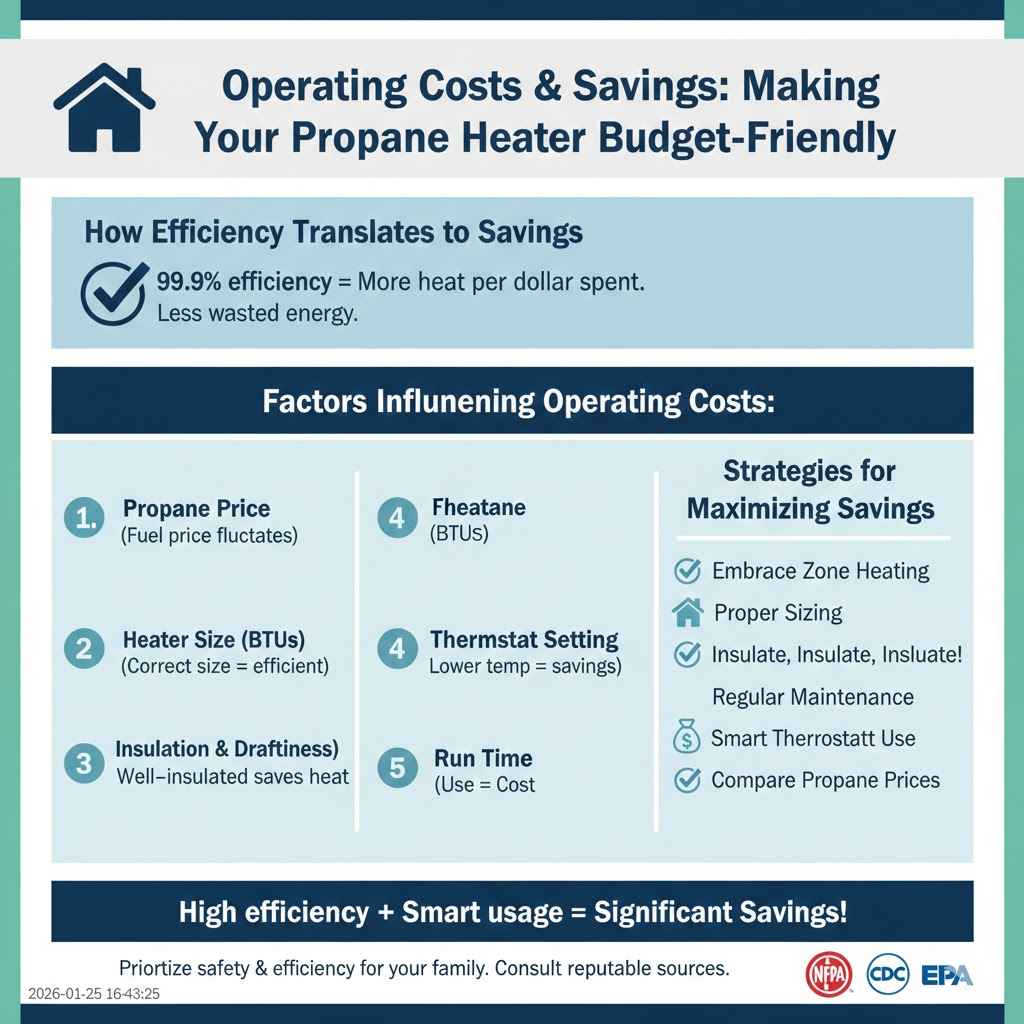
Operating Costs & Savings: Making Your Propane Heater Budget-Friendly
One of the biggest questions on your mind, Tanim knows, is “How much will this actually cost me?” The good news is that the high efficiency of propane wall heaters, combined with smart usage, can lead to significant savings. Let’s break down how efficiency translates into real-world savings and how you can maximize them.
How Efficiency Translates to Savings
Remember that 99.9% efficiency for vent-free models? This means nearly every dollar you spend on propane is converted into heat for your home. Compare that to a heating system with lower efficiency, where a larger portion of your fuel cost literally goes up in smoke or is lost through ducts. With propane wall heaters, you’re getting more warmth per unit of fuel, which directly reduces your heating bills.
Factors Influencing Operating Costs:
- Propane Price: This is the biggest variable. Propane prices fluctuate based on supply, demand, and season. It’s smart to compare prices from different local suppliers.
- Heater Size (BTUs): A correctly sized heater runs more efficiently. An oversized heater will short-cycle (turn on and off too frequently), while an undersized one will run constantly but struggle to reach the desired temperature, both leading to higher costs.
- Insulation & Draftiness: Your home’s insulation plays a huge role. A well-insulated room holds heat better, so your heater doesn’t have to work as hard. Seal up those drafts around windows and doors!
- Your Thermostat Setting: Every degree you lower your thermostat can save you money. Aim for a comfortable but not excessively warm temperature.
- Run Time: How long and how often you run the heater directly impacts your fuel consumption.
Strategies for Maximizing Savings with Your Propane Wall Heater:
- Embrace Zone Heating: This is the superstar strategy! Instead of heating your whole house to 72°F, turn down your central thermostat to a lower setting (e.g., 60-65°F) and only use the propane wall heater to warm the specific rooms you are actively using. For instance, if you’re in the living room in the evening, heat only that room. This can lead to substantial savings compared to heating unused spaces.
- Proper Sizing: Ensure your heater is correctly sized for the space it’s heating (as discussed in the choosing section). This prevents wasted energy from overworking or short-cycling.
- Insulate, Insulate, Insulate!: The better your room is insulated, the less heat will escape, and the less your heater will need to run. Check for drafts around windows and doors, add weatherstripping, and consider extra insulation in walls and attics if needed. Resources like the EPA’s information on sealing your home’s envelope can provide excellent guidance.
- Regular Maintenance: A clean, well-maintained heater runs more efficiently. Follow our maintenance tips to ensure your unit is always performing at its best.
- Smart Thermostat Use: If your heater has a thermostat, use it! Set it to your desired temperature and let the heater do its job, cycling on and off as needed. Programmable thermostats are even better, allowing you to set lower temperatures when you’re away or asleep.
- Compare Propane Prices: Don’t just stick with one supplier. Periodically call around to local propane companies to ensure you’re getting a competitive price per gallon.
By combining the inherent efficiency of propane wall heaters with these smart operating strategies, you can enjoy a warm and cozy home without unexpected high heating bills. It’s all about being informed and using your heater wisely!
FAQ: Your Top Questions About Propane Wall Heaters Answered
You’ve got questions, and Tanim’s got answers! Here are some common beginner-friendly questions about propane wall heaters to help you feel even more confident.
Q1: Are vent-free propane heaters really safe to use indoors?
A: Yes, when used correctly and according to manufacturer instructions. Modern vent-free propane heaters are equipped with an Oxygen Depletion Sensor (ODS) that automatically shuts off the unit if oxygen levels drop. They also burn propane very cleanly. However, it is absolutely essential to have a working carbon monoxide detector in the room and to ensure the space has adequate ventilation (normal air leakage or occasional airing out) to avoid any build-up of moisture or combustion byproducts.
Q2: How much does it cost to run a propane wall heater?
A: The cost depends on several factors: the heater’s BTU output, how long you run it, your local propane price per gallon, and your home’s insulation. Because propane wall heaters are highly efficient (especially vent-free models), they convert a large percentage of fuel into heat, which helps keep operating costs down compared to less efficient options. Zone heating (only heating the room you’re in) is key to saving money.
Q3: Can I use a propane wall heater as my main heat source for my entire home?
A: For larger, multi-room homes, it’s generally not ideal as the sole primary heat source. Propane wall heaters excel at zone heating or supplemental heat for specific rooms or smaller spaces. While you could install multiple units, a central heating system is often more practical for whole-home comfort in larger residences. For smaller homes or cabins, a properly sized wall heater might serve as a primary source, especially direct-vent models.
Q4: What size propane wall heater do I need for my room?
A: You need to calculate the room’s square footage and then multiply it by 20-40 BTUs, depending on how well insulated the room is. For example, a 150 sq ft room might need around 3,000 to 6,000 BTUs. Always aim for a heater that closely matches your room’s heating needs to ensure efficient operation without oversizing or undersizing.
Q5: Do propane heaters produce carbon monoxide?
A: All fuel-burning appliances, including propane heaters, have the potential to produce carbon monoxide (CO) if they are not combusting fuel properly or are malfunctioning. However, modern propane wall heaters are designed to burn propane very cleanly. Despite this, it is CRITICAL to install and regularly test UL-listed carbon monoxide detectors in any room with a fuel-burning appliance and on every level of your home for safety.
Q6: How often should I get my propane wall heater serviced?
A: An annual inspection and cleaning by a qualified propane technician is highly recommended. This ensures all components are working safely and efficiently, helps identify any potential issues early, and keeps your warranty valid. Between professional services, regular cleaning and visual checks (as outlined in our maintenance section) are important.
Q7: Are propane wall heaters allowed in all areas?
A: Local building codes and regulations can vary significantly. Some jurisdictions may have restrictions or prohibitions on certain types of heaters, particularly vent-free models, in specific areas like bedrooms. Before purchasing and installing, always check with your local building department or fire marshal to ensure compliance with all codes and regulations in your area.
Conclusion: Confident Choices for a Warm Home
You’ve navigated the ins and outs of propane wall heaters, and now you can confidently say: “Are propane wall heaters efficient? Absolutely!” With efficiency ratings up to 99.9% for vent-free models, they truly are powerhouses of targeted warmth. They offer a unique blend of high efficiency, independence from the electrical grid, and flexible installation, making them an excellent choice for zone heating, supplemental warmth, and spaces without natural gas access.
Remember, the “best” heater is always the one that fits your specific needs, your home’s layout, and your priorities for comfort, safety, and budget. By understanding the differences between vent-free and direct-vent models, choosing the right size, and always prioritizing safe installation and regular maintenance, you’re not just buying a heater; you’re investing in reliable, efficient warmth for your home. You’ve got this! Now go enjoy that cozy comfort you’ve earned.