Do Portable Outdoor Heaters Need Propane Tanks?
Yes, portable outdoor propane patio heaters absolutely require propane tanks to run. These tanks are not optional; they are the sole fuel source, making the propane tank an essential, proven component for safe and sustained operation of nearly all standard residential outdoor heaters.
Keeping the Chill Away: Why Propane Tanks Are the Absolute Essential for Your Outdoor Heater
Are you setting up for a backyard gathering, hoping to enjoy your patio well into the evening, only to realize you’re completely lost on how the heater actually works? It’s a common feeling! Focusing on comfort shouldn’t bring confusion about mechanics.
Many folks new to owning outdoor heaters worry if they need electrical wiring or some complex hookup. Relax! The beauty of most powerful portable outdoor heaters is their simplicity. They rely on readily available propane tanks—the same kind often used for your BBQ grill. This guide, written by your heating helper Tanim, will walk you through everything you need to know about these tanks. We’ll show you exactly why they are essential, how to choose the right one, and most importantly, how to connect and use them safely. Let’s get your outdoor space warm!
Understanding the Heart of Your Outdoor Heater: The Role of Propane
Why is the propane tank so crucial? Simply put, it’s the engine that makes the heat happen. Unlike electric patio heaters that plug into an outlet, propane heaters are designed for maximum flexibility—meaning they can be placed anywhere on your deck or patio without worrying about cord length or outdoor outlets.
The Science of Portable Heat (The Simple Version)
Propane (which is technically Liquefied Petroleum Gas or LPG) is stored under pressure in the tank. When you open the valve on the heater and ignite the pilot light, a controlled amount is released. This gas mixes with air and burns inside the heater head, creating that wonderful, radiant warmth you feel.
Without the tank, there is no fuel, and therefore, no heat. It is a self-contained fueling system, which is one of the main reasons these heaters are so popular for versatility.
Common Heater Types That Depend on Propane
While many fuel sources exist for outdoor heating, propane dominates the portable market. Understanding the main types helps confirm why the tank is always the necessary component:
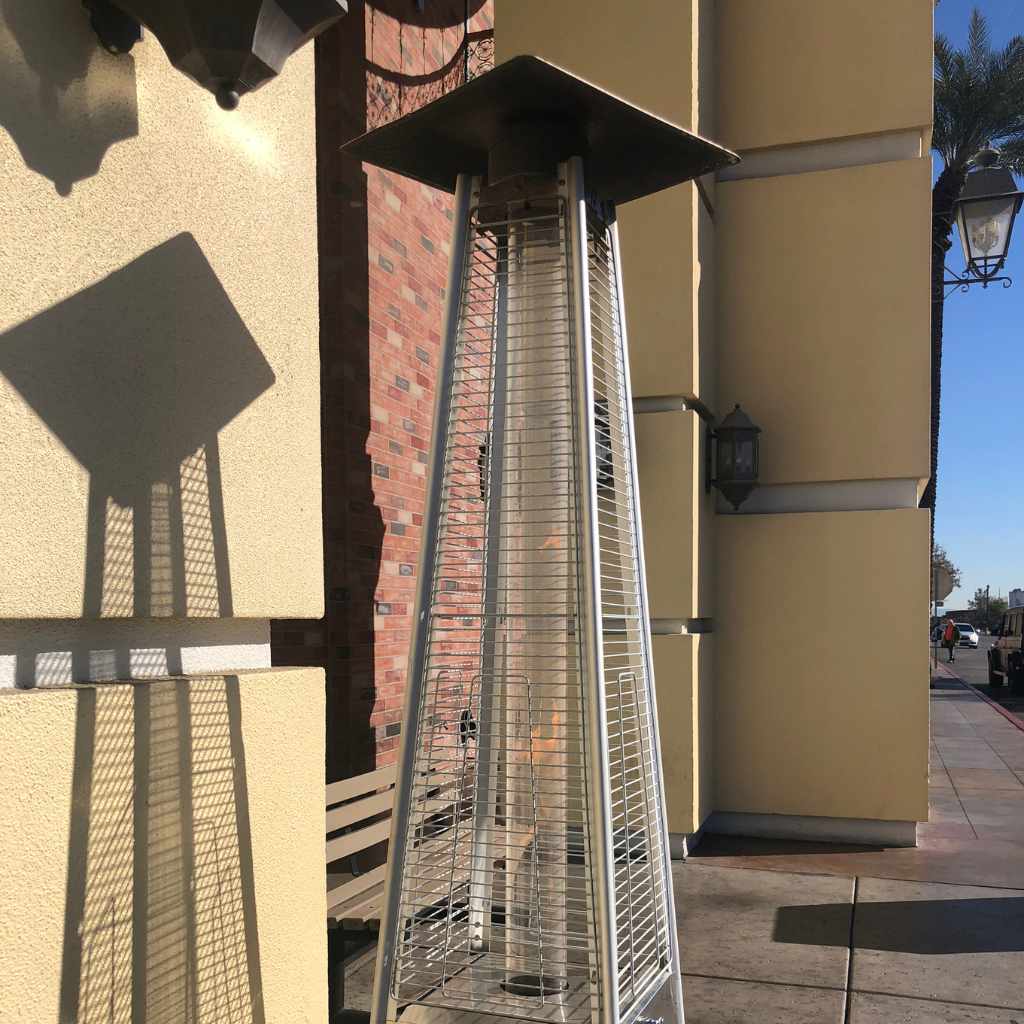
- Tower Heaters: These tall, often glass-tube heaters almost exclusively use propane tanks, usually hidden within the base unit.
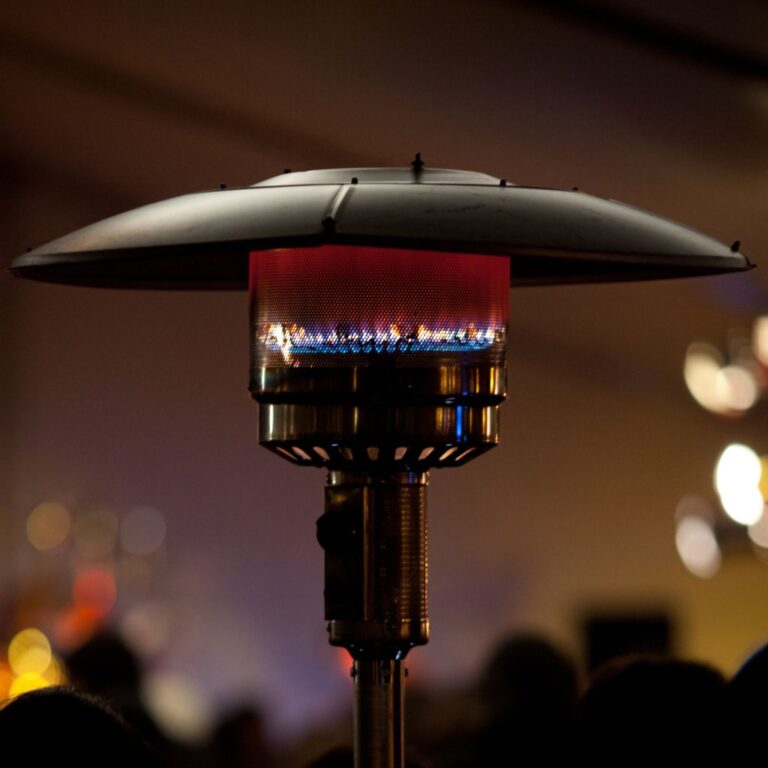
- Mushroom/Umbrella Heaters: The classic, large patio heater. They always sit directly on top of a standard 20 lb propane tank.
- Tabletop Heaters: Smaller versions designed to sit on an outdoor table. These often use smaller 1 lb disposable green Coleman-style tanks or can sometimes adapt to the larger 20 lb tanks with an extension hose.
Note on Alternatives: While natural gas lines can fuel high-end built-in outdoor fireplaces or specialized permanent heaters, for anything you can easily move—a ‘portable’ solution—propane is the answer, requiring that tank.

Choosing the Right Propane Tank: Size Matters for Comfort
The most critical decision when preparing your heater is selecting the correct propane tank. Using the wrong size can mean constantly swapping tanks during a party or dealing with a huge, cumbersome unit.
The Industry Standard: The 20-Pound Tank
When you see a portable patio heater, assume it runs on a standard 20-pound (lb) propane tank. This is the same cylinder mechanics and hardware stores exchange and refill frequently.
Pros of the 20 lb Tank:
- Availability: They are incredibly easy to find, refill, or exchange anywhere in the country.
- Runtime: They offer substantial heating time, often lasting 8 to 12 hours on medium to high settings.
- Compatibility: Nearly all full-sized patio heaters are designed specifically around this dimension and weight for stability.
How Long Will a Tank Last? Check Your Burn Rate
The runtime depends heavily on how high you set the BTU (British Thermal Unit) rating of your heater. Lower BTUs use less fuel per hour.
| Heater Setting (BTU Output) | Approximate Hourly Consumption (Lbs of Propane) | Estimated Runtime on a Full 20 lb Tank (Approx.) |
|---|---|---|
| Low (10,000 – 14,000 BTU) | 0.4 – 0.5 lbs/hour | 40 – 50 hours |
| Medium (15,000 – 25,000 BTU) | 0.6 – 0.8 lbs/hour | 25 – 33 hours |
| High (30,000 – 40,000 BTU) | 1.0 – 1.2 lbs/hour | 16 – 20 hours |
Source Note: These calculations are based on standard safety and usage guidelines for typical residential propane tanks.
The Convenience Option: 1 lb Tanks
If you have a small tabletop heater or only need heat for a short period, the small, disposable 1 lb green canisters are popular. They use nearly all their fuel in about 2 to 3 hours, making them great for a quick evening firepit session but terrible for long weekends.
Expert Tip: Check if your tabletop heater can use an adapter hose. This allows you to connect the small unit to a large 20 lb tank, giving you significantly longer runtime without the hassle of swapping tiny cans.
Propane Tank Safety: Doing It Right from the Start
Propane is wonderfully efficient, but like any compressed gas, safety is paramount. Since the tank is the source, handling it correctly prevents hazards. Follow these steps carefully for maximum peace of mind.
Step 1: Inspecting Your Tank Before Use
Never connect a damaged tank. Think of this as the crucial first safety check, especially if you are reusing an old tank or buying one secondhand.
- Check the Exterior: Look for deep rust, dents, or gouges deeper than a dime. Small surface rust is usually fine, but structural damage means “no go.”
- Examine the Collar: The metal ring protecting the valve must be intact.
- Inspect the Valve: Ensure the valve spindle (the part you turn) is working and feels solid, not loose or wobbly.
- Check the OPD: Modern tanks must have an Overfill Prevention Device (OPD). This feature automatically shuts off the flow if the tank is filled past 80% capacity, preventing dangerous pressure buildup.
Step 2: Connecting the Tank to the Heater
This process is standard for 20 lb tanks and most portable heaters. You will need the regulator and hose assembly that came with your heater.
- Turn Off Everything: Make absolutely sure the heater control knob is in the OFF position. Check the tank valve is also closed.
- Position the Tank: Place the tank firmly into the base compartment of the heater or directly underneath it, ensuring it sits level and stable.
- Attach the Regulator: Screw the female end of the regulator onto the tank’s male opening. Hand-tighten it securely; do not use tools like wrenches, as overtightening can damage the seal. It should feel snug.
- Secure the Hose: Ensure the other end of the hose is attached correctly to the burner assembly inlet, following your heater’s specific instructions.
Step 3: Performing the Leak Test (Non-Negotiable!)
This is perhaps the most overlooked yet vital safety step. Never skip testing for leaks after connecting a new or newly swapped tank.
- Mix the Solution: In a small cup, mix strong dish soap and water (a 50/50 mixture works great). It needs to be very bubbly.
- Open the Gas Slowly: Slowly turn the tank valve counter-clockwise until it opens completely—do not turn the heater control knob yet!
- Apply the Bubbles: Use a brush or sponge to apply the soapy water liberally over the connection threads where the regulator meets the tank valve.
- Observe Closely: Watch the soapy areas for about 30 seconds. If you see bubbles start to form and grow rapidly, you have a leak!
- Fixing a Leak: If bubbles appear, immediately turn the tank valve OFF. Unscrew the regulator, inspect the threads for debris, screw it back on firmly (by hand), and retest. If it still leaks, the tank valve might be faulty, and you should not use that tank.
Important Safety Reminder: If the leak persists, take precautions and move the tank outdoors immediately, away from any ignition sources. Check resources like the National Fire Protection Association (NFPA) for comprehensive guidelines on LPG safety.
Beyond the Basics: Maintenance and Refueling Your Propane Essential
Once you know the tank is essential, the next concern is maintaining the longevity of that essential component. Good maintenance keeps your heater running efficiently and safely season after season.
When to Refill or Exchange Your Tank
Don’t wait until the flame dies mid-conversation! Here are signs it’s time to think about a swap:
- Weight Check: A full 20 lb tank weighs about 37–38 lbs total (Tank + Propane). An empty tank weighs about 17 lbs. If you feel little weight, it’s empty.
- The Float Gauge Trick: While 20 lb tanks don’t have built-in gauges, some hardware stores sell inexpensive magnetic gauges that stick externally. These give a rough estimate of the remaining fuel level.
- Visible Signs: If your flame suddenly shrinks, turns yellow/orange instead of blue, or extinguishes completely, you are out of fuel.
Refilling vs. Exchanging: Which is Better?
Almost everyone has to choose between setting up an exchange program or taking their tank somewhere to be refilled.
Propane Tank Exchange Programs (e.g., Blue Rhino, AmeriGas)
| Pros of Exchange | Cons of Exchange |
|---|---|
| Instant gratification; you get a full tank immediately. | Often slightly more expensive per pound of propane. |
| No waiting for your tank to be physically refilled. | You might get a tank that looks rough or is older. |
| Easy to replace older/damaged tanks without hassle. | You might overfill slightly or underfill depending on the service station protocol. |
Refilling Your Own Tank
| Pros of Refilling | Cons of Refilling |
|---|---|
| Usually the most cost-effective way to buy propane. | Requires you to transport the tank (can be heavy). |
| Technicians are professionally trained to fill tanks safely to the 80% statutory limit. | You might have to wait in line at a service station. |
| You keep the same tank, which you know the history of. | Only available at certain gas stations or certified locations. |
Tanim’s advice? If you use your heater frequently, refilling is cheaper over time. If you only use it a few times a year, exchanging is more convenient.
Tank Storage When Not in Use
Propane tanks need proper storage, especially during the off-season, to maintain their integrity and prevent accidents.
- Location is Key: Always store propane tanks outdoors. Never in a garage, shed, basement, or enclosed patio area, even if empty. Leaks in enclosed spaces can lead to explosions.
- Keep Them Upright: Store the tank standing vertically to ensure the pressure relief valve operates correctly.
- Check the Valve Cap: If the tank is completely empty and you plan to store it for a long time, consider putting the protective valve dust cap (if available) back on.
- Distance Matters: Keep stored tanks away from ignition sources, including water heaters, furnaces, or electrical equipment.
For detailed, official outdoor storage guidelines, consult resources from the Consumer Product Safety Commission (CPSC).
Troubleshooting: When the Essential Refuses to Work
The propane tank is essential, but sometimes the connection between the tank and the heater is the weak link. If you’ve confirmed the tank is full, here are the most common issues and simple fixes.
Problem 1: The Heater Won’t Light or Stays Lit Briefly
This often means the gas isn’t reaching the burner, or something is obstructing the pathway.
- Check the Connections: Re-check the leak test—is the regulator completely seated? Sometimes the OPD on the tank is sensitive and needs the regulator reseated firmly.
- Test the Regulator: If you’ve just connected the tank, leave the valve fully open for about 60 seconds before trying to light the heater. This allows the regulator (the device reducing the high tank pressure for safe heater use) to “bleed” and equalize.
- Check the Air/Gas Mixture: Ensure the air intake screen on the heater is clear of debris, spiders, or lint.
Problem 2: Weak or Yellow Flames Instead of Strong Blue Flames
Yellow flames mean incomplete combustion, usually due to lack of oxygen or low fuel pressure, directly related to the propane supply.
- Is the Tank Running Low? Even if the tank isn’t fully empty, low fuel levels reduce the pressure, causing weak flames. Swap for a full tank.
- Regulator Issue: If the regulator is damaged or malfunctioning, it won’t maintain the correct output pressure, leading to uneven burning. If multiple new tanks show the same issue, the regulator is suspect.
- Dirty Burner Head: Over time, soot builds up. Refer to your heater’s manual to carefully clean the burner head assembly, usually involving removing the protective mesh or glass, and gently brushing the small ports.
Problem 3: The Heater Keeps Shutting Off Unexpectedly
Modern safety standards include auto-shutoff features. If there’s a sudden gust of wind or the heater tips slightly, the tip-over switch will stop the gas flow.
- Check the Tilt: Ensure the heater is standing perfectly straight on level ground. Minor tilts can trigger the sensor.
- Wind Exposure: Powerful winds can sometimes cause momentary flame loss, triggering the safety mechanism. Try repositioning the heater somewhat sheltered from direct wind gusts, while maintaining required clearances (see below).
Essential Clearances and Placement for Safe Operation
Since propane heats intensely, creating a zone of safety around the heater is just as crucial as connecting the tank correctly. Never place combustibles too close to where the heat radiates.
Required Separation Distances
These distances are vital for preventing fires. Treating the propane tank as essential also means treating the space around the heater as essential for safety.
- Overhead Clearance: Ensure at least 8 feet of vertical clearance (from the burner head to the ceiling, awning, or low-hanging tree branches). Heat rises straight up.
- Side Clearance: Maintain at least 3 feet (or more, depending on the manufacturer’s instructions) between the side of the heater and any walls, railings, or flammable materials (like dried leaves or plastic furniture).
- Ground Clearance: Place the heater on a level, non-combustible surface (concrete, stone, pavers). Never operate the heater on a wooden deck without proper heat-resistant mats underneath, and always check the manual for specific decking recommendations.
Remember: The propane tank itself needs clear airflow. Do not let debris or materials pile up around the base where the tank sits.
FAQ for Propane & Outdoor Heaters
Q1: Can I use a small camping propane tank (like the 1 lb green one) on a large patio heater?
A: Generally, no. Large patio heaters are designed for the high flow rate and pressure supplied by a standard 20 lb tank.