

Choosing the right heater feels complicated, right? Don’t worry! This guide breaks down convection and radiation heaters simply. Learn how they heat, their pros and cons, and which is best for your cozy home. We’ll make heating your space easy and effective.
Keeping your home comfortably warm during colder months is a top priority for any homeowner. But when it comes to choosing a heating device, the options can feel overwhelming. You might have heard terms like “convection heater” and “radiation heater,” and wondered what they mean for your comfort and your energy bill. It’s perfectly normal to feel a bit lost!
The good news is, understanding the difference between these two main types of heaters is simpler than you think. Once you know how they work, you can confidently pick the best one for your needs. This guide is here to walk you through it, step by step, using easy-to-understand language. We’ll cover everything from how they heat your air to the best rooms they suit. Let’s get your home warm and toasty!
Understanding How Heaters Work: Convection vs. Radiation
At its core, heating your home involves transferring heat energy. Every heater does this, but they use different methods. The two main ways are convection and radiation. Think of it like this: convection is all about moving air, while radiation is like the sun’s warmth reaching you directly.
What is Convection Heating?
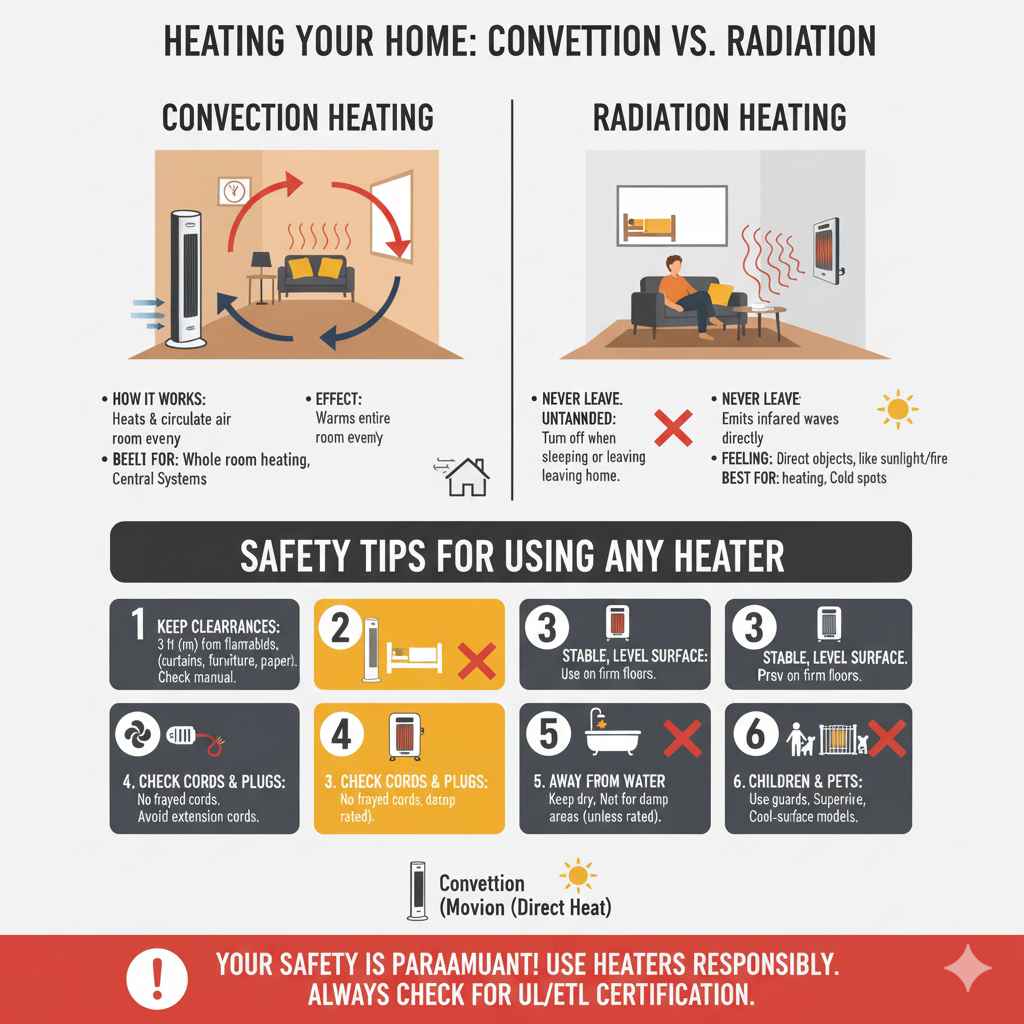
Convection heating works by warming the air in a room. A convection heater draws in cool air, heats it up inside the unit, and then releases the warmer air back into the room. This warmer air is less dense and rises, while the cooler air sinks down to be heated. This creates a continuous cycle, gently circulating air throughout the space. It’s like a natural ventilation system, but for warmth!
- How it works: Cool air enters the heater, is heated, and expelled as warm air.
- The effect: This creates air currents that distribute heat evenly across the room.
- Feeling: You’ll feel a general rise in room temperature rather than direct heat on your skin.
This method is excellent for warming an entire room evenly over time. It’s often used in central heating systems and standalone electric heaters designed for room-to-room heating.
What is Radiation Heating?
Radiation heating, also known as radiant heating, works directly by emitting heat waves. These waves travel outwards and heat objects and people they come into contact with, bypassing the air in between. It’s similar to how the sun warms your skin on a cool day, or how a campfire heats you even if the air around isn’t very hot.
- How it works: The heater’s surface gets hot and emits infrared radiation.
- The effect: This radiation warms surfaces and people directly in its line of sight.
- Feeling: You’ll feel a direct warmth, like sitting by a fire.
Radiant heaters are great for targeted heating or in spaces where air circulation might be difficult. They provide a quick, noticeable warmth.
Types of Convection Heaters
Convection heaters come in various forms, each designed for different needs and spaces. Understanding these can help you identify which type might be best for your situation.
1. Oil-Filled Radiators
These might sound like radiation heaters because of their name, but they primarily work through convection! They have internal heating elements that warm oil sealed within the metal casing. The oil then heats the metal, which in turn heats the air around it, creating convection currents. They are slow to heat up but retain heat for a long time after being switched off, making them energy-efficient for prolonged use.
- Pros: Quiet operation, retains heat, safe surface temperature (usually), good for long-term heating.
- Cons: Slow to heat up, can be bulky.
- Best for: Bedrooms, living rooms, offices where quiet and consistent warmth is needed.
2. Fan Heaters (Ceramic or Coil)
Fan heaters are a common and often affordable choice. They use a heating element (either a ceramic plate or a metal coil) that gets hot. A fan then blows air across this element and expels the heated air into the room. Because they use a fan, they heat up a space relatively quickly.
- Pros: Heats up quickly, portable, generally inexpensive to buy.
- Cons: Can be noisy due to the fan, can dry out the air, can circulate dust.
- Best for: Small to medium rooms, quick spot heating, garages or workshops where rapid warmth is needed.
3. Panel Heaters
Panel heaters are often slim, wall-mounted units that rely on both convection and some radiation. They draw in cool air at the bottom, heat it internally, and release warm air from the top. They are designed for more permanent installation and offer a more subtle, yet consistent, background heat. Many modern panel heaters are thermostat-controlled for better energy efficiency.
- Pros: Quiet, unobtrusive design, can be wall-mounted, provides consistent warmth.
- Cons: Slower to heat a whole room compared to fan heaters, might not provide instant heat.
- Best for: Living rooms, hallways, conservatories, or as a supplemental heat source.
Types of Radiation Heaters
Radiation heaters are known for providing quick, direct warmth. They can be incredibly effective in specific situations.
1. Infrared Heaters
Infrared heaters emit infrared radiation, which directly heats objects and people in their path. They don’t rely on heating the air. This makes them very efficient for heating specific zones, outdoor spaces, or for situations where you need heat instantly without waiting for the air to warm up.
- Pros: Instant heat, energy-efficient for spot heating, doesn’t heat the air (so no heat loss from drafts), good for people with allergies as they don’t circulate dust.
- Cons: Only heats what it’s pointed at, can feel less effective in large, open spaces if not positioned correctly, direct intense heat can be uncomfortable for some.
- Best for: Patios, workshops, bathrooms (when mounted safely), heating a specific seating area.
2. Quartz Heaters
Quartz heaters are a type of infrared heater. They use a heating element (usually a wire or tube) enclosed in a quartz tube. When heated, the element emits infrared radiation. They are very quick to heat up, making them a popular choice for portable, instant warmth.
- Pros: Fast heating, relatively inexpensive, portable.
- Cons: Can provide a very intense heat directly in front, surface can get very hot, can dry out the air.
- Best for: Small rooms, personal desk heating, quick bursts of warmth.
3. Halogen Heaters
Similar to quartz heaters, halogen heaters use a halogen filament (often in quartz glass tubes) to produce infrared heat. They are known for their efficiency and speed. They give off a visible glow when operating.
- Pros: Very efficient, fast heating, direct warmth.
- Cons: Similar to quartz and infrared – direct heat, can dry air, potential for surface burn.
- Best for: Similar uses to quartz heaters, providing focused heat.
Convection vs. Radiation Heaters: Key Differences
Understanding the core differences between convection and radiation heaters will help you make the best choice for your home and your comfort. Here’s a breakdown:
Heating Mechanism
- Convection: Heats the air, creating circulation.
- Radiation: Heats objects and people directly through waves.
Heating Speed and Distribution
- Convection: Slower to heat up initially, but provides more even, whole-room heating over time.
- Radiation: Heats up almost instantly, but only in the direction it’s pointed.
Comfort and Feel
- Convection: Creates a general ambient warmth. You feel warm because the air around you is warm.
- Radiation: Provides a direct, toasty feeling. You feel warm because you are absorbing the heat waves.
Energy Efficiency
Both types can be energy efficient depending on how they are used. Convection heaters are efficient for maintaining a steady temperature in a well-insulated room. Radiation heaters are more efficient for targeted heating, when you only need to warm a specific area or person, saving energy by not heating the entire room or its air.
Moisture and Air Quality
- Convection: Can sometimes dry out the air, especially fan heaters. They may also circulate dust if not kept clean.
- Radiation: Generally doesn’t affect air moisture as much and doesn’t circulate dust, making it a good option for those with allergies or respiratory issues.
When to Choose Which: Practical Scenarios
Deciding between convection and radiation heating often comes down to your specific needs and the space you’re trying to heat.
For Heating an Entire Room Evenly
If your goal is to make a whole room consistently comfortable, a convection heater is usually the better choice. They work by warming the air and circulating it, ensuring there are fewer cold spots. Oil-filled radiators and well-placed panel heaters are excellent for this.
For Quick, Targeted Warmth
Need to warm up fast or just want to be toasty while you sit in one spot? A radiation heater is ideal. Infrared, halogen, or quartz heaters deliver immediate warmth to you and the area in front of them. This is perfect for a chilly bathroom while you get ready, or for a workshop bench.
For Bedrooms at Night
In bedrooms, especially for overnight heating, quiet operation and consistent, gentle warmth are key. Oil-filled radiators, which are silent and retain heat, are often preferred. Some modern panel heaters also offer very quiet convection heating suitable for bedrooms.
For Living Areas
Living rooms often benefit from a dual approach. A convection heater can establish a comfortable ambient temperature, while a small radiant heater can provide extra coziness for individuals sitting down. Many people find floor-standing convection heaters or wall-mounted panel heaters are excellent for maintaining the main warmth.
For Garages, Workshops, or Outdoor Spaces
These areas can be trickier to heat. If you need quick heat to combat the chill while you’re working, an infrared or fan heater can be effective. For outdoor patios or covered porches, infrared radiant heaters are the standard choice, offering warmth without fighting drafts.
For Energy Savings
Energy efficiency depends on usage. If you’re heating a room for hours on end, a convection heater that maintains a steady temperature might be best. If you only need heat for short periods or in a very specific spot (like a desk area), targeted radiant heating can save a lot of energy by not heating unused air or space. Using timers and thermostats on any heater type will drastically improve efficiency. For more information on home energy efficiency, the U.S. Department of Energy provides great resources on improving your home’s energy performance.
Here’s a simple table to help summarize:
| Heater Type | Primary Heating Method | Best Use Case | Pros | Cons |
|---|---|---|---|---|
| Oil-Filled Radiator | Convection (primarily) | Whole room, consistent warmth | Quiet, retains heat, even distribution | Slow to heat up, bulky |
| Fan Heater | Convection | Quick spot heating, small rooms | Heats fast, portable, affordable | Noisy, can dry air, circulates dust |
| Panel Heater | Convection (some radiation) | Background heat, whole room | Quiet, discreet, consistent | Slower for rapid heat |
| Infrared Heater | Radiation | Targeted heat, instant warmth | Instant, energy-efficient for spot use, no air circulation | Only heats direct line, intense heat |
| Quartz/Halogen Heater | Radiation | Quick burst of personal heat | Very fast, portable, inexpensive | Direct intense heat, can dry air |
Safety Tips for Using Any Heater
No matter which type of heater you choose, safety should always be your number one concern. Improper use of any heating device can lead to accidents. Here are some essential safety tips:
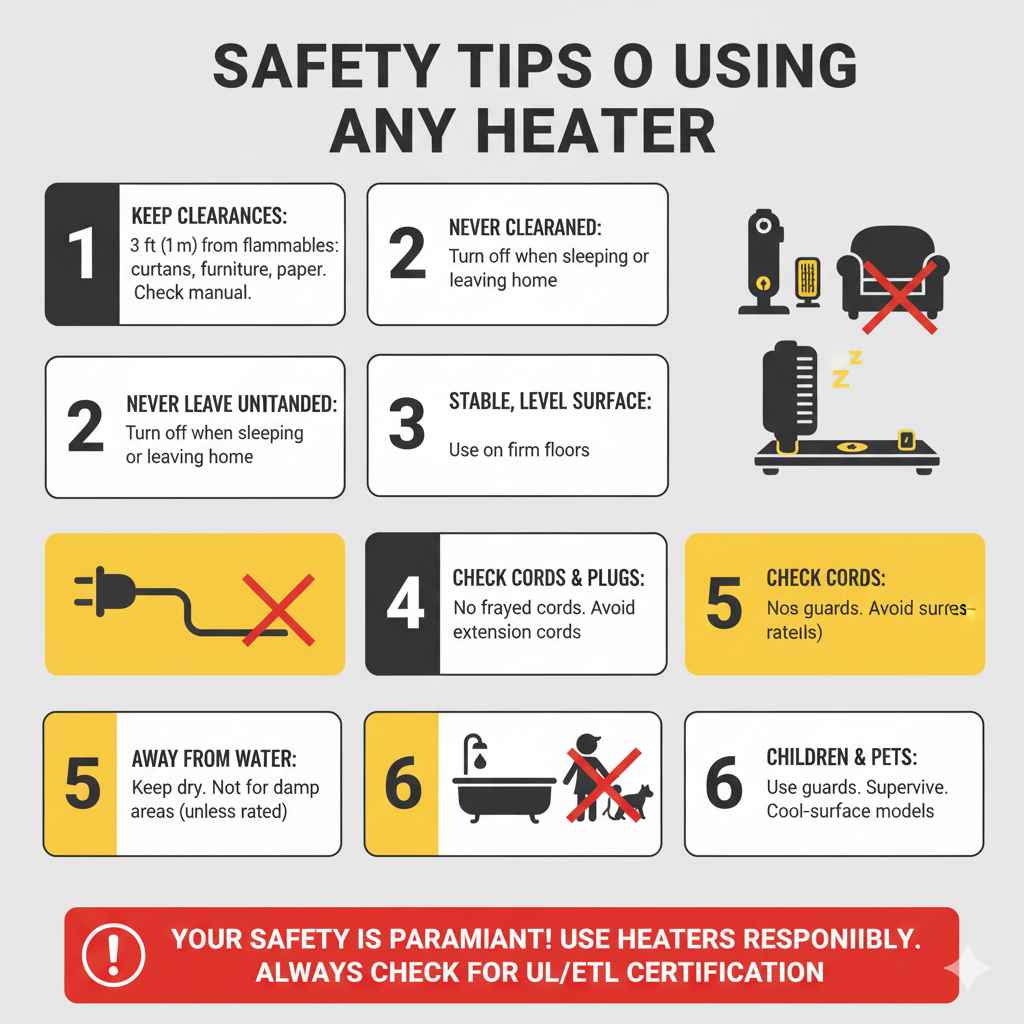
1. Keep Clearances
Always maintain a safe distance between your heater and anything flammable, such as curtains, furniture, bedding, paper, or clothing. Most manufacturers recommend at least 3 feet (about 1 meter) of clearance. Check your heater’s manual for specific recommendations.
2. Never Leave Unattended
Do not leave portable heaters running unattended, especially when you are sleeping or leaving the house. If you must leave a room, turn the heater off. This applies to both convection and radiation units.
3. Place on a Stable, Level Surface
Ensure your heater is placed on a firm, level floor. If it’s a portable unit, make sure it won’t easily tip over. Many modern heaters have tip-over protection, which automatically shuts them off if they fall, but it’s best to prevent falls altogether.
4. Check Cords and Plugs
Inspect the heater’s power cord and plug regularly for any signs of damage. Never use a heater with a frayed cord or a damaged plug. Avoid using extension cords if possible, as they can overheat and become a fire hazard. If an extension cord is absolutely necessary, ensure it is rated for the heater’s wattage and is in good condition.
5. Keep Away from Water and Damp Areas
Unless the heater is specifically designed for use in damp environments (like some bathroom-safe radiant heaters), keep it away from sinks, bathtubs, showers, and swimming pools. Water and electricity are a dangerous combination.
6. Children and Pets
Be extra vigilant if you have young children or pets. They may not understand the dangers of touching a hot heater. Consider using a heater guard or choosing a model with cooler surface temperatures if this is a concern. For radiant heaters, ensuring they are out of direct reach is crucial.
7. Proper Ventilation
While not always a primary concern for electric heaters, it’s good practice to ensure some minimal ventilation in rooms where heaters are used continuously. This helps prevent a build-up of humidity or drafts that can affect heating efficiency. For heaters that may produce combustion byproducts (though most electric ones do not, unlike gas heaters), proper ventilation is critical. Always ensure your heating device is certified by a safety organization like UL or ETL.
Following these simple guidelines ensures you can enjoy the warmth your heater provides safely.
Frequently Asked Questions (FAQ)
Got more questions about convection and radiation heaters? Here are some answers to common beginner queries:
Q1: Which type of heater is the most energy-efficient, convection or radiation?
A1: The most energy-efficient choice depends on how you use it. Convection heaters are good for maintaining a steady, even temperature in a room over long periods. Radiation heaters are more energy-efficient for heating a small, specific area or a person quickly, as they don’t waste energy heating the air. Using thermostats and timers can significantly improve the efficiency of any heater.
Q2: Can I use a radiation heater to warm up my whole house?
A2: Generally, no. Radiation heaters are designed for spot heating. They heat objects and people directly in their line of sight. While they can make a small room feel warmer if you’re directly in front of them, they won’t effectively warm an entire house or even a large room consistently like a central heating system or a powerful convection heater would.
Q3: Which heater is better for someone with allergies or asthma?
A3: Radiation heaters are often recommended for people with allergies or asthma. This is because they heat objects and people directly and do not rely on circulating air. Convection heaters, especially fan heaters, can blow dust, allergens, and dander around the room. Radiation heat also doesn’t tend to dry out the air as much as some convection models.
Q4: How quickly do convection heaters warm a room compared to radiation heaters?
A4: Radiation heaters provide almost instant warmth because they transmit heat waves directly. Convection heaters take longer to warm up a room because they first need to heat the air, and then that warm air circulates to heat the entire space. For example, a fan heater will feel warm faster than an oil-filled radiator, but the oil-filled radiator will maintain a more even, sustained warmth once it reaches temperature.
Last Updated on October 22, 2025 by Tanim