Are Propane Convection Heaters Safe for Indoors?
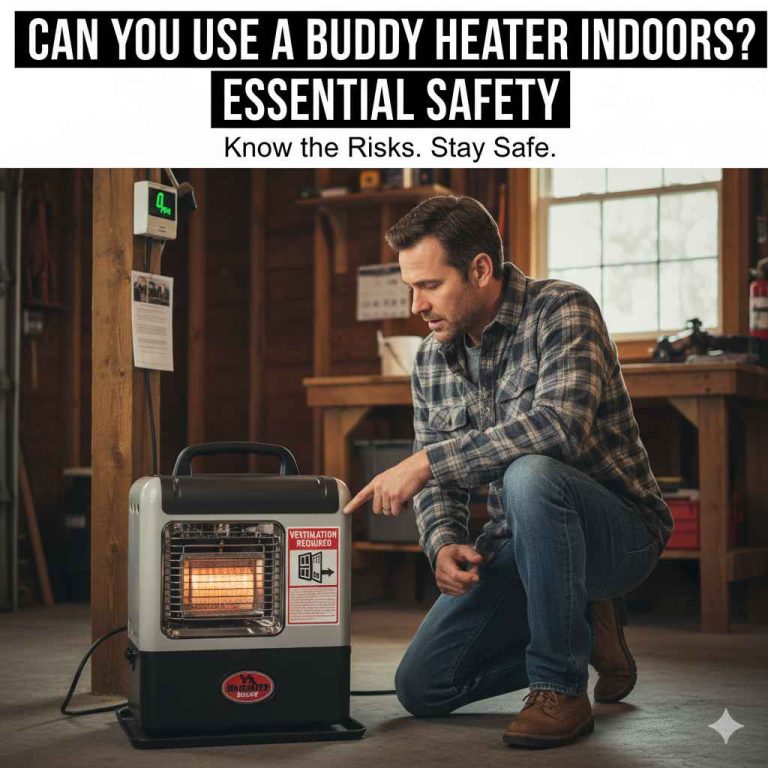
Yes, propane convection heaters can be safe for indoor use when they are specifically designed and approved for indoor use, properly installed, and used according to manufacturer instructions. Always look for safety certifications and ensure adequate ventilation.
Are you looking for a cozy way to warm up your home, especially those trickier-to-heat spots? Propane convection heaters often come up as an option, but a big question looms: are they safe for use inside? It’s completely normal to wonder about this. We all want to stay warm and comfortable without compromising our well-being. This guide is here to clear the air and give you the confidence you need. We’ll walk through everything you need to know, step by step, so you can make an informed decision about your home heating.
Understanding Propane Convection Heaters
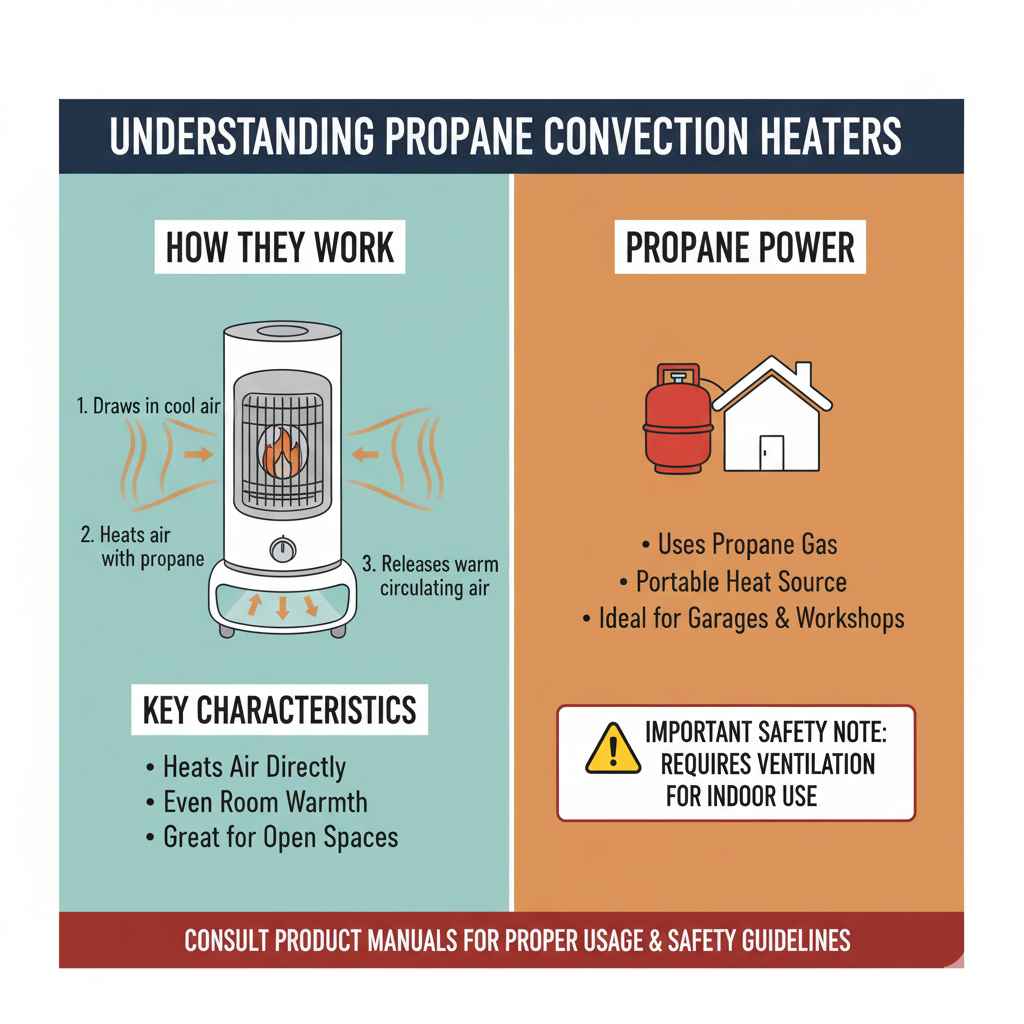
First off, let’s get acquainted with what a propane convection heater actually is. Unlike space heaters that use radiant heat (like the sun’s rays) directly on objects, convection heaters work by warming the air. They pull cooler air in, heat it up, and then release the warmer air, which circulates around the room. This process creates a gentle, even warmth that can spread nicely through your living space.
Propane-powered versions use propane gas to generate this heat. This makes them a great option for homes without natural gas lines or for supplemental heating in garages, workshops, or rooms that are often chilly. But the “propane” part often brings up safety concerns, which is why understanding their suitability for indoor use is so important.
Safety First: Key Considerations for Indoor Use
When we talk about safety with any indoor heating appliance, especially those using combustible fuels like propane, there are a few fundamental things to keep in mind. It’s not just about the heater itself, but also how it’s used and where it sits.
Ventilation is Non-Negotiable
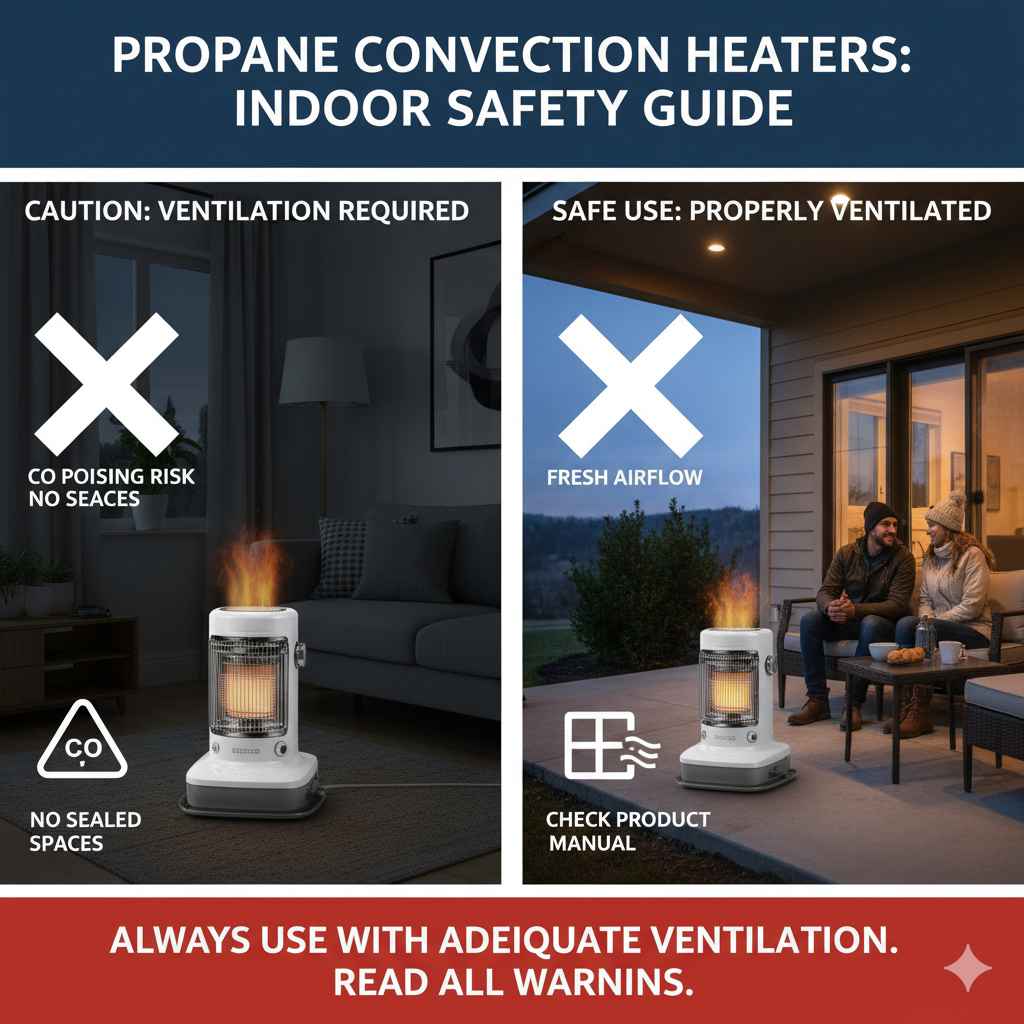
This is arguably the most critical aspect. Propane combustion produces byproducts, including carbon monoxide (CO). Carbon monoxide is a colorless, odorless gas that can be extremely dangerous, even deadly, if it builds up in an enclosed space. Therefore, any propane heater intended for indoor use must be properly vented to the outdoors. This means ensuring the heater is connected to a vent system that safely expels combustion gases.
Look for heaters that are specifically labeled for indoor use and come with built-in safety features for venting. These are often called “vented” propane heaters. Unvented propane heaters should generally not be used indoors in living spaces due to the risk of CO buildup and oxygen depletion. They are sometimes permitted for temporary use in well-ventilated areas like garages or under strict supervision, but it’s crucial to consult local building codes and manufacturer guidelines.
For understanding carbon monoxide safety, the U.S. Consumer Product Safety Commission (CPSC) offers valuable resources on preventing CO poisoning, highlighting the importance of detectors and proper appliance maintenance: CPSC Carbon Monoxide Page.
Carbon Monoxide Detectors: Your Essential Safety Net
Regardless of the type of heating appliance you use, installing and maintaining working carbon monoxide detectors is a must. These devices alert you if CO levels become dangerously high. Place them on every level of your home, especially near sleeping areas. Test them regularly and replace batteries as needed. It’s a simple step that offers immense peace of mind.
Oxygen Depletion Sensor (ODS)
Many indoor-safe propane heaters are equipped with an Oxygen Depletion Sensor (ODS). This is a crucial safety feature designed to shut off the heater if the oxygen level in the room drops to a potentially unsafe point. This is another layer of protection that helps mitigate risks associated with combustion in enclosed spaces.
Tip-Over Protection
Accidents happen, and heaters can sometimes be knocked over. Many modern heaters, including some propane models, have a tip-over safety switch. This switch automatically shuts off the fuel supply if the heater is tilted or knocked over, preventing potential fires or uncontrolled flames.
Clearance and Placement
Always maintain the recommended clearance around your propane heater. This means keeping it away from curtains, furniture, bedding, paper, and anything else that could easily catch fire. The owner’s manual will specify the minimum distances. Place the heater on a stable, level surface to prevent it from tipping over.
Fuel Storage and Handling
Propane tanks need to be stored and handled correctly. They should always be stored upright and in a well-ventilated area, away from heat sources or open flames. Never try to refill a tank indoors. When connecting or disconnecting a tank, ensure the valve is turned off and do so in a clear, open space where any minor propane leakage can dissipate quickly.
Types of Propane Convection Heaters and Indoor Suitability
Not all propane heaters are created equal, especially when it comes to indoor use. Broadly, they fall into two main categories:
1. Vented Propane Convection Heaters
These are the safest option for continuous indoor heating. As the name suggests, they are designed to be vented directly to the outside. The combustion process happens within a sealed chamber, and the exhaust gases are safely channeled away through a pipe or chimney.
- How they work: They draw in outside air for combustion and vent exhaust gases outside. This means they don’t consume indoor oxygen or release combustion byproducts into your living space.
- Indoor suitability: Excellent. These are designed with indoor use as their primary purpose.
- Pros: Very safe, no combustion byproducts indoors, efficient heating.
- Cons: Installation can be more involved (requires venting), typically more expensive initially.
Examples include direct-vent wall furnaces and some models of vent-free heaters that can be converted to direct-vent systems with proper installation. For detailed installation guidelines and safety standards, consult resources like the National Propane Gas Association:
National Propane Gas Association (NPGA)
2. Unvented (Vent-Free) Propane Heaters
These heaters burn propane and release their combustion byproducts directly into the room. They are designed with features like ODS and often catalytic converters to minimize harmful emissions and maximize efficiency. However, their use indoors is a topic of significant discussion and regulation.
- How they work: They burn propane and discharge heat, water vapor, and small amounts of CO2 and CO directly into the room.
- Indoor suitability: Controversial. While some models are approved for indoor use in specific situations (often with strict limitations on run time and room size), they are generally NOT recommended for primary or continuous heating in modern, tightly sealed homes. Users must ensure extremely good ventilation, regular CO monitoring, and understand the potential for oxygen depletion and moisture buildup. Many jurisdictions have banned or restricted their use.
- Pros: No venting required, lower initial cost, portable.
- Cons: Release combustion byproducts indoors (CO, CO2, H2O), can deplete oxygen, potential health risks if not used with extreme caution and ventilation, can add moisture to the air.
It’s critical to check local building codes and fire regulations regarding unvented appliances. Many experts advise against their use in occupied living spaces due to safety concerns. For instance, the National Fire Protection Association (NFPA) provides guidance on heating safety that emphasizes proper ventilation.
Important Note: When considering an unvented heater, ensure it’s the correct type approved for your region and intended use. Never alter the safety features. Always operate them in rooms with a window or door slightly open to allow for fresh air exchange, and religiously use CO detectors.
Propane Convection Heaters vs. Other Heating Options
To really understand where propane convection heaters fit, it’s helpful to compare them to other common indoor heating solutions.
Here’s a look at some popular options:
| Heater Type | Fuel/Power Source | Typical Indoor Use | Safety Considerations | Pros | Cons |
|---|---|---|---|---|---|
| Propane Convection Heater (Vented) | Propane | Excellent (Designed for) | Requires proper venting, CO monitoring recommended | Efficient, even heat, safe for continuous indoor use, no indoor pollution | Requires venting installation, higher initial cost |
| Propane Convection Heater (Unvented) | Propane | Limited/Conditional (Check codes/manufacturer) | Requires excellent ventilation, ODS, CO detectors mandatory; potential CO/O2 risks | No venting needed, portable, lower initial cost | Releases byproducts indoors, depletes O2, adds moisture, health risks if misused, restricted use in many areas |
| Electric Convection Heater | Electricity | Excellent (Designed for) | Electrical safety (overheating, cord damage) | No combustion, no fumes, easy to use, widely available | Can be energy-intensive and costly to run, may not heat as quickly as propane |
| Natural Gas Heater | Natural Gas | Excellent (Requires gas line) | Requires proper venting, CO monitoring recommended | Potentially cheaper to run than propane, consistent heat | Requires natural gas line installation, less portable |
| Electric Space Heater (Radiant/Fan) | Electricity | Good for supplemental/spot heating | Electrical safety, tip-over risks | Portable, quick spot heating, no fumes | Can be costly to run, may not heat large areas evenly, fire risk if placed too close to combustibles |
As you can see, for consistent and safe indoor heating throughout your home, a vented propane convection heater offers a compelling balance of efficiency and safety, comparable to natural gas but with greater fuel flexibility. Electric options are generally the easiest and safest to use from an operational standpoint, but their running costs can be a significant factor.
Installing and Using Your Propane Convection Heater Safely
Proper setup and consistent usage habits are key to ensuring your propane convection heater operates safely and effectively. Always refer to your heater’s specific owner’s manual, as models can vary.
Step-by-Step Installation (General Guidelines for Vented Models)
For vented propane convection heaters, installation typically involves these key steps:
- Choose the Location: Select a spot away from foot traffic, flammable materials, and drafts. Ensure it’s on a level surface. For vented models, you’ll need to plan for the vent pipe to exit an exterior wall or through the roof.
- Mount the Heater: Securely mount the heater to the wall according to the manufacturer’s instructions. This usually involves brackets and ensuring the unit is level.
- Connect the Propane Line: Attach the propane regulator to the heater and connect it to the propane tank using the appropriate hose. Ensure all connections are tight and leak-free. You can typically test connections with a soapy water solution – bubbles indicate a leak.
- Install the Venting: This is crucial for vented heaters. Follow the manufacturer’s diagrams precisely for routing the vent pipe. Ensure it exits the building properly, is sealed against weather, and is the correct type of vent material. Improper venting can lead to carbon monoxide leaks.
- Perform a Leak Test: After connecting the propane, perform another thorough leak test on all fittings.
- Test the Heater: Once everything is connected and leak-free, turn on the propane and follow the manufacturer’s instructions for igniting and operating the heater for the first time.
If you’re not comfortable with gas lines or venting, it is always best to hire a qualified HVAC professional or a certified propane technician. Mistakes in installation, especially with venting, can have severe safety consequences.
Safe Operating Practices
- Read the Manual: Seriously, this is your most important tool! Every bit of information about your specific model’s operation and safety features is in there.
- Regular Inspections: Periodically check the heater for any signs of damage, rust, or wear. Inspect the propane hose for cracks or brittleness.
- Cleanliness: Keep the area around the heater clear and clean. Dust and debris can be a fire hazard and can interfere with the heater’s operation.
- Pilot Light Check: If your heater has a pilot light, check that it burns with a steady blue flame. A flickering or yellow flame can indicate incomplete combustion.
- Vent Check: For vented models, ensure the vent is clear of obstructions like snow, leaves, or animal nests.
- Never Leave Unattended (Especially Unvented): If you choose to use an unvented model (where permitted and appropriate), never leave it running when you are sleeping or away from the area.
- Monitor Air Quality: Pay attention to any unusual smells, soot marks, or if you or anyone in your household experiences symptoms like headaches, nausea, dizziness, or difficulty breathing. These could be signs of CO buildup.
Troubleshooting Common Issues
Even the best heaters can have minor hiccups. Here are a few common issues and what you can do about them:
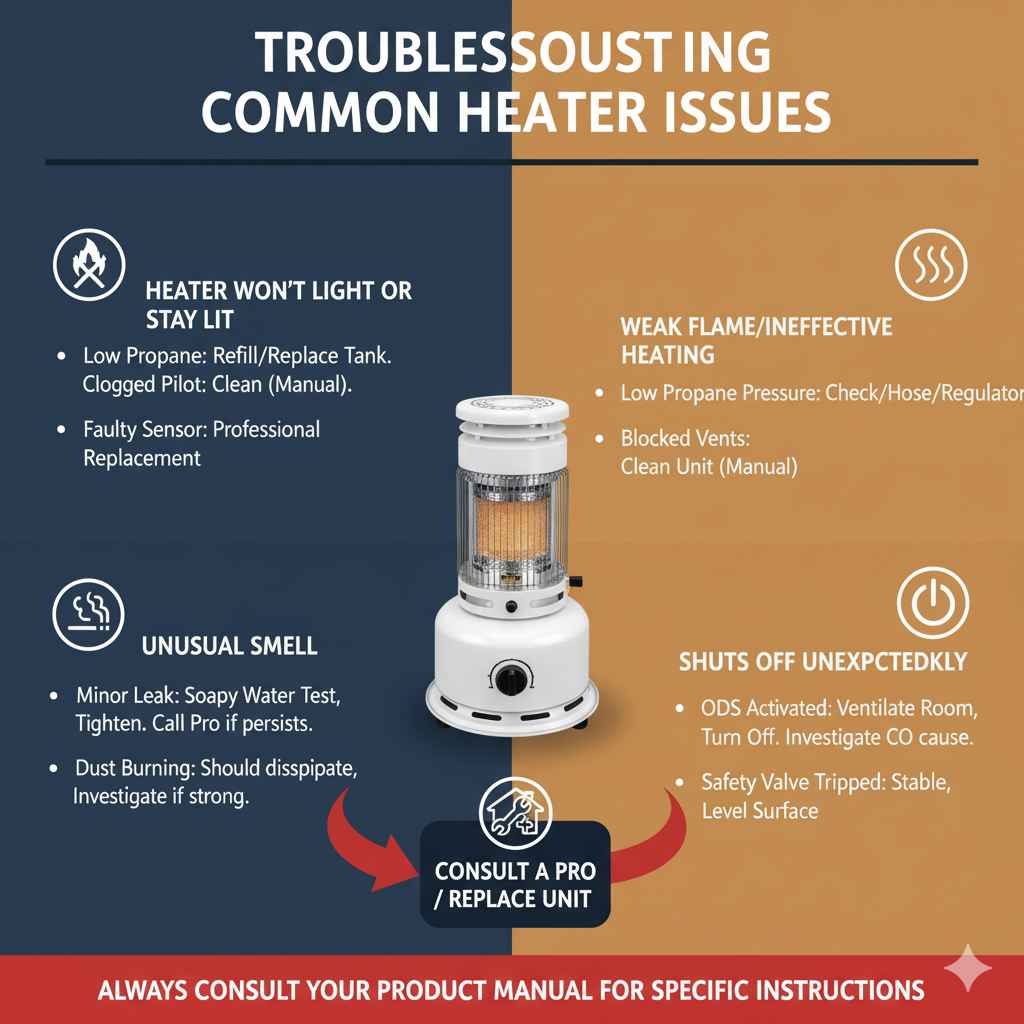
| Problem | Possible Cause | Solution |
|---|---|---|
| Heater won’t light or stay lit. | Low propane level in tank. | Refill or replace the propane tank. |
| Clogged pilot orifice or igniter. | Carefully clean the pilot orifice/igniter (refer to manual). | |
| Faulty thermocouple or ODS sensor. | These are safety components that may need professional replacement. | |
| Heater is producing a weak flame or not heating effectively. | Low propane pressure. | Ensure the tank is adequately filled and the regulator is functioning correctly. Check for kinks in the propane hose. |
| Blocked vents or heat exchangers (on some models). | Ensure vents are clear and clean the unit as per the manual. | |
| Unusual smell. | Minor propane leak at a connection. | Turn off the gas immediately and test all connections with soapy water. Tighten or replace faulty connectors. If the smell persists, call a professional. |
| Dust or debris burning off. | This can happen when a heater is first used after a long period of disuse. It should dissipate. If it’s a strong or persistent smell, investigate further. | |
| Heater shuts off unexpectedly. | ODS has activated (common with unvented models). | This indicates low oxygen levels. Immediately ventilate the room and turn off the heater. Investigate the cause of oxygen depletion before using again. |
| Safety valve tripped (e.g., tip-over switch). | Ensure the heater is on a stable, level surface and has not been knocked. |
Frequently Asked Questions (FAQ)
Q1: Can I use a propane heater designed for outdoor use inside my home?
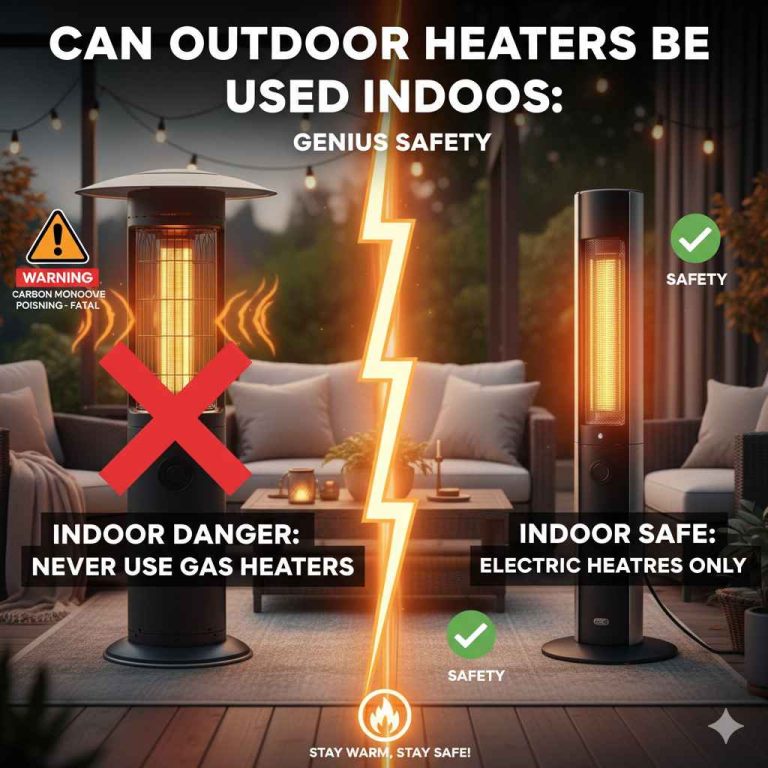
A: Absolutely not. Outdoor propane heaters are not designed with the safety features (like proper venting or ODS) needed for indoor environments. Using one indoors is extremely dangerous and can lead to carbon monoxide poisoning or fire.
Q2: How often should I replace the propane tank for my indoor heater?
A: Propane tanks themselves are designed to last for many years, but they do need to be refilled or exchanged when empty. Always check the tank’s condition for any dents, rust, or damage before refilling. It’s the law in most places to have tanks inspected before refilling.
Q3: Do propane convection heaters add moisture to the air?
A: Yes, the combustion of propane produces water vapor. Unvented heaters release this directly into the room, which can contribute to condensation on windows and walls, and potentially lead to mold or mildew issues if the room is not adequately ventilated. Vented heaters expel this moisture outside.
Q4: Are propane heaters noisy?
A: Propane convection heaters are generally quite quiet. They produce a gentle whooshing sound as the air circulates, which is often unnoticeable or even comforting. They don’t have the loud fan noises associated with some forced-air electric heaters.