
Figuring out How Much Do Electric Garage Heaters Cost to Run? is a common question, especially for those new to garage heating. It can seem a bit tricky at first, with terms like “watts” and “kilowatt-hours” thrown around. Don’t worry, though! This guide will break down the costs simply. We’ll explore the factors that affect the price, step by step. We’ll explore how to calculate energy use and look at ways to make your garage toasty without breaking the bank. Let’s get started!
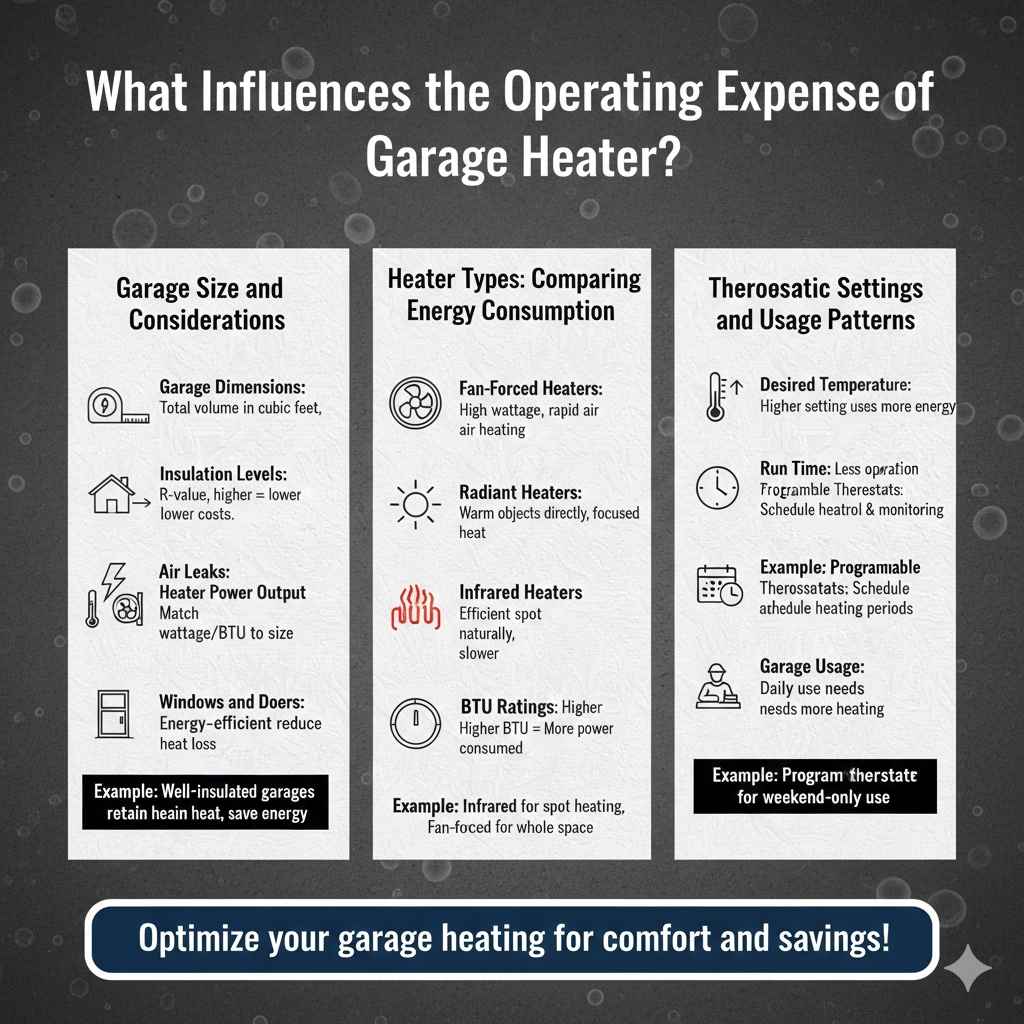
What Influences the Operating Expense of Garage Heaters?
The cost of operating an electric garage heater isn’t a fixed number; several factors can impact the final bill. The size of your garage, the insulation, and the thermostat settings play significant roles. The type of heater you select also matters. Fan-forced heaters, radiant heaters, and infrared heaters all consume electricity at different rates. Knowing these key elements helps you anticipate and control your heating costs. This knowledge is important for managing your budget and keeping your garage at a comfortable temperature.
Garage Size and Insulation Considerations
The size of your garage is the first thing to think about. A larger garage needs a heater with more power to warm the space effectively. This means it will likely consume more electricity. Think of it like filling a swimming pool versus a small tub – the pool needs much more water. Insulation is your garage’s ability to retain heat. Good insulation prevents heat from escaping, reducing the time and energy your heater needs to run. If your garage is poorly insulated, the heater will work harder, leading to higher costs. You should consider adding or improving insulation to keep costs down.
- Garage Dimensions: The cubic footage of your garage significantly affects heating needs. Measure length, width, and height. Multiply these to get the total volume.
- Insulation Levels: Check the insulation rating (R-value) in your walls, ceiling, and door. Higher R-values mean better insulation and lower operating costs.
- Air Leaks: Identify and seal any air leaks around windows, doors, and other openings. Sealing these gaps can prevent heat loss and lower energy use.
- Heater Power Output: Determine the heater’s wattage or BTU (British Thermal Units) rating, which indicates its heating capacity. Match the heater’s output to the garage size.
- Windows and Doors: Consider the number and type of windows and doors in your garage. They can influence heat loss. Energy-efficient windows and well-sealed doors are great.
Imagine two garages, same size. One has excellent insulation, and the other has little to no insulation. The poorly insulated garage needs the heater to run almost constantly. In contrast, the well-insulated garage can reach and maintain a set temperature with much less effort. You might save on your energy costs by improving insulation.
Heater Types: Comparing Energy Consumption
Different types of electric garage heaters use energy differently. Some are more energy-efficient than others. Fan-forced heaters use a fan to distribute heat quickly, potentially making them suitable for rapid heating. Radiant heaters emit infrared rays, warming objects directly rather than the air. Infrared heaters are known for focused heating, and can be energy-efficient in some situations. The best choice depends on your specific needs and how you use your garage. Keep in mind that initial purchase price is not the only cost; long-term operating costs matter too.
- Fan-Forced Heaters: These are common and use a fan to push heated air. They often have higher wattage, meaning they may consume more electricity.
- Radiant Heaters: These heat objects directly through infrared radiation. They can be energy-efficient for focused heating but might not warm the entire garage uniformly.
- Infrared Heaters: Similar to radiant heaters, these direct heat. They are known for efficient spot heating.
- Convection Heaters: These heat air naturally through convection currents. They might take longer to heat a space compared to fan-forced types.
- BTU Ratings: BTU (British Thermal Unit) ratings indicate a heater’s heat output. The higher the BTU, the more heat the heater generates and generally, the more power it consumes.
Consider a scenario: you have a small garage and mainly need spot heating while you work on a project. An infrared heater would be a solid option. It directs heat efficiently to your work area. On the other hand, if you want to heat the whole space quickly, a fan-forced heater would work well. Always consider the efficiency and your specific garage use case when making a decision.
Thermostat Settings and Usage Patterns
How you set your thermostat and how often you use your garage heater have a significant impact on its cost. Setting the thermostat too high uses more energy. Setting it to a moderate, comfortable temperature and only turning it on when needed is a good strategy. If you only use your garage occasionally, a programmable thermostat can save money. It allows you to set the heater to turn on and off based on your schedule. Think about your habits and adjust settings accordingly for a better result.
- Desired Temperature: The higher you set the thermostat, the more energy the heater will use.
- Run Time: How long the heater operates daily or weekly impacts energy use. Using it less often saves money.
- Programmable Thermostats: These allow you to schedule heating. You can set the heater to turn on before you use your garage and off when you leave.
- Smart Thermostats: Some models can learn your habits and adjust heating automatically for optimal comfort and savings.
- Garage Usage: If you only use your garage for a few hours a week, you’ll need less heating than someone using it daily.
Think about a typical week. If you only use your garage for a few hours on the weekend, you can program your thermostat to turn on an hour before you plan to use it. This way, the garage is warm when you arrive, but you’re not wasting energy heating an empty space. A smart thermostat, on the other hand, might learn this pattern and adjust accordingly. This helps to reduce wasted energy and lower your bills.
Calculating Energy Use: Finding the Cost
Calculating the energy consumption and, ultimately, the cost of running an electric garage heater may sound complicated. However, it’s quite simple when broken down into steps. You’ll need the heater’s wattage, the number of hours it runs, and the cost of electricity per kilowatt-hour. This information allows you to estimate your heating expenses. This section will walk you through the process, providing the information you need to make informed decisions about your energy use.
Understanding Wattage and Kilowatt-Hours
Wattage and kilowatt-hours (kWh) are key terms for understanding electricity use. Wattage measures the rate at which the heater uses energy, and kilowatt-hours measure how much energy the heater consumes over time. A higher wattage means the heater uses more electricity per hour. Knowing these concepts helps you estimate the cost of running your heater. Understanding these two concepts is important for making smart energy choices.
- Wattage: The rate at which the heater consumes electricity. It’s usually listed on the heater’s label or in its specifications.
- Kilowatt (kW): One thousand watts. To convert watts to kilowatts, divide by 1000.
- Kilowatt-hour (kWh): The unit of energy used to measure how much electricity you use over time. 1 kWh means using 1000 watts for one hour.
- Energy Consumption Formula: kWh = (Watts x Hours used) / 1000
- Utility Bills: Your electricity bill shows the cost per kWh. This is crucial for calculating heating costs.
For example, if a heater is rated at 1500 watts and runs for 5 hours, the calculation is (1500 x 5) / 1000 = 7.5 kWh. Knowing this, you can now use your utility’s rate to calculate the expense of using that heater for that amount of time.
Step-by-Step Cost Calculation
Calculating the cost of running your garage heater involves a straightforward process. First, find your heater’s wattage and how many hours it runs each day. Next, divide the wattage by 1000 to convert it to kilowatts. Then, multiply by the number of hours it runs to find the kilowatt-hours used. Finally, multiply the kilowatt-hours by the cost per kWh shown on your electricity bill. This will give you an estimate of the daily or monthly costs, depending on how you do the calculation. Using these steps, you can estimate the expense accurately.
- Find Wattage: Locate the wattage rating of your electric garage heater. This is typically printed on the unit itself or in the manual.
- Determine Run Time: Estimate how many hours per day or week the heater runs. This depends on your usage and thermostat settings.
- Convert Watts to Kilowatts: Divide the wattage by 1000 to convert to kilowatts (kW). For example, 1500 watts / 1000 = 1.5 kW.
- Calculate Kilowatt-hours (kWh): Multiply the kW by the number of hours the heater runs. For example, 1.5 kW x 4 hours = 6 kWh.
- Check Your Electricity Bill: Look at your electricity bill to find the cost per kWh in your area.
- Calculate the Cost: Multiply the kWh used by the cost per kWh. For example, 6 kWh x $0.15/kWh = $0.90 per day.
Let’s say your heater is 1500 watts and runs for 4 hours a day. Using the steps above, you’d calculate: (1500 watts / 1000) x 4 hours = 6 kWh. If your electricity costs $0.15 per kWh, the daily cost is 6 kWh x $0.15 = $0.90 per day. This example shows that even small changes can impact your costs.
Estimating Monthly and Annual Costs
To estimate your monthly or annual heating expenses, you simply extend the daily calculation. Multiply the daily cost by the number of days in the month to find the monthly cost. Likewise, multiply the daily cost by 365 to calculate the yearly expense. This gives you a clear picture of how much you spend on heating your garage. This knowledge helps you budget and make informed choices to control your energy spending.
- Monthly Cost Calculation: Multiply the daily cost by the number of days in the month. For example, $0.90 per day x 30 days = $27 per month.
- Annual Cost Calculation: Multiply the daily cost by 365 days. For example, $0.90 per day x 365 days = $328.50 per year.
- Consider Seasonal Usage: Remember that you might use the heater more during winter months and less in the spring and fall.
- Factor in Changes: Energy costs and your usage patterns can change. Update your calculations periodically to reflect these changes.
- Use Online Calculators: Many online tools allow you to input your heater’s wattage, run time, and electricity rates to estimate costs.
If your daily heating cost is $0.90, the monthly cost would be approximately $27 if you use it every day for 30 days. Annually, at the same rate, the cost would be roughly $328.50. However, these are estimates. Factors like how often you use your garage can change these numbers. It’s smart to adjust your budget seasonally.
Factors That Can Affect Your Calculations
Several factors can influence the accuracy of your cost calculations. The price of electricity, the efficiency of your heater, and your usage patterns can all play a role. Being aware of these elements helps you refine your estimates and make smarter choices about energy use. Knowing how these things affect your figures lets you make better decisions.
Fluctuating Electricity Prices
Electricity prices aren’t constant; they can change throughout the year and even throughout the day. These shifts impact your heating costs. Prices can vary based on the season, demand, and your local energy provider’s rates. Keeping an eye on these price fluctuations allows you to adjust your usage accordingly. It might be wise to use your heater less during peak hours when electricity is more expensive. This awareness helps you manage costs effectively.
- Seasonal Variations: Electricity rates often increase during peak seasons, such as summer and winter, due to increased demand.
- Time-of-Use Rates: Some utility companies offer different rates based on the time of day. Using your heater during off-peak hours can be cheaper.
- Demand Charges: Some commercial and industrial customers face demand charges, based on their peak electricity usage.
- Renewable Energy Options: Some utility providers offer renewable energy plans. These plans may have different pricing structures.
- Checking Your Bill: Look at your electricity bill regularly. It will show the current rates and any changes.
In many areas, electricity prices are higher during the daytime. If your utility has time-of-use rates, running your heater mostly during off-peak hours (like overnight) could save money. This flexibility can help lower costs. Checking your bill regularly will provide valuable insights.
Heater Efficiency and Maintenance
The efficiency of your electric garage heater impacts how much it costs to run. A more efficient heater converts more electricity into heat, requiring less power to achieve the same temperature. Regularly maintaining your heater, such as cleaning filters and checking for any damage, also helps ensure it operates efficiently. This means your heater works as it should, using less electricity. Efficiency and maintenance play a role in how much energy you use and how much you pay.
- Energy Efficiency Ratings: Look for Energy Star-rated heaters. These have been tested and shown to be more efficient.
- Filter Maintenance: Clean or replace the filter regularly. This prevents the heater from working harder, which increases energy consumption.
- Component Inspection: Inspect the heating elements and other parts of the heater for damage or wear.
- Airflow Considerations: Ensure proper airflow around the heater. Blocking vents can lower efficiency and increase costs.
- Professional Servicing: Have a professional service your heater periodically to maintain peak performance.
Imagine two heaters. Both warm your garage, but one is newer and more efficient. The newer heater uses less electricity to produce the same amount of heat. Keeping your heater maintained, such as cleaning the filter, will also make it operate better. Doing this can extend its lifespan, too.
Variations in Usage Patterns
Your heating costs vary based on how often you use your garage and how you use your heater. Someone who uses the garage for a few hours a day will have different costs than someone who uses it infrequently. Adjusting your usage patterns can lead to big savings. For example, you can avoid heating an empty space. This control is useful for managing your energy budget.
- Frequency of Use: The more often you use your garage, the more you’ll use the heater.
- Duration of Use: The longer you run the heater during each use, the more it will cost.
- Temperature Settings: Higher thermostat settings lead to higher consumption and costs.
- Pre-heating: If you use the garage in the morning, pre-heating the night before is often more cost-effective.
- Work Habits: Consider how you work in the garage. Do you need a constant temperature, or is spot heating enough?
For example, you might only need your garage warm for a few hours on weekends. In this case, turning off the heater completely during the week would save money. Alternatively, if you spend a lot of time in the garage, a consistent temperature would be important. Recognizing and adjusting your habits can help lower your heating expenses.
Real-Life Examples and Scenarios
Let’s look at some real-life scenarios to see how these factors affect costs. Examining how different people use their garage heaters can provide a clear view of how these factors affect costs. The results in these scenarios highlight how your choices can impact your energy expenses. These examples bring the cost calculations to life.
Case Study 1: The Weekend Mechanic
John uses his 1500-watt electric garage heater for about 8 hours each weekend to work on his cars. His electricity cost is $0.14 per kWh. He uses his garage every Saturday and Sunday. The calculation: (1500 watts / 1000) 8 hours = 12 kWh per weekend. Then, 12 kWh $0.14 = $1.68 per weekend. He spends roughly $1.68 on heating for each weekend, totaling about $6.72 each month.
Case Study 2: The Artist’s Studio
Maria uses a 1000-watt heater in her garage-turned-art studio for 4 hours each weekday. Her local electricity rate is $0.16 per kWh. The daily cost is (1000 watts / 1000) 4 hours = 4 kWh $0.16 = $0.64. Maria spends about $0.64 per day on garage heating, about $12.80 each month.
Case Study 3: The Occasional User
David only uses his 2000-watt heater on the coldest days. He estimates the heater runs for about 3 hours per month, when needed. His utility charges $0.17 per kWh. The cost is (2000 watts / 1000) 3 hours = 6 kWh. The monthly cost is 6 kWh $0.17 = $1.02. This shows that the cost can be low with careful usage.
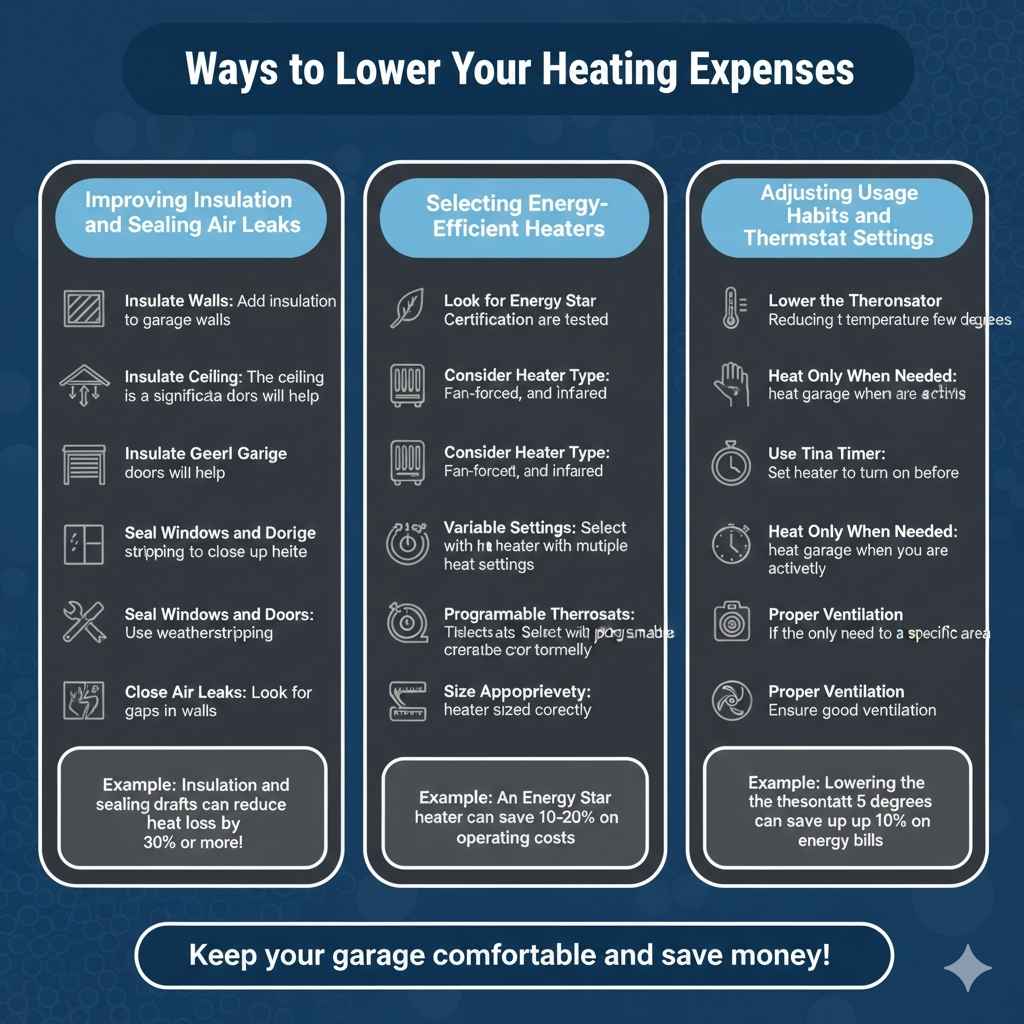
Ways to Lower Your Heating Expenses
There are several steps you can take to lower the cost of running your electric garage heater. Simple changes to your habits, improving insulation, and choosing energy-efficient options all help to reduce energy consumption. These strategies will help you save money while keeping your garage comfortable. Making these adjustments can provide great value.
Improving Insulation and Sealing Air Leaks
Improving the insulation in your garage will help to keep heat inside, reducing the workload of your heater. This, in turn, can lower your energy bills. Sealing air leaks prevents heat from escaping, which is also very helpful. These simple improvements can make a big difference in how efficiently your garage heater works. Taking these steps is good for both your budget and the environment.
- Insulate Walls: Add insulation to your garage walls, if possible. Fiberglass batts, spray foam, or rigid foam board are good options.
- Insulate Ceiling: The ceiling is a significant area for heat loss. Install insulation above the ceiling.
- Insulate Garage Door: Insulated garage doors will help prevent heat loss. Retrofit kits can be useful if your door isn’t insulated.
- Seal Windows and Doors: Use weatherstripping and caulk to seal around windows and doors.
- Close Air Leaks: Look for gaps in walls, around pipes, and wiring. Seal these with caulk or foam sealant.
Consider an example: if your garage walls are uninsulated, adding insulation can reduce heat loss by a significant amount. This means the heater won’t have to work as hard to maintain the temperature. Using weatherstripping around doors and windows will also prevent heat from escaping. These improvements will create a more comfortable garage and cut energy costs.
Selecting Energy-Efficient Heaters
Choosing an energy-efficient heater can make a difference in your energy costs. Look for models with an Energy Star rating, as these meet strict efficiency guidelines. Consider the type of heater and its features. Some types, like radiant or infrared heaters, are efficient for spot heating. These factors play a role when considering an affordable approach. Taking time to select the right product can save you money.
- Look for Energy Star Certification: These heaters are tested and proven to use less energy.
- Consider Heater Type: Fan-forced, radiant, and infrared heaters have varying levels of efficiency.
- Variable Settings: Select a heater with multiple heat settings and a thermostat for precise control.
- Programmable Thermostats: Select a heater with a programmable thermostat to schedule operation.
- Size Appropriately: Choose a heater sized correctly for your garage. A heater too large might waste energy.
Compare two options. One heater is Energy Star rated and has a programmable thermostat. The other is an older model without these features. The Energy Star heater uses less energy. Using the programmable thermostat allows you to heat the space only when needed. Over time, these features can result in significant savings.
Adjusting Usage Habits and Thermostat Settings
How you use your heater and set your thermostat greatly impacts your costs. Making small changes can often lead to significant savings. Setting the thermostat a few degrees lower, turning it off when the garage isn’t in use, and using a timer all help. Being mindful of your energy use is a good idea. Combining good practices will help with efficiency.
- Lower the Thermostat: Reducing the temperature a few degrees can save a lot of energy.
- Use a Timer: Set the heater to turn on before you use the garage and turn off when you leave.
- Heat Only When Needed: Only heat the garage when you are actively using the space.
- Spot Heating: If you only need to heat a specific area, consider a spot heater instead of heating the whole garage.
- Proper Ventilation: Ensure good ventilation in your garage to avoid wasting energy on humid air.
A simple change could make a difference. If you typically set your thermostat to 75 degrees, you could try setting it to 70 degrees. You might hardly notice the change, but you would see some savings. Using a timer to turn the heater on and off can also help you avoid heating an empty garage. These small changes lead to bigger savings over time.
Frequently Asked Questions
Question: What’s the main factor impacting electric garage heater cost?
Answer: The wattage of the heater, coupled with how long it runs, is a key factor.
Question: Are some heater types more energy-efficient?
Answer: Yes, Energy Star-rated models tend to use less energy.
Question: How do I calculate the cost to run my heater?
Answer: Multiply the heater’s wattage by its run time (in hours), then divide by 1000. Finally, multiply this number by your local electricity cost per kWh.
Question: Should I always keep the heater on in the garage?
Answer: It’s typically more efficient to turn the heater on only when needed and adjust settings, unless you require constant warmth.
Question: How do I know if my garage is well insulated?
Answer: Check the insulation rating (R-value) in your walls, ceiling, and door. Higher R-values indicate better insulation.
Final Thoughts
How Much Do Electric Garage Heaters Cost to Run? You now understand the variables that impact the costs of running an electric garage heater. We’ve explored how garage size, insulation, heater types, and usage patterns all play a role in calculating the expenses. The cost is not a fixed number, but it is manageable. Armed with this information, you can now make smart choices about your garage heating, leading to better control over your energy bills.
Remember, small changes in your habits can have a big impact. By prioritizing efficiency, you can create a comfortable garage space while also keeping your energy costs in check. The path to saving money on garage heating is within your reach. Start today!
Last Updated on January 14, 2026 by Tanim