Are Ceramic and Infrared Heaters The Same: Expert Guide
People often wonder, “Are ceramic and infrared heaters the same? Expert guide” is a common question for folks new to heating options. It can be a bit confusing because both types are popular for home heating, but they work quite differently.
Don’t worry, though! We’re going to break it all down super simply. You’ll see exactly how they differ and which might be best for you.
Let’s clear things up step-by-step.
Understanding Ceramic and Infrared Heaters
Many people find themselves asking, “Are ceramic and infrared heaters the same? Expert guide” because the terms sound similar, and both are used to warm up spaces. This common point of confusion arises from the fact that both technologies are excellent solutions for space heating, but their fundamental methods of heat distribution and the way they warm objects and people are distinct.
This guide aims to demystify these differences, providing a clear and straightforward comparison so you can make an informed decision about your heating needs. We will explore the core principles behind each type, their operational mechanisms, and how they interact with your environment.
How Ceramic Heaters Work
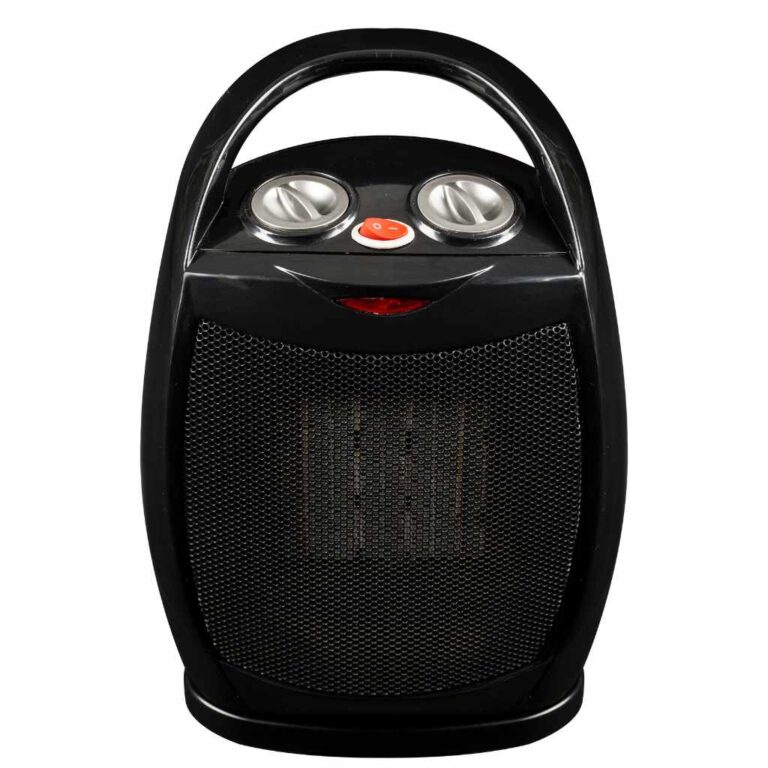
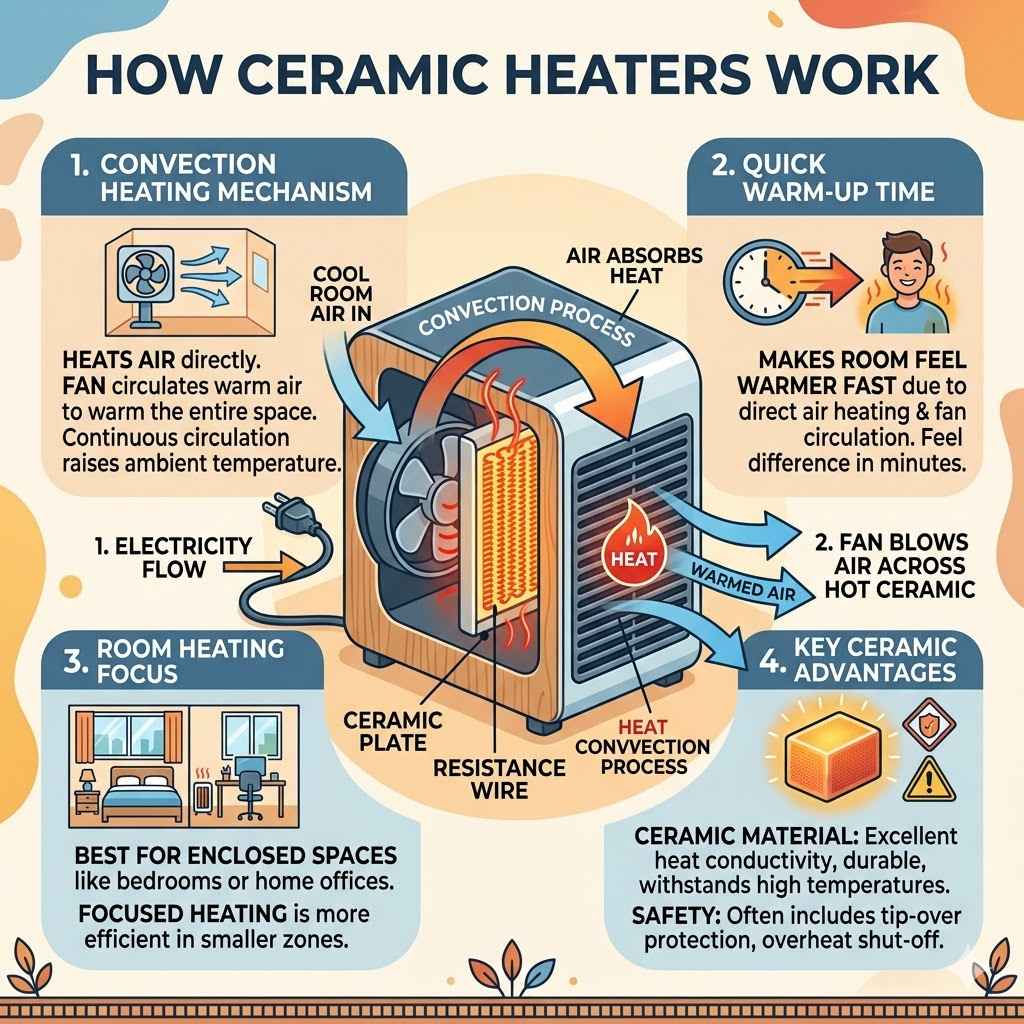
Ceramic heaters operate by passing air over a heated ceramic element. This element, often a ceramic plate or a ceramic-coated metal, gets very hot. A fan then blows room air across this hot surface.
As the air moves over the ceramic, it absorbs heat. The warmed air is then pushed out into the room. This process is called convection.
The heated air circulates throughout the space, gradually raising the overall temperature of the room. Think of it like a small, portable furnace that warms the air around it.
The ceramic material itself is chosen for its excellent heat conductivity and durability. It can withstand high temperatures without degrading. When electricity flows through the heating element, it generates heat.
This heat is then transferred to the ceramic. The fan is crucial for distributing this heat efficiently. Without the fan, the heat would simply stay localized around the ceramic element.
The continuous circulation of air ensures that the entire room benefits from the warmth.
Ceramic heaters are known for their relatively fast heating capabilities for the immediate area. Because they warm the air directly, you can feel the warmth quite quickly after turning them on. They are a popular choice for supplemental heating in smaller rooms or to quickly take the chill off a space.
Their design often includes safety features like tip-over protection and overheat shut-off, making them a safe option for many households.
Key Features of Ceramic Heaters
- Convection Heating Mechanism: They heat the air, which then circulates to warm the room. This creates a generally warm environment over time.
- The primary way ceramic heaters work is by heating the air. This is done through a process called convection. An electric current passes through a resistance wire, which is often embedded within or attached to a ceramic element.
- This ceramic element gets hot. A fan, usually built into the heater, then forces room air to pass over this hot ceramic. As the air travels across the hot surface, it picks up heat.
- This newly warmed air is then expelled from the heater and begins to circulate in the room. This continuous movement of warmed air helps to raise the overall ambient temperature of the space.
- Quick Warm-up Time: They can make a room feel warmer relatively fast due to air circulation.
- One of the advantages people appreciate about ceramic heaters is their speed in making a space feel warmer. Because they are directly heating the air and using a fan to push that warm air out, you can often feel the difference in temperature within minutes of turning the unit on. This makes them ideal for situations where you need rapid heating, like getting a chilly bedroom ready for sleep or warming up a home office quickly before you start your workday.
- The sensation is of the air itself becoming warmer around you.
- Room Heating Focus: Best for warming enclosed spaces like bedrooms or offices.
- Ceramic heaters are generally most effective when used in smaller, enclosed spaces. This is because their method of heating relies on circulating warmed air. In larger, open-plan areas, the warm air can escape easily, and the fan might not have the power to circulate it effectively throughout the entire space.
- Therefore, they are often recommended for personal spaces like bedrooms, small living rooms, or home offices where they can create a comfortable and consistent temperature without needing to heat a vast area. This focused heating can also lead to more efficient energy use in these targeted zones.
How Infrared Heaters Work
Infrared heaters work differently by emitting infrared radiation. This radiation is a form of light that we feel as heat. Unlike ceramic heaters that warm the air, infrared heaters warm objects and people directly.
When the infrared waves hit a surface, like your skin, furniture, or walls, they are absorbed and converted into heat. This means you feel warm almost instantly, even if the air temperature in the room hasn’t significantly changed yet.
The infrared waves are invisible to the human eye. They travel in straight lines until they encounter an object. This is similar to how the sun warms you on a cool day.
The sun’s rays travel through space and warm the things they touch. Infrared heaters use specialized elements, such as quartz tubes or carbon fibers, to generate this radiation efficiently. The intensity and type of infrared radiation can vary between models, affecting how quickly and deeply they warm objects.
Because they heat objects and not just the air, infrared heaters can be very efficient in certain situations. They are less affected by drafts or air leaks compared to convection heaters. This makes them a good choice for larger spaces, partially open areas, or rooms where consistent air temperature is hard to maintain.
You can feel the heat from an infrared heater even if the room feels a bit cool because it’s warming you directly.
Key Features of Infrared Heaters
- Radiant Heating Mechanism: They emit infrared waves that directly warm objects and people.
- The core principle behind infrared heaters is radiant heat. Instead of warming the air first, they produce electromagnetic waves, specifically in the infrared spectrum. These waves travel through the air until they strike a surface – this could be a person, a piece of furniture, a wall, or the floor.
- When these waves hit an object, they are absorbed and converted into heat energy. This direct warming of surfaces and bodies is what makes you feel warm almost instantaneously, much like feeling the warmth of the sun on your skin even on a cool day. The air itself is not directly heated by the emitter.
- Instant Heat Feeling: You feel warm almost immediately upon exposure to the rays.
- A significant advantage of infrared heaters is the rapid onset of warmth. As soon as you are in the path of the infrared radiation, you will begin to feel the heating effect. This is because the waves directly interact with your body’s molecules, causing them to vibrate and generate heat.
- This immediate sensation of warmth is a stark contrast to convection heaters, which need time to heat the air and circulate it. This makes infrared heaters excellent for targeted heating or for situations where you need instant comfort.
- Object and People Warming: They warm what they “see” not just the air.
- Infrared heaters excel at heating specific areas or objects within a room. They don’t rely on heating the entire volume of air to create a comfortable environment. Instead, they emit waves that warm surfaces and people directly in their line of sight.
- This selective heating can be very energy-efficient if you only need to warm a particular spot, like your desk area or a seating arrangement. It also means that even if the air temperature in the room is slightly lower, you can still feel very comfortable because your body is being directly warmed.
Are Ceramic and Infrared Heaters the Same? Expert Guide Comparison
When considering “Are ceramic and infrared heaters the same? Expert guide,” it’s vital to look at their distinct methods of warming a space. While both are electric heating solutions, their operational principles lead to very different user experiences and suitability for various environments.
Understanding these differences is key to choosing the right heater for your needs. This section will provide a direct comparison, highlighting the unique characteristics that set them apart.
Heating Method Comparison
| Feature | Ceramic Heater | Infrared Heater |
|---|---|---|
| Primary Heating Principle | Convection (heats air) | Radiation (heats objects and people) |
| Speed of Warmth | Gradual (as air heats up) | Instant (directly warms surfaces) |
| Effect on Air Temperature | Significantly raises room air temperature | Slightly affects air temperature; warms surfaces |
| Best For | Enclosed, smaller spaces; quick ambient warmth | Targeted heating, larger/open spaces, drafty areas |
| Feeling of Warmth | General room warmth | Direct warmth on skin and objects |
This table clearly illustrates the fundamental differences. Ceramic heaters are like blowing warm air into a room. They work by heating the air first, and then that warm air spreads around.
This means it takes a little time for the whole room to feel warm. It’s like turning on your car’s heater on a cold day; you feel the warmth gradually as the engine heats up and the fan blows air.
Infrared heaters are more like standing in a patch of sunlight. They send out rays that directly warm whatever they hit. This is why you feel warm almost immediately.
This method is also less affected by air movement, so if there’s a draft, a ceramic heater might struggle to keep the room warm, but an infrared heater will still keep you feeling toasty because it’s warming you directly.
The choice between them often comes down to what you want to achieve. If you need to warm up a small, closed-off bedroom quickly and consistently, a ceramic heater might be your go-to. If you have a larger living area with high ceilings or windows, or if you want to feel warm without heating the entire volume of air to a high temperature, an infrared heater could be a better fit.
They can also be more energy-efficient if you only need to heat a specific zone.
Efficiency and Energy Use
- Ceramic heaters generally use electricity to heat a ceramic element, which then heats air via convection.
- Ceramic heaters are electric resistance heaters. This means they convert electrical energy directly into heat energy with very little waste. The efficiency of the heating process itself, in terms of converting electricity to heat, is close to 100%.
- However, their overall energy efficiency for heating a room can depend on factors like room insulation, how well the warm air circulates, and whether the heater is appropriately sized for the space. If used to heat a small, well-insulated room, they can be quite efficient. If used in a large, drafty area, they might run longer and use more electricity to achieve the desired temperature, as the warm air can escape.
- Infrared heaters use electricity to generate radiant heat, which warms objects directly.
- Infrared heaters also convert electrical energy into heat, but the mechanism is different. They generate infrared radiation, and the efficiency lies in how effectively they convert electricity into these specific wavelengths of radiation. Like ceramic heaters, they are very efficient in converting electricity to heat energy.
- Their perceived efficiency for a user often comes from their ability to provide instant, targeted warmth. If you only need to warm yourself or a specific area, you can often achieve comfort using less energy overall compared to heating an entire room with a convection heater. This is especially true in larger or less insulated spaces where convection losses are significant.
Let’s consider a scenario. Imagine you have a drafty sunroom that you only use occasionally in the cooler months. Heating the entire room with a ceramic heater might take a long time and use a lot of energy because the warm air escapes through the windows.
An infrared heater, however, could be pointed at your seating area, warming you directly and making the space comfortable much faster and with potentially less overall energy consumption because it’s not fighting to heat the air that’s escaping.
On the other hand, if you have a small, well-insulated bedroom that you want to keep consistently warm overnight, a ceramic heater might be more suitable. It will gently heat the air in the room, providing a steady, ambient temperature without the direct, intense warmth that some people find too much from infrared. The key is matching the heating method to the space and your personal comfort preferences.
Suitability for Different Spaces
- Ceramic heaters are ideal for smaller, enclosed spaces like bedrooms, offices, or bathrooms.
- The effectiveness of ceramic heaters is maximized when used in rooms that can be closed off. This helps to trap the warm air being circulated, allowing it to build up and maintain a comfortable temperature. In a bedroom, for instance, a ceramic heater can quickly warm the air before you go to sleep and maintain that warmth throughout the night.
- For a home office, it can provide a cozy environment for focused work without needing to heat the entire house. The fan ensures that even corners of these smaller rooms receive warmth.
- Infrared heaters are versatile and can be used in larger rooms, garages, workshops, or even partially outdoor areas.
Infrared technology shines in situations where traditional convection heating struggles. In a garage or workshop, where doors might be opened frequently, infrared heaters can provide direct warmth to the user without the need to heat the entire large volume of space. For living rooms with high ceilings or open-plan layouts, infrared panels can be strategically placed to warm seating areas or specific zones.
Their ability to warm objects means they can even be effective in areas with some air movement, as the warmth isn’t as easily dispersed as heated air.
For example, consider a family that enjoys spending time in a screened-in porch during the fall. They don’t want to heat the whole house, but the porch gets chilly. Placing a couple of infrared heaters on the porch, directed towards the seating area, would allow them to enjoy the space comfortably for longer periods.
The infrared rays would warm them directly, making the experience enjoyable even if the ambient air temperature is cool.
In contrast, a student living in a dorm room might benefit most from a compact ceramic heater. The dorm room is typically small and enclosed, making convection heating very effective. They can use it to quickly warm the room before studying or sleeping, and the fan will help distribute the warmth evenly throughout their personal space.
Are Ceramic and Infrared Heaters the Same? Expert Guide to Choosing
Deciding between ceramic and infrared heaters involves understanding your specific heating needs. The question “Are ceramic and infrared heaters the same? Expert guide” often leads people to this crucial decision-making phase.
This section will help you pinpoint which type of heater is the best fit for your home, considering factors like room size, intended use, and personal comfort preferences. We aim to provide practical advice for making the right selection.
Factors to Consider When Buying
- Room Size and Layout: Is the space small and enclosed, or large and open?
The size and layout of the room are primary considerations. For small, well-insulated rooms like bedrooms or small offices, ceramic heaters are often a good choice because they can efficiently warm the air within these confined spaces. If you have a larger living area, a room with high ceilings, or an open-plan design where air can easily escape, infrared heaters might be more effective.
Infrared heaters excel at providing direct warmth to specific zones, making them suitable for larger areas where heating the entire volume of air would be inefficient.
- Heating Speed and Comfort Preference: Do you want instant warmth or ambient heating?
Your preference for how you experience heat is important. If you want to feel warm almost instantly and prefer direct heat on your body and surrounding objects, an infrared heater is the better option. They provide an immediate sense of warmth as soon as you’re in their radiant path.
If you prefer a more gradual, enveloping warmth that raises the overall air temperature of a room, a ceramic heater is likely more suitable. Ceramic heaters create a general feeling of warmth as the air heats up and circulates.
- Energy Efficiency Goals: Are you looking to heat a small zone or an entire area?
Both types of heaters are generally efficient in converting electricity to heat. However, their perceived energy efficiency in practice can differ based on how they are used. If you only need to warm yourself or a specific spot within a larger room, an infrared heater can be very efficient because it targets heat where it’s needed.
If you want to maintain a consistent temperature in a small, enclosed room, a properly sized ceramic heater can also be efficient. Over-heating unoccupied spaces or using a heater not suited for the room size can lead to wasted energy regardless of the type.
For instance, if you have a drafty basement that you use for hobbies, you might want to install a panel infrared heater on the wall. This will provide comfortable radiant heat to the area where you typically work or relax without needing to overcome the drafts to heat the entire basement volume. This targeted approach can save energy and provide better comfort.
Conversely, if you have a nursery that needs to be kept at a consistent, comfortable temperature all day, a thermostat-controlled ceramic heater would be a good choice. It will gently warm the air, ensuring the baby’s room remains at a steady, pleasant warmth, and the enclosed nature of a nursery helps retain that heat effectively.
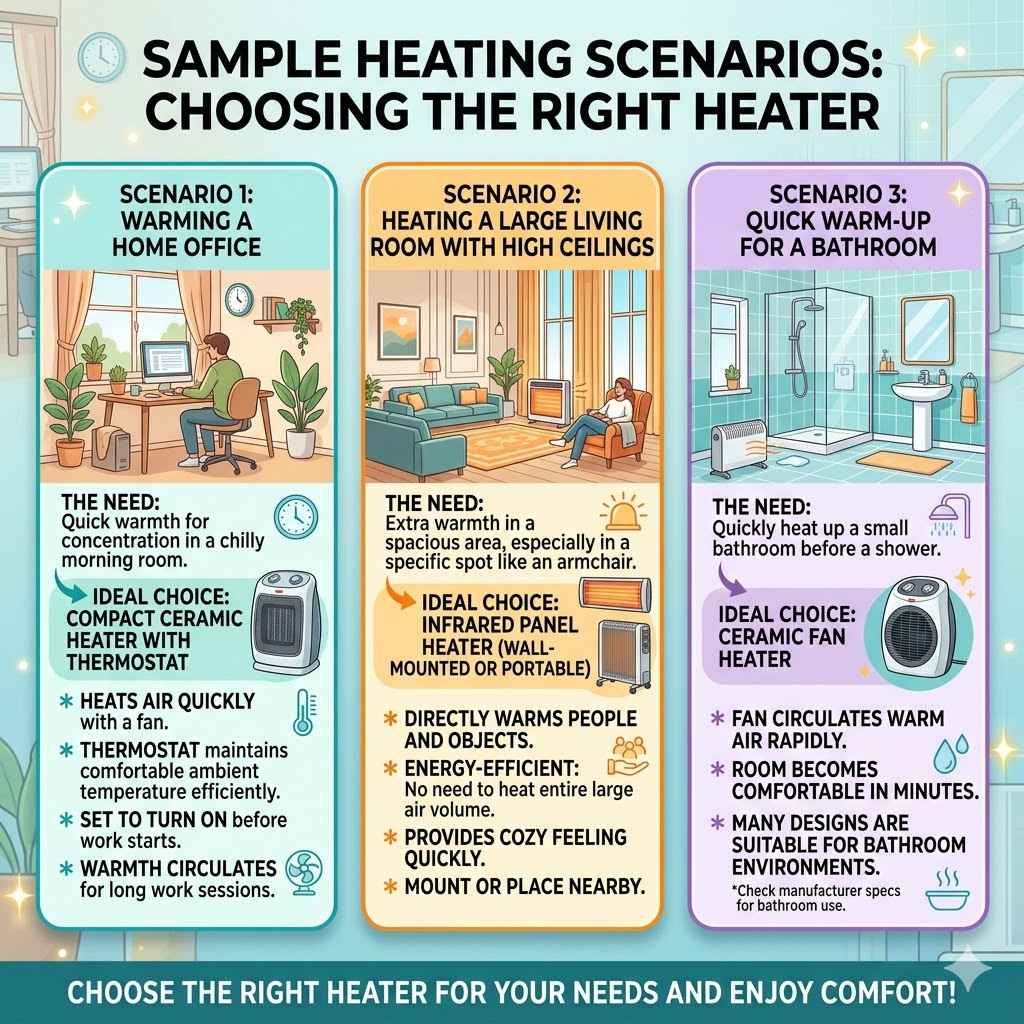
Sample Scenarios
- Scenario: Warming a Home Office
Imagine you work from home in a small office. The room can get a bit chilly in the mornings. You want it to warm up quickly so you can focus.
A compact ceramic heater with a thermostat would be ideal. You can set it to turn on before you start work, and it will quickly heat the air in your office, providing a comfortable ambient temperature. The thermostat will help maintain this temperature efficiently.
You’ll feel the warmth around you as the air circulates, making it pleasant for long work sessions.
- Scenario: Heating a Large Living Room with High Ceilings
You have a spacious living room with high ceilings. You want to add some extra warmth on cooler evenings, especially around your favorite armchair. In this case, an infrared panel heater mounted on the wall, or a portable infrared heater placed nearby, would be a great choice.
It will directly warm you and the immediate area without needing to heat the entire large volume of air. This provides a cozy feeling quickly and can be more energy-efficient than trying to warm the whole room with a convection heater.
- Scenario: Quick Warm-up for a Bathroom
You need to quickly warm up a small bathroom before a shower. A ceramic heater is perfect for this. Its fan will quickly circulate warm air, making the room comfortable in just a few minutes.
Many ceramic heaters are also designed with safety features suitable for bathroom use (always check manufacturer guidelines and ensure proper ventilation). The rapid air heating ensures you don’t have to wait long for a pleasant temperature.
Frequently Asked Questions
Question: Are ceramic and infrared heaters the same type of heater
Answer: No, ceramic and infrared heaters are not the same. Ceramic heaters warm the air through convection, while infrared heaters warm objects and people directly using radiant waves.
Question: Which type of heater is faster at warming a room
Answer: Infrared heaters provide a feeling of warmth almost instantly because they directly heat objects and people. Ceramic heaters warm the air first, so it takes longer to feel the warmth throughout the room.
Question: Which heater is better for a drafty room
Answer: Infrared heaters are generally better for drafty rooms because their radiant heat warms objects directly and is less affected by air movement compared to ceramic heaters, which rely on circulating warm air.
Question: Can ceramic heaters dry out the air
Answer: While both types of electric heaters can slightly lower humidity levels as they warm the air, ceramic heaters do not inherently “dry out” the air more than other electric resistance heaters. Maintaining proper ventilation can help manage humidity.
Question: Is infrared heat safe for people
Answer: Yes, infrared heat is very safe for people. It’s the same type of heat we feel from the sun and is commonly used in therapeutic applications. Modern infrared heaters are designed with safety features to prevent burns.
Summary
So, to answer “Are ceramic and infrared heaters the same? Expert guide,” the clear answer is no. Ceramic heaters warm the air, providing gradual ambient heat, best for enclosed spaces.
Infrared heaters use radiant waves to warm objects and people directly, offering instant warmth and being effective in larger or draftier areas. Choose based on your space and heating needs.