Water Heater Guide
Choose a water heater by fuel, space, and peak hot-water demand: tank models are sized by first-hour rating, and tankless units by gallons per minute, with about 2–3 gpm covering one shower. Get the choice wrong and you can end up with cold showers, higher utility costs, early failure, or unsafe gas, venting, pressure, and electrical conditions. This guide covers selection, parts, sizing, maintenance, and the line between safe homeowner checks and repairs that need a pro.
How does a water heater work?


A storage tank water heater heats and stores a set volume of water, then refills and reheats as hot water is used. A tankless unit skips storage and heats incoming water only when flow starts. In both systems, thermostats, safety valves, and fuel-specific parts manage temperature, pressure, and shutdown.
How a storage tank heats, stores, and delivers hot water
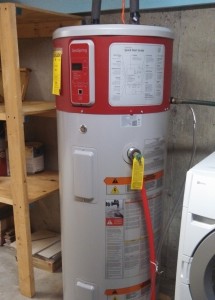
A tank water heater keeps water hot inside an insulated steel tank, commonly 30, 40, 50, 60, or 80 gallons. Cold water enters through a dip tube, hot water exits from the top, and insulation slows standby heat loss.
Gas models use a burner under the tank and vent exhaust outdoors. Electric models use one or two resistance elements behind access panels on the side of the tank. As you draw hot water, cold water enters to replace it, and the heater starts another recovery cycle.
Two numbers matter more than raw tank size: first-hour rating, which estimates how much hot water the unit can supply in the first hour of use, and recovery rate, which shows how fast it reheats after drawdown. Most manufacturers list both on the data label or spec sheet.
How a tankless unit heats water on demand
A tankless water heater starts when a flow sensor detects water moving through the unit. A gas burner or electric heating assembly raises water temperature as it passes through a heat exchanger, so output depends on flow rate in gallons per minute and the required temperature rise.
If incoming water is 50°F and the target is 120°F, the unit must deliver a 70°F rise. That is harder in cold climates, which is why a model advertised at one flow rate may deliver less in winter.
Whole-house tankless units are sized for simultaneous use, such as a shower plus a sink. Point-of-use units serve one fixture or a small zone where long pipe runs waste time and water.
The parts that control temperature, pressure, and safety
The thermostat tells the heater when to start and stop heating. On electric tank models, thermostats are usually behind upper and lower access panels, often under insulation. Gas tank models usually have an external gas control valve with a temperature dial.
The temperature and pressure relief valve, usually called the T&P valve, opens if temperature or pressure climbs too high. Its discharge pipe must point downward and terminate safely; it should never be capped, plugged, or reduced.
An anode rod threads into the tank and sacrifices itself to slow internal corrosion. Common rod materials are magnesium, aluminum, and aluminum/zinc blends. Once that rod is spent, the tank itself becomes the next corrosion target.
What changes between gas and electric models
Gas units need proper venting, enough combustion air, and fuel shutoff safety. Electric units do not vent combustion gases, but they do rely on branch-circuit capacity, intact wiring, and high-current components that can trip breakers or overheat if damaged.
Gas vent systems may use metal vent pipe suited to the appliance category, while high-efficiency condensing models often use listed plastic vent materials specified by the manufacturer. Wrong vent materials, blocked draft, or backdrafting can create carbon monoxide risk and require pro diagnosis.
Which water heater type fits your home?
The right type depends on the busiest hour of hot-water use, the fuel already available, physical installation limits, and whether you need hot water at one fixture or across the whole house. Tank heaters often make more sense for straightforward replacement where existing gas lines, venting, or electrical service already fit the unit. Tankless units fit better when floor space is tight, draw periods are long, or a remote fixture wastes time and water waiting for heat.
Storage tank water heaters
Choose a tank when the house often uses hot water at the same time, for example two overlapping showers or a shower plus dishwasher and laundry, and you want a direct replacement that usually fits existing utility connections more easily. Tank models are simpler to size around gallons, first-hour rating, and recovery rate, which makes them easier to match to real peak demand.
Tank insulation matters. Better insulation cuts standby loss, which matters most in garages, basements, and utility rooms with lower ambient temperatures.
Tankless water heaters
Choose tankless when floor space is limited, a utility closet or wall location rules out a large tank footprint, or the house has long hot-water draws spread through the day instead of one short peak. The tradeoff is tighter sizing and more installation constraints: gas pipe capacity, vent routing, condensate handling on condensing units, or heavy electrical demand on large electric models.
Tankless is not automatically the better answer. If the home often runs two showers, a dishwasher, and laundry at once, the unit must be sized for that combined flow at the local temperature rise.
Gas versus electric water heaters
Gas water heaters often recover faster than similarly sized electric tank units, which can help in homes with overlapping showers and appliance use. Electric units avoid combustion venting issues and may fit better where gas service is unavailable or vent routes are poor.
For tankless, gas whole-house units usually support higher flow rates than electric whole-house units in many homes, but they may need gas line and vent upgrades. Electric tankless units can work well for point-of-use applications or mild-demand homes with sufficient electrical capacity.
Whole-house versus point-of-use setups
A whole-house heater supplies the home from one location. A point-of-use unit serves a distant sink, one bathroom, or another small demand zone where waiting for hot water wastes time and water.
Suppose a half bath sink is 60 feet from the main heater and only that sink has long wait times. A small point-of-use unit at that fixture may solve the delay without replacing the main whole-house heater.
Which water heater type saves the most energy?
If your goal is lower utility bills, the supporting guide explains why a heat pump water heater is often the most energy-efficient choice, but only when your home can support the added electrical and space requirements. It also shows when a high-efficiency gas tank or tankless model can end up cheaper overall once venting, gas-line work, or electrical upgrades are included.
That matters because the “best” efficient unit is not always the one with the lowest sticker price or the highest efficiency rating. The water heater energy savings article breaks down lifetime cost, installation limits, and hot-water demand so you can match the system to your home instead of overpaying for savings you can’t actually capture.
What size water heater do you need?
Size a tank water heater by first-hour rating and recovery rate, not tank gallons alone. Size a tankless unit by the gallons per minute needed at the same time, adjusted for local temperature rise. Overlapping showers, laundry, fixture count, and utility limits can change the right answer fast.
Sizing a tank by gallons, first-hour rating, and recovery rate
A common starting point for tank sizing is household demand, then a check against first-hour rating. For many homes, about 40 to 50 gallons fits 2 to 3 people, about 50 to 60 gallons fits 3 to 4, and about 60 to 80 gallons fits 5 or more, but that is only a first pass.
If two showers often overlap with dishwasher or laundry use, first-hour rating becomes the deciding number. A 50-gallon tank with stronger recovery can outperform a larger but slower unit during peak use.
Most manufacturers publish first-hour rating in gallons. Match that number to the busiest hour, not average daily use.
Sizing a tankless unit by GPM and temperature rise
Start with simultaneous flow. A common rule of thumb is about 2 to 3 gpm for one shower, roughly 1 to 1.5 gpm for a bathroom faucet, and often 1.5 to 3 gpm for dishwashers and clothes washers depending on fill behavior and fixture efficiency.
Add only the fixtures that run together. Then check the needed temperature rise. In colder regions, a unit that can deliver 7 gpm at a small rise may only deliver a much lower flow at a 70°F rise.
Picture a house that uses two showers at about 2.0 gpm each while a kitchen faucet runs at about 1.0 gpm. That is 5.0 gpm simultaneous demand before temperature-rise limits are considered, so a smaller whole-house tankless may fall short in winter.
How simultaneous showers, laundry, and fixture count change the answer
Fixture count matters because it predicts overlap. Two bathrooms with one shower each can behave very differently from three bathrooms, a soaking tub, and frequent laundry during morning demand.
Hard water changes the sizing conversation too. Sediment narrows passages and insulates heat transfer surfaces over time, which can reduce delivered performance if maintenance is delayed.
When space, venting, or utility service changes the right size
A perfect on-paper size can still be the wrong choice if the home lacks combustion air, vent path, gas capacity, drain access for condensate, or sufficient amperage. Before you pick a type or size, check physical clearance, vent route, gas meter and piping, and electrical panel limits.
Water heater decision matrix
| Home or symptom | Demand or condition | Most likely fit or cause | Next action | Homeowner-safe or pro-required |
|---|---|---|---|---|
| 2 people, 1 bath, one shower at a time | Low to moderate peak use | 40-50 gallon tank or small whole-house tankless if flow and rise pencil out | Compare tank first-hour rating against busiest hour; compare tankless GPM against one shower plus one sink | Homeowner-safe planning |
| 3-4 people, 2 baths, shower plus dishwasher overlap | Moderate to high peak use | 50-60 gallon tank with adequate first-hour rating, or larger whole-house gas tankless | Check first-hour rating before tank gallons; add simultaneous GPM for tankless | Homeowner-safe planning; pro may be needed for fuel and vent review |
| 5+ people, 3 baths, back-to-back showers and laundry | High peak use | 60-80 gallon tank, high-recovery gas tank, or properly sized whole-house tankless with utility upgrades | Favor recovery rate and first-hour rating; confirm gas line or electrical service limits | Pro sizing review strongly advised |
| Small remote sink or addition | Single fixture, long pipe run | Point-of-use tankless or mini-tank | Size for that one fixture’s flow and local rise | Homeowner-safe planning; installation may require pro |
| Lukewarm water that runs cold fast | Short hot-water duration | Undersized tank, failed lower electric element, burner issue, or heavy sediment reducing effective volume | Check thermostat setting and demand pattern; inspect for element or burner symptoms | Basic checks safe; sealed electrical and gas repair pro-required |
| No hot water at all | Total loss of heating | Tripped breaker, failed upper element, reset trip, ignition failure, gas supply issue, or control failure | Verify power or gas status; try one reset only if no damage signs | Single safe reset only; repeated trip means pro-required |
| Popping or rumbling tank | Noise during heating | Sediment buildup, more common in hard water areas | Flush tank and inspect maintenance history | Often homeowner-safe if drain path is safe |
| T&P discharge pipe dripping | Intermittent or steady discharge | Overpressure, thermal expansion, overheating, debris in valve seat, or failing valve | Lower risk by stopping adjustments and checking water temperature; do not cap pipe | Pro-required unless a basic visual check finds an obvious nonhazard issue |
| Breaker keeps tripping | Electrical fault signs | Failed element, wiring fault, wet controls, or undersized/overloaded circuit | Reset once after checking for moisture or burning smell; stop if it trips again | Pro-required after one trip recurrence |
| Draft smell, soot, melted vent parts, or exhaust spillage | Combustion or venting warning | Backdrafting, blocked vent, wrong vent material, or inadequate combustion air | Shut down unit if safe and arrange service immediately | Pro-required now |
Use the matrix as a triage tool, not a diagnosis shortcut. The left side helps with sizing and replacement planning, while the symptom rows show where a simple setting or maintenance check may help and where pressure, venting, fuel, or electrical hazards mean it is time to stop and call a pro.
What should a water heater be set at?
A common starting point is 120°F because it balances scald risk, energy use, and normal household comfort better than higher settings in many homes. Some households may need a different setting, but higher temperatures raise burn risk quickly and should trigger closer attention to mixing valves and use patterns.
Why 120°F is the common safety starting point
At 120°F, most homes still get comfortable hot water for bathing and cleaning without moving to a higher scald hazard. It is also a practical baseline when you are troubleshooting complaints that water feels too cool or runs out too fast.
Scald risk, bacteria concerns, and household-specific tradeoffs
Higher settings can support more delivered hot water by mixing with cold at the tap, but they also increase injury risk, especially for children, older adults, and anyone with slower reaction time. If a household raises temperature for sanitation or mixing strategy, anti-scald protection becomes more important.
Hot-water delivery expectations also depend on pressure and expansion. Many homes operate with incoming water pressure in a common residential range of roughly 40 to 80 psi. If a check valve or pressure-reducing valve closes the system, thermal expansion may need a properly sized expansion tank to keep pressure from rising when the heater cycles.
Where thermostat adjustments are usually found on electric and gas models
Electric tank heaters usually hide thermostats behind upper and lower side panels under insulation. Gas tank heaters usually combine thermostat and gas control in one front-mounted valve assembly. Tankless units use digital controls or dip-switch settings depending on model.
A common first-timer mistake is raising an electric tank thermostat without checking both upper and lower settings. If one is much higher than the other, comfort gets erratic and diagnosis gets muddy.
Pressure, expansion, and delivery expectations to watch
Water that is too hot at nearby taps, sudden pressure spikes, or T&P discharge after long heating cycles can point to thermostat drift, expansion trouble, or valve problems rather than simple “turn it up” or “turn it down” fixes. Those are stop signs, not tuning opportunities.
How to interpret a water heater’s UEF rating
UEF, or Uniform Energy Factor, is the efficiency number that tells you how much hot water a unit can deliver for the energy it uses. A higher UEF is better, but only when you compare the same fuel type, heater style, and usage bin; otherwise the number can be misleading. The supporting guide on UEF meaning explains how to read the yellow EnergyGuide label, why UEF replaced EF, and what counts as a good rating for different water heater categories.
That matters because a model with a flashy label can still cost more to run or perform worse than expected if you judge it against the wrong benchmark.
The parts that fail most often
Thermostat and reset controls
Electric units have thermostats and a high-limit reset, often a red button behind the upper access panel. If the reset trips once, a safe single reset may restore operation. If it trips again, likely causes include a shorted element, bad thermostat, loose wiring, or overheating, and diagnosis should move to a pro.
Heating elements and gas burners
Electric heating elements fail by burning out, shorting, or scaling over. A failed upper element can mean no hot water at all; a failed lower element often causes hot water that turns lukewarm quickly. Gas burners can suffer ignition issues, dirty combustion, flame rollout, or control problems.
Access matters. Electric elements sit behind access panels. Gas burner assemblies sit behind lower combustion covers or burner doors depending on design. Opening sealed combustion systems or disturbing gas controls is outside homeowner-safe repair.
Anode rod and tank corrosion protection
The anode rod protects the steel tank by corroding first. Magnesium rods often offer strong protection but may deplete faster in some water conditions. Aluminum rods can last longer in certain water, and aluminum/zinc rods are often used when sulfur-like odor is an issue.
Inspect the anode rod about every 3 to 5 years, and sooner in hard water or softened water conditions. Replace it when it is heavily consumed, the steel core wire is exposed over significant length, or the rod is reduced enough that protection is clearly spent.
T&P valve, discharge pipe, and venting on gas units
The T&P valve is a pressure and overtemperature safety device, not a convenience drain. Dripping may mean debris in the seat, high pressure, thermal expansion, overheating, or a weak valve. The discharge pipe must run to a safe termination point and stay unobstructed.
On gas units, the venting system must draft exhaust outdoors and the room must provide enough combustion air. Warning signs include soot, melted plastic nearby, scorch marks, rust flakes at the draft hood, or moisture and exhaust smell around the vent.
What are the most common water heater problems?
The most common problems are no hot water, water that turns lukewarm too fast, leaks or discharge, sediment noise, breaker trips, and gas venting warnings. The key is to separate symptom from cause, then decide whether a safe check is enough or whether pressure, fuel, or electrical risk makes it a pro job.
No hot water or water that turns lukewarm fast
No hot water on an electric tank often points to breaker, reset, upper thermostat, or upper element trouble. On a gas model, look for ignition or gas supply issues. Lukewarm water that fades quickly often points to a failed lower element, burner underperformance, undersizing, or sediment consuming tank volume.
For tankless units, scale buildup, inlet filter restrictions, flow-sensor issues, and minimum-flow requirements can cause unstable temperature or short cycling.
Leaking, dripping, or pressure-related discharge
Start by locating the water. A leak at threaded fittings, drain valves, or supply connectors may be repairable. Water from the tank body itself, especially at seams or corrosion points, usually means replacement rather than repair.
T&P discharge is different from a plumbing leak. It can signal dangerous pressure or overheating and should not be ignored or “solved” by capping the pipe.
Popping, rumbling, or other noise from sediment
Sediment forms when minerals settle and bake onto the bottom of a tank. That layer traps heat, lowers efficiency, and can cause popping or rumbling during burner or element operation. Hard water raises the risk and shortens the interval between flushes.
Breaker trips, error codes, and venting warning signs
A tripping breaker, burned-wire smell, visible moisture at controls, or a tankless error code that returns after reset all suggest a fault, not a nuisance. For gas models, shut down and call for service if there is exhaust smell, soot, rollout signs, or obvious backdrafting.
How do you maintain a water heater safely?
Safe maintenance means sticking to visual checks, careful flushing, limited thermostat or reset actions, and stopping before sealed electrical, gas, venting, or pressure repairs begin. The goal is to catch sediment, corrosion, leaks, and unsafe discharge early without turning routine care into a hazard.
Routine visual checks and shutdown basics
- Inspect the area. Look for rust streaks, water at fittings, scorch marks, soot, melted vent parts, or moisture around electrical covers. Any sign of gas odor, active arcing, or vent spillage moves the job out of homeowner-safe territory.
- Check the setting. Confirm the thermostat is still at about 120°F unless the household has a deliberate reason to run higher. Sudden unexplained changes can point to control trouble or previous misadjustment.
- Know the shutoffs. Find the cold-water shutoff, power disconnect or breaker, and gas shutoff valve before touching anything else. That speeds a safe response if a drain valve sticks, a fitting leaks, or a reset fails.
Flushing and draining to manage sediment
Flush intervals depend on water quality and noise symptoms. Once a year is a common starting point for tank heaters, with more frequent service in hard water areas or when rumbling starts early.
- Shut off the heat. Turn off power at the breaker for an electric tank, or set a gas control to pilot or off as the manufacturer directs. Heating an empty or partially drained tank can damage elements and create unsafe conditions.
- Close the cold supply. Stop incoming water so sediment can move out instead of stirring endlessly inside the tank. Let the water cool first if scald risk is high.
- Connect a hose. Attach a garden hose to the drain valve and route it to a safe floor drain or exterior discharge point that can handle hot water. Kinks slow flow and leave sediment behind.
- Open a hot tap. Crack a nearby hot-water faucet to admit air and reduce vacuum lock. This helps the tank drain more steadily.
- Drain and flush. Open the tank drain and let water run until it clears, then briefly pulse the cold-water supply to stir and carry out more sediment. Repeat until the discharge looks cleaner and flow is steady.
- Refill the tank. Close the drain, open the cold supply, and keep the hot tap open until air sputtering stops and a full stream returns. Only then restore power or gas heating.
If the drain valve will not close cleanly, the hose connection leaks badly, or sediment clogs the valve completely, stop and arrange service. Forcing an old drain can create a larger leak than the maintenance was meant to prevent.
Anode rod inspection and replacement timing
Inspection every 3 to 5 years is a solid baseline, with earlier checks in hard water, softened water, or homes that run heavy hot-water demand. Replacement makes sense before the rod is fully gone, not after the tank starts rusting.
Because seized fittings, ceiling clearance, and breaker-bar force can damage older tanks or piping, anode replacement often lands on the edge between DIY-capable and pro-recommended.
T&P valve checks and when to stop
The goal of a T&P check is simple: confirm the safety valve and discharge path are unobstructed, then stop if anything suggests pressure, overheating, or a valve that may not reseat cleanly. This is a cautious inspection task, not a repair or repeated test routine.
- Inspect the discharge pipe. Confirm the pipe points downward, is not capped, and shows no obvious corrosion or blockage. If it terminates unsafely or is missing, stop and call a plumber.
- Look for active dripping. Occasional discharge may indicate expansion or pressure issues, while constant dripping may point to a weak valve or overheating. Either way, do not plug the outlet or install a cap.
- Test only with caution. If the manufacturer allows testing and the discharge can be handled safely, briefly lift and release the lever to verify movement. If the valve will not reseat cleanly, keep clear of hot discharge and arrange replacement.
After any test, watch the pipe end and the area around the valve for continued dripping. If discharge continues, if the lever sticks, or if the water is unusually hot, leave the valve alone and arrange service. A T&P valve is a critical safety device, so a failed test means stop using trial-and-error fixes.
When should you repair or replace a water heater?
Repair a water heater when the fault is limited to replaceable parts like thermostats, elements, controls, or some valves and the tank itself is sound. Replace it when the tank leaks, corrosion is advanced, failures repeat, or the current type cannot meet demand without constant compromise or unsafe workarounds.
Leaks, corrosion, and tank failure points
A leaking tank shell is the clearest replacement signal. Once corrosion has breached the tank body or seams, there is no lasting repair. By contrast, a leak at a union, supply line, or drain valve may be serviceable if the tank is otherwise in good condition.
When repeated part failures stop making sense
If the heater has gone from one isolated repair to a series of issues such as element failure, reset trips, thermostat drift, and T&P discharge, the cost and downtime can outweigh another part swap. That is especially true when sediment and corrosion are both visible.
Efficiency, fuel costs, and upgrade triggers
Replacement also makes sense when demand has changed. Added bathrooms, a finished basement, or a growing household can expose sizing mistakes that no repair will solve. At that point, compare first-hour rating or GPM needs against the current heater before choosing a same-size replacement.
Cases where you should call a plumber or electrician now
Call now for tank-body leaks, active T&P discharge, recurring breaker trips, burned wiring smell, gas odor, backdraft signs, soot, melted vent material, flame rollout, or any repair that requires opening sealed electrical compartments or gas controls beyond a basic safe reset or shutdown.
Frequently asked questions
What size water heater does my house need?
Use peak demand, not headcount alone. For tank heaters, compare household use to the unit’s first-hour rating and recovery rate, then check gallons. For tankless, total the fixtures that run together in gallons per minute and match that flow at the local temperature rise.
How do I tell if my water heater needs replacement?
Replacement is usually the right call when the tank body leaks, corrosion is advanced, or failures keep stacking up after repairs. A unit that cannot meet demand without constant thermostat changes, repeated resets, or unsafe discharge also deserves replacement rather than another patch.
How do I flush a water heater to remove sediment?
Turn off the heat source, close the cold-water supply, connect a hose to the drain valve, open a hot tap, and drain the tank safely. Pulse the cold-water supply to stir sediment, then refill fully before restoring heat. Stop if the drain leaks or clogs badly.
How do I reset a water heater safely?
For an electric tank, check for moisture, burned smell, or obvious damage first, then try one reset at the high-limit control if the manual allows it. Restore power and monitor. If the reset trips again or the breaker trips again, stop and call an electrician or plumber.
What should I do next if I am choosing or troubleshooting a water heater?
Start with the symptom or the busiest hour of use, then match that to the right path: first-hour rating for tank models, simultaneous gpm and temperature rise for tankless, and visual safety checks before any adjustment. Stop at once for tank leaks, T&P discharge, gas odor, venting warnings, or repeat electrical trips.