
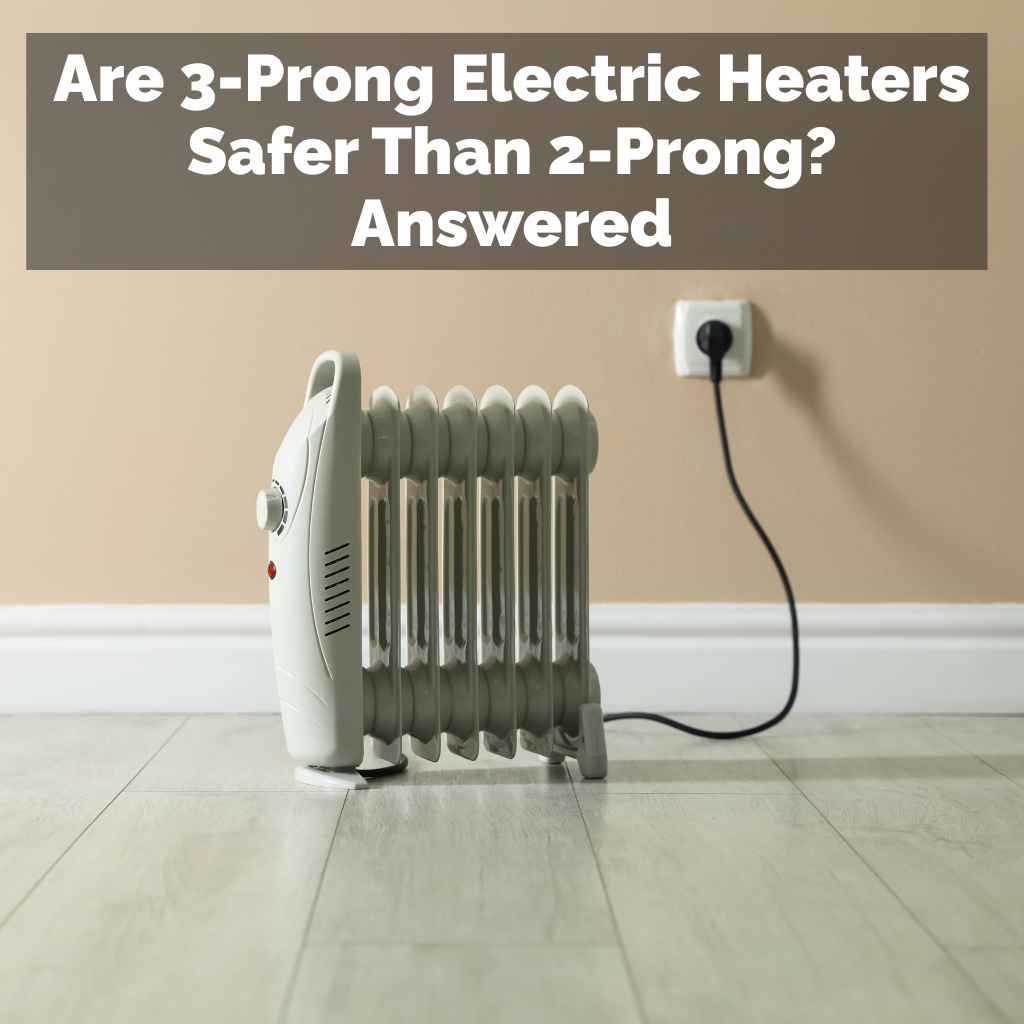
It’s a question many of us have when unpacking a new heater for a chilly room. You look at the plug. Does it matter if it has two little metal bits or three?
This simple difference in plugs can feel confusing. But understanding it is key to keeping your home safe. We’ll dive deep into what these plugs mean and whether a 3-prong heater truly offers better protection than a 2-prong one.
Let’s make your home warm and safe.
Generally, a 3-prong electric heater is considered safer than a 2-prong heater because the third prong provides grounding. This grounding helps protect against electrical shock by offering a safe path for electricity if a fault occurs. While older 2-prong heaters might still work, modern safety standards favor 3-prong designs.
Understanding Electric Heater Plugs: The Basics
When you look at an electric heater’s plug, you’re seeing how it connects to power. Most plugs you see have either two metal blades or three. These blades connect to slots in your wall outlet.
The number of blades is not just for show. It tells you something important about how the heater is designed to work. And how it protects you from danger.
The two blades you often see are for the “hot” and “neutral” wires. These wires carry the electricity to the heater. They complete the circuit.
The heater needs this circuit to turn on and produce warmth. Without this connection, the heater simply won’t work. It’s like needing two hands to clap.
Both blades are needed for the basic function.
The third prong, which is usually round or U-shaped, is the ground. This is the big difference. The ground wire is a safety feature.
It’s connected to the metal casing of the heater. This is very important. If something goes wrong inside the heater, like a wire touching the metal body, the ground wire gives electricity a safe way to go.
It directs the electricity away from you.
Think of it like a fire escape. If there’s a problem, the ground wire is your escape route to safety. It prevents you from getting shocked when you touch the heater.
This is especially true if the heater’s wiring becomes damaged. Or if there’s a power surge. The ground connection is a silent protector.
Why Grounding Matters for Electrical Safety
Grounding is a core concept in electrical safety. It’s not just a suggestion; it’s a fundamental design principle for preventing harm. In your home, the electrical system is designed with grounding in mind.
Wall outlets have ground connections. Your home’s wiring usually includes a ground wire. This wire runs from your outlets back to your electrical panel and then to the earth itself.
So, what does this ground wire actually do? Its main job is to provide a low-resistance path for electricity to flow to the ground. This happens when something goes wrong.
For example, imagine the hot wire inside your heater comes loose. It might touch the metal outer shell of the heater. Without grounding, that metal shell would become “hot” with electricity.
If you were to touch that “hot” metal casing, the electricity would try to flow through your body to reach the ground. This is an electrical shock. Shocks can range from mild and unpleasant to severe and life-threatening.
They can cause burns, muscle contractions, and even stop your heart. It’s a serious danger.
However, if the heater is properly grounded (has that third prong), the electricity that touches the metal casing has an easier path. It can flow through the ground wire directly to the earth. This path has much less resistance than your body.
So, most of the electricity will take the safer route. This keeps the metal casing from becoming dangerously “hot.”
Furthermore, this flow of electricity through the ground wire will often trigger your circuit breaker or blow a fuse. This cuts off the power supply to the heater. It stops the dangerous situation from continuing.
The breaker is like a safety valve. It protects the whole system. So, grounding not only protects you directly but also helps your home’s electrical system react to faults.
Grounding: A Quick Recap
Purpose: To provide a safe path for electricity if a fault occurs.
How it works: Connects the metal casing of an appliance to the earth.
Benefit: Prevents electrical shock by diverting fault current away from the user.
Action: Often trips a circuit breaker, shutting off power.
The 2-Prong Heater: What You Need to Know
Many older homes still have some outlets with only two slots. These are called ungrounded outlets. They are designed for appliances that only have a 2-prong plug.
These heaters are often older models. Or they might be designed with plastic casings that don’t require grounding. This is a key design choice.
A 2-prong plug supplies power through the “hot” and “neutral” wires. These are essential for the heater to function. However, it lacks the safety net of the ground wire.
This means that if there’s an internal wiring issue that causes the metal parts of the heater to become energized, there’s no direct path for that electricity to escape safely.
In such a scenario, the metal casing of the heater could become live. If you touch it, your body becomes the path to ground. This is the risk associated with 2-prong appliances.
You are essentially the fallback safety mechanism, which is never a good thing.
Some people try to use adapters to plug a 2-prong device into a 3-prong outlet. Or they might try to break off the third prong of a 3-prong plug to fit into a 2-prong outlet. It’s crucial to understand that these actions severely compromise safety.
They defeat the purpose of the ground wire entirely. Breaking off a prong is never a safe solution.
If your home has only 2-prong outlets, it’s a sign that the electrical system might be outdated. While a 2-prong heater might work fine for years, the risk is always present. It’s about being prepared for the unexpected electrical fault.
The absence of a ground connection leaves you more vulnerable.
When considering older appliances, it’s also worth thinking about their general condition. Are the cords frayed? Is the casing cracked?
Any physical damage increases the risk of electrical faults, making the lack of grounding even more concerning. Safety features are designed to work together. Removing one piece weakens the whole system.
The 3-Prong Heater: The Safety Advantage
Now, let’s talk about the 3-prong heater. This is the standard for most modern electric heaters. As we’ve discussed, the third prong is the ground.
This connection is made directly to the metal casing of the heater. This is where the significant safety upgrade comes in.
If an internal wire comes loose and touches the metal casing, the electricity will flow through the ground wire. This wire offers a much easier path than your body. The electricity bypasses you.
It goes straight to the ground connection in your outlet. This prevents you from getting shocked. Your risk of harm is greatly reduced.
This grounding also helps protect the heater itself. In some cases, a fault that might damage the internal components can be safely discharged through the ground wire. This can prevent a minor issue from becoming a major failure or even a fire hazard.
The presence of a 3-prong plug often indicates that the appliance is built to meet current safety standards. Manufacturers are required to design products that are safe for consumer use. For heating appliances, which draw a lot of power and can pose a fire risk, these safety standards are particularly important.
If you have a choice between a 2-prong and a 3-prong heater, always opt for the 3-prong model. It offers an extra layer of protection that the 2-prong simply cannot match. It’s about peace of mind, knowing that there’s a system in place to help prevent accidents.
Many modern homes have updated electrical systems with 3-prong outlets. If your home has these, it’s ideal to use appliances that can take advantage of them. Using a 3-prong heater in a 3-prong outlet ensures you are getting the full safety benefits.
It’s a simple step that makes a big difference.
3-Prong vs. 2-Prong: Key Differences
- 2-Prong: Power only (hot & neutral). No grounding.
- 3-Prong: Power (hot & neutral) PLUS grounding.
- Safety: 3-prong offers protection against shock via the ground wire.
- Modern Standard: 3-prong is the current safety standard for many appliances.
My Own Close Call with an Older Heater
I remember one particularly cold winter a few years back. My apartment’s main heating wasn’t cutting it. I dug out an old electric heater from my parents’ basement.
It was a trusty old thing, beige plastic, and had a plug with just two prongs. I didn’t think much of it then. It worked fine for a week straight.
Then, one evening, as I was reaching over to adjust the thermostat on the heater, I felt a strange tingle. It wasn’t painful, just… odd. Like static electricity, but stronger.
I immediately pulled my hand back. My heart jumped into my throat. Was the heater faulty?
Was I going to get a shock?
I nervously looked at the heater. The casing seemed fine. The cord looked okay.
But that tingling sensation lingered. I unplugged it just to be safe. Later, after a bit of research, I realized that the older heater likely had a worn internal wire.
It was probably brushing against the casing. Since it didn’t have a ground wire, there was no safe place for that stray electricity to go.
My body had provided the path. Thankfully, it was a minor fault and I didn’t get a severe shock. But it scared me badly.
I learned a huge lesson that day about the importance of grounding. I immediately went out and bought a new, modern 3-prong heater. The peace of mind that came with that third prong was worth every penny.
It reminded me that sometimes, older isn’t always better, especially when it comes to safety features.
Real-World Scenarios: Where Grounding is Crucial
The need for grounding isn’t just theoretical. It plays out in real homes every day. Think about where you use electric heaters.
Many of us put them in bedrooms, living rooms, or basements. These are places where people spend a lot of time. Any electrical fault in these areas can have serious consequences.
Consider a child playing on the floor near a heater. If that heater were to develop an electrical fault and the metal casing became live, the child is in a very vulnerable position. The ground wire provides a critical layer of protection, ensuring the child is not harmed by stray electricity.
It’s about protecting the most vulnerable members of our household.
Basements or garages can be damp environments. Water and electricity are a dangerous mix. While heaters are not meant to be used in wet locations without specific safety features (like GFCI protection), a grounding wire provides an added safety buffer.
If moisture causes a wire to fray and touch the casing, the ground wire is essential to prevent a shock in these riskier areas.
Many people use heaters in older homes where the wiring might not be as robust as in newer constructions. Outlets may be two-pronged, or the overall wiring system might be less equipped to handle modern electrical demands safely. In these situations, choosing a 3-prong heater is an especially wise decision.
It’s about compensating for potential weaknesses in the home’s electrical infrastructure.
Also, think about the sheer amount of power a heater uses. These are not small appliances. They draw significant electrical current.
When dealing with higher power loads, the potential for faults increases. A well-grounded appliance is better equipped to handle these higher loads safely. It’s a matter of robust design for a demanding task.
Heater Safety in Different Rooms
Living Room: High traffic area. Grounding protects family and guests.
Bedroom: For comfort. Grounding ensures safe sleep, especially for children.
Basement/Garage: Can be damp. Grounding is extra crucial here.
Office/Den: Areas with prolonged use. Safety prevents long-term risks.
When to Worry: Identifying Potential Heater Issues
While 3-prong heaters are safer, no appliance is entirely risk-free. It’s important to know what to look out for. Regular checks can prevent issues before they become dangerous.
Think of it as preventative maintenance for your safety.
One of the most obvious signs is damage to the cord or plug. If you see any fraying, nicks, or exposed wires on the cord, stop using the heater immediately. The plug itself should be intact.
If the prongs are bent or damaged, it can affect the connection and safety. Never try to repair a damaged cord yourself unless you are qualified.
Listen to your heater. Unusual noises are a red flag. Do you hear any buzzing, crackling, or popping sounds?
These sounds can indicate electrical arcing or loose connections inside the unit. If you hear these, unplug the heater and do not use it again. It’s a clear sign of a problem that needs professional attention or replacement.
Feel for excessive heat on the casing, especially in areas that shouldn’t be hot. While the front grille will get warm or hot during operation, the main body or sides should not be excessively hot to the touch. If the casing is unusually hot, it might point to an internal malfunction or a wiring issue.
Smell is another indicator. A faint burning smell, especially when the heater is first turned on, could mean dust burning off the heating element (which is often normal for the first few minutes). However, a persistent or strong acrid burning smell is a serious warning sign.
It could indicate overheating components or melting plastic, which are fire hazards. Unplug it right away.
Finally, consider the age and condition of the heater. Older heaters, even those with 3 prongs, may have components that wear out over time. If a heater is very old, has visible wear and tear, or has been stored improperly (e.g., in a damp basement), it might be time to consider replacing it, even if it seems to be working.
If you notice any of these issues, the safest course of action is to stop using the heater. For 3-prong heaters, ensure the outlet you are using is also 3-prong and properly grounded. If you have a 2-prong outlet and a 3-prong heater, do not force it.
Using an adapter to bypass the ground connection defeats its purpose.
When to Quit Using Your Heater
- Damaged Cord/Plug: Exposed wires, nicks, bent prongs.
- Strange Noises: Buzzing, crackling, popping.
- Overheating Casing: Unusually hot to the touch.
- Burning Smell: Persistent or acrid odor.
- Age/Wear: Old, visibly damaged, or improperly stored units.
Upgrading Your Outlets for Safety
If you have a home with mostly 2-prong outlets, it’s a sign that your electrical system might be due for an update. While a 2-prong heater is designed for these outlets, and a 3-prong heater is designed for newer ones, the best long-term solution for safety is to upgrade your outlets.
Replacing 2-prong outlets with 3-prong ones is not a DIY job for everyone. It requires understanding your home’s wiring and electrical panel. It’s crucial to have this work done by a qualified electrician.
They can ensure the new outlets are properly grounded. This means they will connect to the ground wire in your home’s electrical system.
An electrician can assess your current wiring to make sure it can support grounded outlets safely. They can also check if your electrical panel has a grounding connection. Sometimes, older homes might have 3-prong outlets that are not actually connected to a ground wire.
This creates a false sense of security. A professional inspection is key.
Upgrading outlets isn’t just about being able to plug in new appliances. It’s about ensuring all your electrical devices operate with the intended safety features. It significantly reduces the risk of electrical shock and fires throughout your home.
It’s an investment in your family’s safety.
If you cannot immediately upgrade your outlets, and you have a 3-prong heater, you should avoid using it in a 2-prong outlet. Do not use plug adapters that bypass the grounding pin. These adapters can be dangerous.
They may also be against local electrical codes. It’s better to use a heater that matches your outlet type, or to ensure your outlets are properly grounded first.
Can You Use a 3-Prong Heater in a 2-Prong Outlet? (The Wrong Way vs. The Right Way)
This is where confusion often happens. Many people want to use their new, safer 3-prong heater, but their wall outlets are older, 2-prong types. Let’s be clear: forcing a 3-prong plug into a 2-prong outlet, or using certain adapters, is not the safe way.
It defeats the purpose of the third prong.
The Wrong Way: Some adapters look like they let you plug a 3-prong into a 2-prong outlet. Often, these adapters have a little metal tab or wire. The idea is to connect this tab to the screw that holds the outlet cover plate.
The theory is that this screw is connected to the outlet box, which might be grounded. However, this is often unreliable. The outlet box might not be properly grounded itself.
Or the connection to the tab might be poor. This method is generally discouraged by safety experts and is often not up to code. It offers a false sense of security.
The Other Wrong Way: Breaking off the third prong. This is extremely dangerous and should never be done. The prong is there for a reason.
Removing it removes a critical safety feature. It’s like removing the safety bar on a ride.
The Right Way: The only truly safe way to use a 3-prong heater in an area with only 2-prong outlets is to have a qualified electrician upgrade those outlets. They will run a new ground wire or verify the existing grounding system. Once the outlet is properly grounded, you can safely plug in your 3-prong heater.
This ensures that the grounding system works as intended by the heater’s manufacturer.
Until you can get your outlets upgraded, you should ideally only use 2-prong appliances in 2-prong outlets. While this might seem inconvenient, safety should always come first. It’s not worth risking an electrical shock or a fire for the sake of using a particular heater.
Outlet Safety Summary
- 2-Prong Outlet: For 2-prong appliances only.
- 3-Prong Outlet: For 3-prong appliances (safest).
- Adapter Use (with grounding tab): Generally not recommended; often unreliable and not to code.
- Breaking Prongs: NEVER do this; it removes safety features.
- Professional Upgrade: The safest solution for 2-prong outlets is an electrician upgrading to grounded 3-prong outlets.
When is a 2-Prong Heater “Safe Enough”?
This is a tricky question because “safe enough” is subjective and depends on many factors. For a 2-prong heater to be considered relatively safe, several conditions should ideally be met. However, it’s crucial to reiterate that a 3-prong heater is always safer.
First, the heater itself must be in excellent condition. This means no damaged cords, no cracked casings, and no signs of internal wear. If the appliance’s build quality is good and it has a non-conductive (plastic) outer casing, the risk of the casing becoming energized is lower.
Appliances with plastic casings are often designed as “double insulated,” meaning they have extra layers of insulation so that even if a wire comes loose, it’s unlikely to touch the outside.
Second, the environment where it’s used matters. If it’s used in a dry location, away from children and pets, and in an area where the electrical system is known to be well-maintained (even if it has 2-prong outlets), the risk is lower. However, “well-maintained” does not equate to “grounded.”
Third, and most importantly, is the condition of the 2-prong outlet and the associated wiring. Older wiring can be brittle or have underlying issues. A qualified electrician can inspect the outlet and wiring.
They can confirm it’s in good repair and not showing signs of stress or failure. However, even a good outlet cannot replace the safety of a ground wire.
Ultimately, there’s no perfect guarantee of safety with a 2-prong appliance when compared to a properly grounded 3-prong appliance. The absence of the ground connection means a critical safety net is missing. While many people use 2-prong heaters without incident for years, it’s important to acknowledge that they are operating with a higher inherent risk.
If you have a 2-prong heater, consider it a temporary solution until you can
What the Experts Say: U.S. Safety Standards
In the United States, safety standards for electrical appliances are set and influenced by organizations like Underwriters Laboratories (UL) and the Consumer Product Safety Commission (CPSC). These organizations work to ensure that products sold to consumers are safe.
UL certification, often seen as a sticker on appliances, means that a product has been tested and meets rigorous safety requirements. For heating appliances, these requirements are particularly strict. The presence of a 3-prong plug on a heater is a strong indicator that it has met these modern safety standards.
It signifies that the manufacturer has incorporated grounding as a necessary safety feature.
The CPSC provides valuable information and warnings to consumers about product safety. They highlight risks associated with older electrical products and recommend using appliances with modern safety features. Their advice generally points towards replacing older, ungrounded appliances with newer, grounded ones.
They also emphasize the importance of proper wiring and outlets.
The National Electrical Code (NEC) dictates building codes for electrical installations. While it doesn’t directly regulate appliance plugs, it mandates that new construction and significant renovations must include grounded outlets and wiring. This reflects the industry-wide consensus on the importance of grounding for safety.
Older homes may not meet current NEC standards, underscoring the potential need for upgrades.
In essence, the consensus among safety experts and regulatory bodies in the U.S. is clear: grounding is a vital safety feature. Appliances designed with a 3-prong plug are built to leverage this feature.
Therefore, they are generally considered safer than their 2-prong counterparts, especially for high-power devices like electric heaters.
Can 2-Prong Outlets Be Made Safe?
Yes, 2-prong outlets can be made safe, but it requires proper electrical work. The primary goal is to introduce grounding. Here’s how it’s typically done, emphasizing that this is a job for a qualified electrician:
1. Running a New Ground Wire: The most effective solution is to run a new ground wire from the electrical panel to the outlet location. This wire is then connected to the ground terminal in a new 3-prong outlet.
This ensures a true, reliable ground connection.
2. Connecting to Existing Grounding: In some cases, if the wiring system is already grounded but the outlets are only 2-prong, an electrician can connect the ground wire to the new 3-prong outlet. This might involve tracing wires back to a junction box that has a ground connection.
3. Using GFCI Outlets (as a substitute for grounding in some cases): Ground Fault Circuit Interrupter (GFCI) outlets are another safety device. They detect imbalances in the electrical current and can shut off power very quickly, preventing shocks.
In situations where it’s impractical to run a new ground wire, a GFCI outlet can be installed as a replacement for a 2-prong outlet. It provides a high level of protection against shock. However, it’s important to note that a GFCI outlet does not provide the same protection as a properly grounded outlet for the appliance itself in certain fault conditions.
The outlet itself will be labeled “No Equipment Ground.” It’s a workaround, not a perfect replacement for a true ground.
It is critical to understand that simply replacing a 2-prong outlet with a 3-prong outlet without a functioning ground wire is a code violation and can create a dangerous situation. The 3-prong outlet implies a ground is present. If it isn’t, it can lead users to believe the appliance is grounded when it is not.
Always consult a licensed electrician to determine the best and safest course of action for your home. They can assess your wiring and recommend the most appropriate upgrade path to ensure your outlets are safe and capable of supporting modern, grounded appliances.
Making 2-Prong Outlets Safer
- Option 1: Electrician runs a new ground wire and installs a 3-prong outlet.
- Option 2: Electrician connects to an existing ground wire in the system.
- Option 3: Electrician installs a GFCI outlet (provides shock protection but the outlet is marked “No Equipment Ground”).
- NEVER: Simply
Quick Fixes and Safety Tips
While the best fix is often an upgrade, here are some quick tips to maximize safety with your current setup:
- Inspect Regularly: Always check the heater’s cord and plug before each use. Look for any damage.
- Keep Clear: Ensure the heater is placed on a stable, flat surface. Keep flammable materials like curtains, papers, and bedding at least three feet away.
- Never Cover: Do not place anything over the heater. Blocking the air vents can cause it to overheat.
- Unplug When Not in Use: For safety and energy saving, unplug the heater when you leave the room or go to sleep.
- Use Correct Outlets: If you have a 3-prong heater, use it only in a properly grounded 3-prong outlet. If you have a 2-prong heater, use it in a 2-prong outlet. Do not force connections.
- Avoid Extension Cords: Whenever possible, plug heaters directly into the wall outlet. If you must use an extension cord, make sure it is heavy-duty and rated for the heater’s wattage. Check it for damage.
- Keep Away from Water: Never use an electric heater in a bathroom, laundry room, or any damp environment unless it is specifically designed for such use and has appropriate safety features (like GFCI protection).
- Don’t Tamper: Never try to modify the plug or bypass safety features on any heater.
Frequently Asked Questions
Are all electric heaters required to have a 3-prong plug?
Not all electric heaters are required to have a 3-prong plug, especially older models or those designed with plastic, double-insulated casings. However, modern safety standards strongly favor and often require 3-prong plugs for appliances that draw significant power, like heaters, to ensure proper grounding.
What happens if a 3-prong heater is plugged into a 2-prong outlet without an adapter?
A 3-prong heater’s plug will not fit into a standard 2-prong outlet. Forcing it or using unauthorized adapters can damage the plug, the outlet, or the heater, and most importantly, it will bypass the grounding safety feature. It’s best to ensure your outlets match your appliance’s plug type.
Can a 2-prong heater cause a fire?
Yes, any electrical appliance, including a 2-prong heater, can pose a fire risk if it malfunctions. Faulty wiring, overheating components, or damage to the cord can all lead to fires. The lack of grounding on a 2-prong heater means that a fault that energizes the casing might not be quickly interrupted by a circuit breaker, potentially prolonging a dangerous situation.
Is it safe to use a surge protector with an electric heater?
While surge protectors are good for protecting electronics from power surges, they are not a substitute for proper grounding. For high-wattage appliances like heaters, it’s generally recommended to plug them directly into a wall outlet. If you do use a surge protector, ensure it is heavy-duty and rated for the heater’s power draw.
Always check the manufacturer’s recommendations.
How do I know if my outlets are grounded?
The easiest way to tell is by looking at the outlet. If it has three slots (two vertical, one round or U-shaped), it’s designed for a 3-prong plug. To confirm if it’s actually grounded, you can use an outlet tester (available at hardware stores) or hire an electrician.
A simple visual check of the plug type is the first step.
Should I replace all my 2-prong outlets?
It’s highly recommended to
Further Reading: CPSC electrical safety standards | NFPA electrical safety guide
Conclusion: Safety First, Always
The difference between a 2-prong and a 3-prong electric heater boils down to a critical safety feature: grounding. While older 2-prong heaters might still function, a 3-prong heater offers a significant advantage by providing a safe path for electricity in case of faults. Prioritizing 3-prong heaters, ensuring your outlets are properly grounded, and performing regular checks are simple steps that greatly enhance your home’s safety.