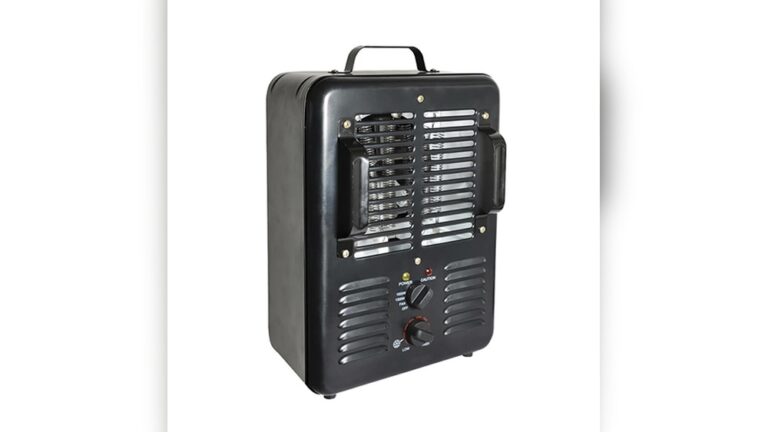
Portable Heaters vs Space Heaters Safety
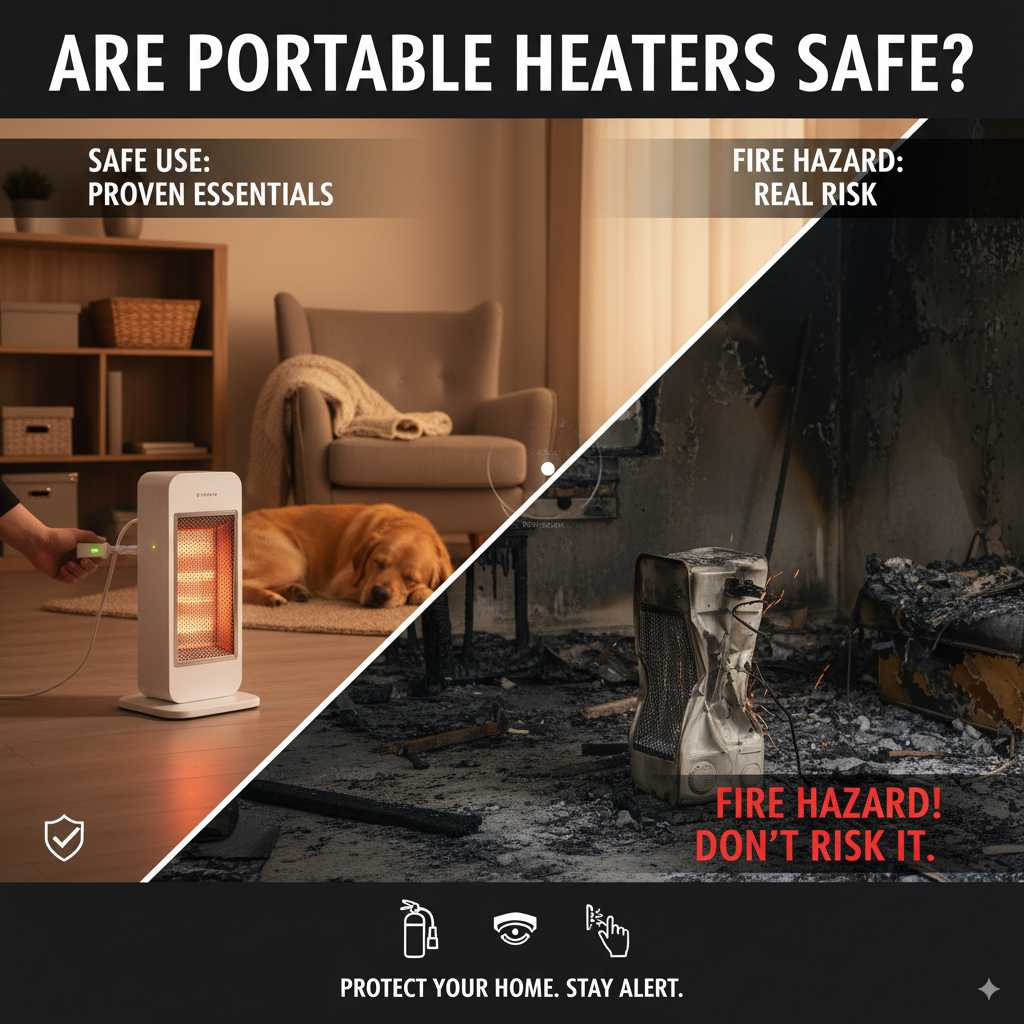
Yes, portable heaters can be remarkably safe and are essential for providing supplemental heat when used correctly. Prioritizing safety features, proper placement, and mindful operation is key to enjoying their warmth without worry. This guide will walk you through everything you need to know to use your portable heater with confidence.
Feeling a chill in a specific room, or need an extra boost of warmth without heating your whole house? Portable heaters are a fantastic solution! They’re convenient, often energy-efficient, and can quickly make a space cozy. But a common question pops up: “Are portable heaters safe?” It’s a valid concern, and the good news is, with a little knowledge, you can absolutely use them safely and effectively. We’ll break down exactly how to choose, set up, and use portable heaters so you can enjoy peace of mind along with pleasant warmth. Get ready to discover how essential they can be for your comfort!
Understanding Portable Heater Safety: Your Essential Guide
Portable heaters are designed to be a convenient way to add warmth to your home. Whether you’re looking to take the chill off a drafty basement, a chilly home office, or just a specific corner of your living room, these units offer a flexible heating solution. However, like any heating appliance, safety is paramount. Knowing the potential risks and how to mitigate them is crucial for every homeowner and renter. This guide is here to simplify everything, helping you feel confident and secure as you use your portable heater.
We’ll explore the different types of portable heaters and their safety features, discuss best practices for placement and operation, and provide tips for maintenance. By the end of this article, you’ll have a clear understanding of how to ensure your portable heater is a safe and effective addition to your home comfort toolkit.
Types of Portable Heaters and Their Safety Features
Not all portable heaters are created equal. Understanding the different types can help you choose one that best suits your needs and offers the safety features you’re looking for. Each type has its own way of generating heat, and manufacturers incorporate specific safety mechanisms into their designs.
Convection Heaters (Oil-Filled Radiators)
These heaters typically feature a sealed column filled with oil. The oil is heated by an electric element and then circulates, warming the air around it through convection. They heat spaces evenly and quietly, making them great for continuous use in bedrooms or living areas.
- Safety Features:
- Overheat Protection: Most models automatically shut off if they get too hot.
- Tip-Over Switch: This is a critical safety feature that turns the heater off if it’s accidentally knocked over.
- Cool-Touch Exterior: The casing usually stays cool enough to prevent burns, even when the unit is on.
- No Open Flames: Unlike some other heaters, these pose no fire risk from exposed elements.
Infrared Heaters (Radiant Heaters)
Infrared heaters work by emitting radiant heat, much like the sun. They warm objects and people directly in their path, rather than heating the air. This makes them efficient for spot heating, as you feel the warmth immediately without waiting for the air to heat up.
- Safety Features:
- Tip-Over Switch: Essential for preventing fires if the unit is unstable.
- Overheat Protection: Shuts down the heater if internal temperatures become excessive.
- Protective Grill: A safety grille surrounds the heating element to prevent accidental contact.
- Durable Construction: Built to maintain stability.
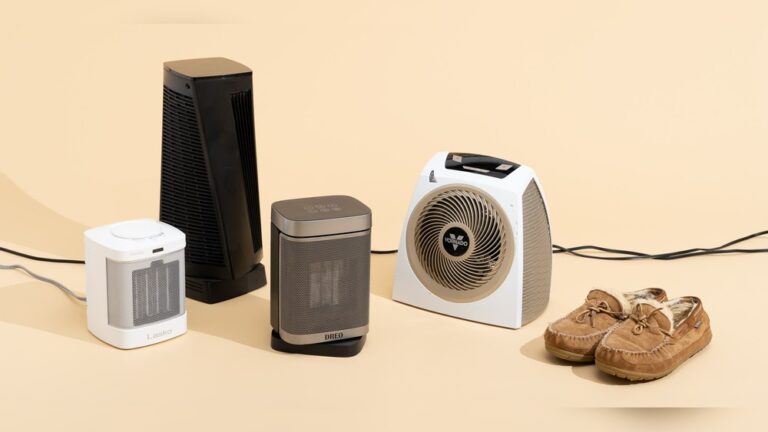
Ceramic Heaters
Ceramic heaters use a ceramic plate or disc that heats up, with a fan blowing air through it to distribute the heat. They are popular for their relatively quick heating capabilities and compact size.
- Safety Features:
- Tip-Over Switch: Standard on most reputable ceramic heaters, shutting them off if tipped.
- Overheat Protection: Automatically powers down if it reaches a dangerously high temperature.
- Cool-Touch Housing: The exterior remains cooler to prevent burns.
- Ceramic Element: The heating element is encased within the ceramic, making it safer than exposed coils.
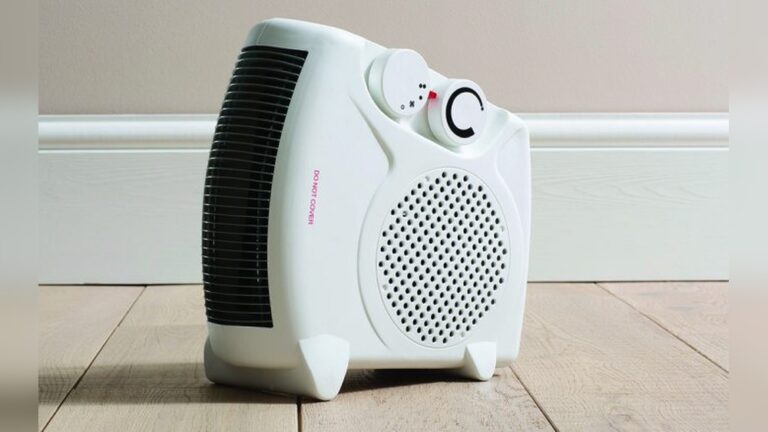
Fan Heaters (or Fan Forced Heaters)
These are often compact and consist of a heating element (usually coiled wire or ceramic) with a fan that blows air over it. They heat up spaces quickly but can sometimes be noisy and dry out the air.
- Safety Features:
- Tip-Over Switch: A non-negotiable safety feature for fan heaters.
- Overheat Protection: Essential to prevent the heating element from becoming dangerously hot.
- Fan Safety: Grilles prevent fingers or objects from reaching the fan blades.
- Stable Base: Designed to resist tipping, though vigilance is still key.
Micathermic Heaters
These combine convection and radiant heat. They use a thin mica-based element that covers a large surface area, heating the air and objects. They are known for being quiet and energy-efficient.
- Safety Features:
- Overheat Protection: Standard safety cutout.
- Tip-Over Switch: Standard safety measure.
- Lightweight & Stable: Often designed with a broad base for stability.
- No Fan: Operates silently and doesn’t circulate dust or allergens.
Essential Safety Practices for Using Portable Heaters
The safety of your portable heater relies heavily on how you use it. Adhering to these essential practices will minimize risks and ensure you get the most out of your heating solution.
1. Location, Location, Location: Safe Placement is Key
Where you put your heater is one of the most critical safety considerations. Follow these guidelines:
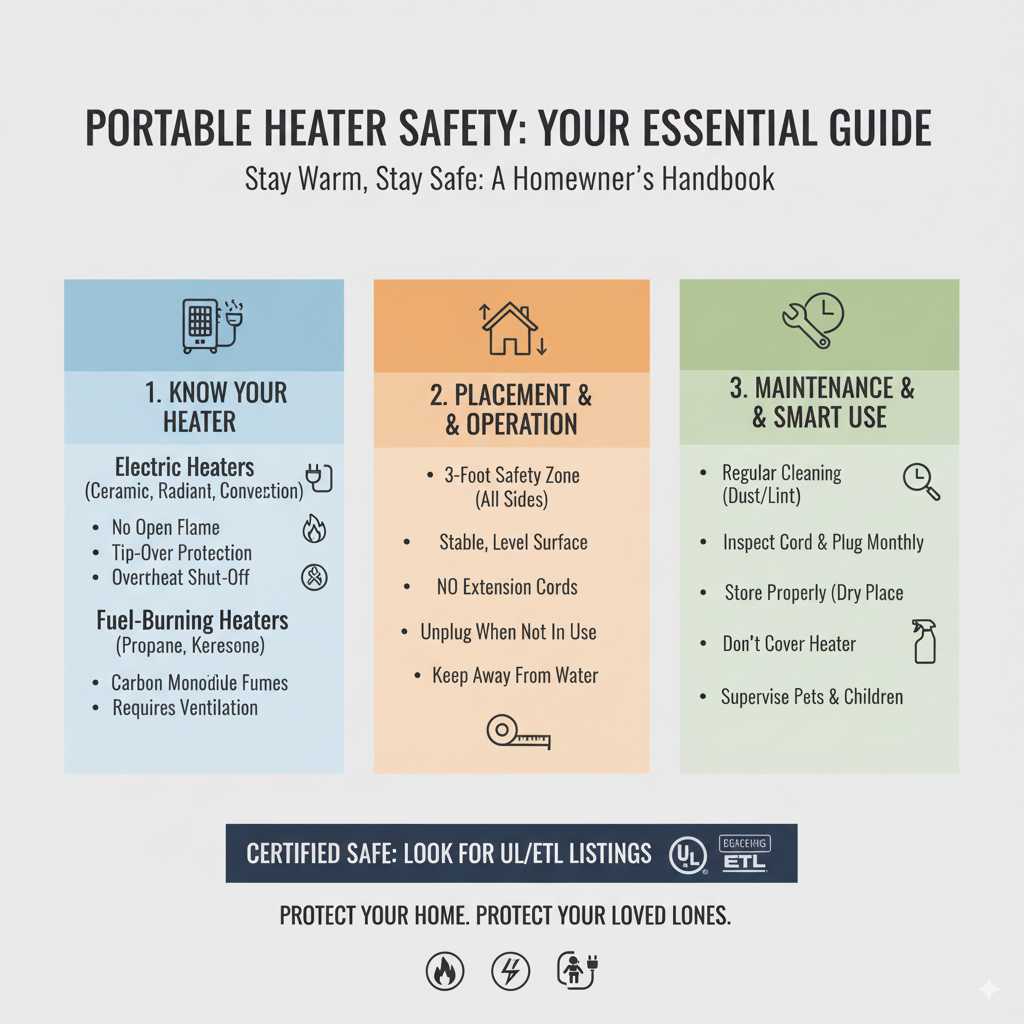
- Maintain Clearances: Keep heaters at least 3 feet (about 1 meter) away from anything flammable. This includes curtains, furniture, bedding, clothing, paper, and rugs. Check the manufacturer’s manual for specific clearance recommendations.
- Stable, Level Surface: Always place your heater on a firm, level, and stable surface. Avoid placing them on uneven flooring, carpets that are too plush, or where they can be easily bumped or knocked over.
- Avoid High-Traffic Areas: Don’t place portable heaters in doorways, exits, or busy walkways where they could be tripped over or bumped.
- Never Place in Bathrooms or Wet Areas: Water and electricity are a dangerous combination. Portable heaters are not designed for use in damp environments like bathrooms, laundry rooms, or near sinks. The U.S. Consumer Product Safety Commission (CPSC) strongly advises against using electric heaters in bathrooms.
- Keep Away from Water Sources: Never place a heater near sinks, bathtubs, showers, or any other water source.
- Do Not Block Vents: Ensure the heater’s air intake and outlet vents are not blocked by furniture or other objects, as this can cause overheating.
2. Proper Operation: Using Your Heater Wisely
Simple habits can go a long way in ensuring safe heater operation:
- Never Leave Unattended: This is a golden rule. Never leave a portable heater running when you are asleep or when you leave the room, even for a short period.
- Use on Correct Voltage Outlets: Plug your heater directly into a wall outlet. Avoid using extension cords or multi-plug adapters, as they can overheat and become a fire hazard. If an extension cord is absolutely necessary, use a heavy-duty cord rated for the heater’s wattage, and ensure it’s in good condition.
- Follow Manufacturer Instructions: Always read and follow the specific operating and safety instructions provided by the heater’s manufacturer.
- Turn Off When Not in Use: Make it a habit to turn off and unplug your heater when you are finished using it, or when it is no longer needed.
- Keep Children and Pets Safe: Supervise children and pets closely when a heater is in use. Ensure they understand not to touch the unit and know to stay a safe distance away.
3. Regular Inspection and Maintenance
A well-maintained heater is a safer heater:
- Inspect Before Each Use: Before plugging in your heater, check the power cord for any fraying, cracks, or damage. Inspect the plug and the unit itself for any signs of wear or damage. If you find any issues, do not use the heater and have it repaired or replaced.
- Keep it Clean: Dust and debris can accumulate on the heating elements and vents, which can be a fire hazard. Regularly clean your heater according to the manufacturer’s instructions. Usually, this involves unplugging the unit and gently wiping it down with a dry or slightly damp cloth. Ensure the unit is completely dry before plugging it back in.
- Check Safety Features: Periodically test the tip-over switch and overheat protection by carefully simulating the conditions (e.g., gently tilting the unit on its side on a safe surface). If these features don’t function, stop using the heater.
Understanding Heater Wattage and Energy Use
When considering a portable heater, understanding wattage is important for effective and safe heating, as well as managing energy consumption. Wattage (W) indicates how much power an appliance uses. Higher wattage generally means more heat output, but also higher energy consumption.
Most portable electric heaters range from 750W to 1,500W. A 1,500W heater is often the most powerful you’ll find for standard household outlets, as many circuits are designed to handle this load safely. Overloading a circuit can cause it to trip (shut off power) or, in rare cases, lead to overheating and fire risks.
To illustrate, let’s look at typical usage:
| Heater Type | Typical Wattage Range | Energy Use Consideration | Best For |
|---|---|---|---|
| Ceramic Heater | 750W – 1,500W | Can be energy-efficient for small spaces. Look for models with user-adjustable thermostats. | Quickly heating small rooms or personal spaces. |
| Oil-Filled Heater | 800W – 1,500W | More energy-efficient for maintaining consistent heat due to slow heat release. Uses radiant and convection. | Long periods of continuous heat in medium-sized rooms, like bedrooms or living rooms. |
| Infrared Heater | 800W – 1,500W | Efficient for direct, targeted heating. Doesn’t heat the air, so it’s good for drafts or open spaces. | Spot heating people or objects directly in their line of sight. |
| Fan Heater | 500W – 1,500W | Fast heating, but can consume more energy due to continuous fan operation. | Rapidly warming up very cold, small rooms. |
To calculate approximate running costs, you can use the following formula: (Wattage / 1000) Hours of Use Cost per Kilowatt-hour (kWh). For example, running a 1,500W heater for 5 hours a day on an electricity rate of $0.15 per kWh would cost: (1500 / 1000) 5 $0.15 = $1.125 per day.
Choosing a heater with a thermostat is a smart move. It allows the heater to cycle on and off automatically, maintaining your desired temperature and preventing it from running constantly, which saves energy and reduces wear on the unit. Always consult your electricity provider or local energy resources for current kilowatt-hour rates in your area.
Choosing a Portable Heater with the Best Safety Features
When you’re in the store or browsing online, how do you pick the safest portable heater? Look for these specific features:
- Certifications: Look for safety certifications from recognized organizations like UL (Underwriters Laboratories), ETL (Intertek), or CSA (Canadian Standards Association). These certifications indicate that the product has been tested and meets safety standards.
- Automatic Shut-Off Features:
- Tip-Over Switch: This is non-negotiable. It should be clearly visible or mentioned in the product description.
- Overheat Protection: Ensures the heater will shut off before internal components become a fire hazard.
- Thermostat Control: While not strictly a safety feature, a thermostat helps prevent the heater from running constantly, reducing the risk of overheating and saving energy.
- Cool-Touch Exterior: Especially important if children or pets are around. This prevents burns on contact.
- Sturdy Construction and Stable Base: The heater should feel solid and not be easily tipped. A wider base generally offers more stability.
- Durable Power Cord: A thick, undamaged power cord is a sign of a quality appliance.
It’s also wise to read customer reviews to see if other users have reported any safety concerns or issues with the heater’s performance or durability.
When NOT to Use a Portable Heater
Even with the best safety features, there are situations where using a portable heater isn’t advisable:
- In Areas Where Flammable Materials are Present: If you have a lot of stored paper, fabric, or other flammable items in a space, it’s best to avoid using a portable heater there.
- Near Anything Flammable: As mentioned, maintaining a 3-foot clearance is vital. If you cannot ensure this space, do not use the heater.
- In Damp or Wet Environments: Bathrooms, steamy kitchens, garages with potential water leaks, or laundry rooms are not safe places for electric heaters.
- With Damaged Cords or Plugs: An electrical hazard can turn serious quickly. If the cord is frayed, cracked, or the plug is bent, the heater is unsafe to use.
- If the Heater is Otherwise Damaged: Dents, broken parts, or unusual noises are all signs that the heater may be compromised and should not be operated.
- On Extension Cords or Power Strips: Unless explicitly stated as permissible by the manufacturer and using a heavy-duty, properly rated cord, avoid these. They are a common cause of electrical fires.
- Unattended: Never leave a portable heater running when you are not in the room or are asleep.
Tips for Maximizing Safety and Comfort
Combining safety and comfort is the goal. Here are some ways to achieve both:
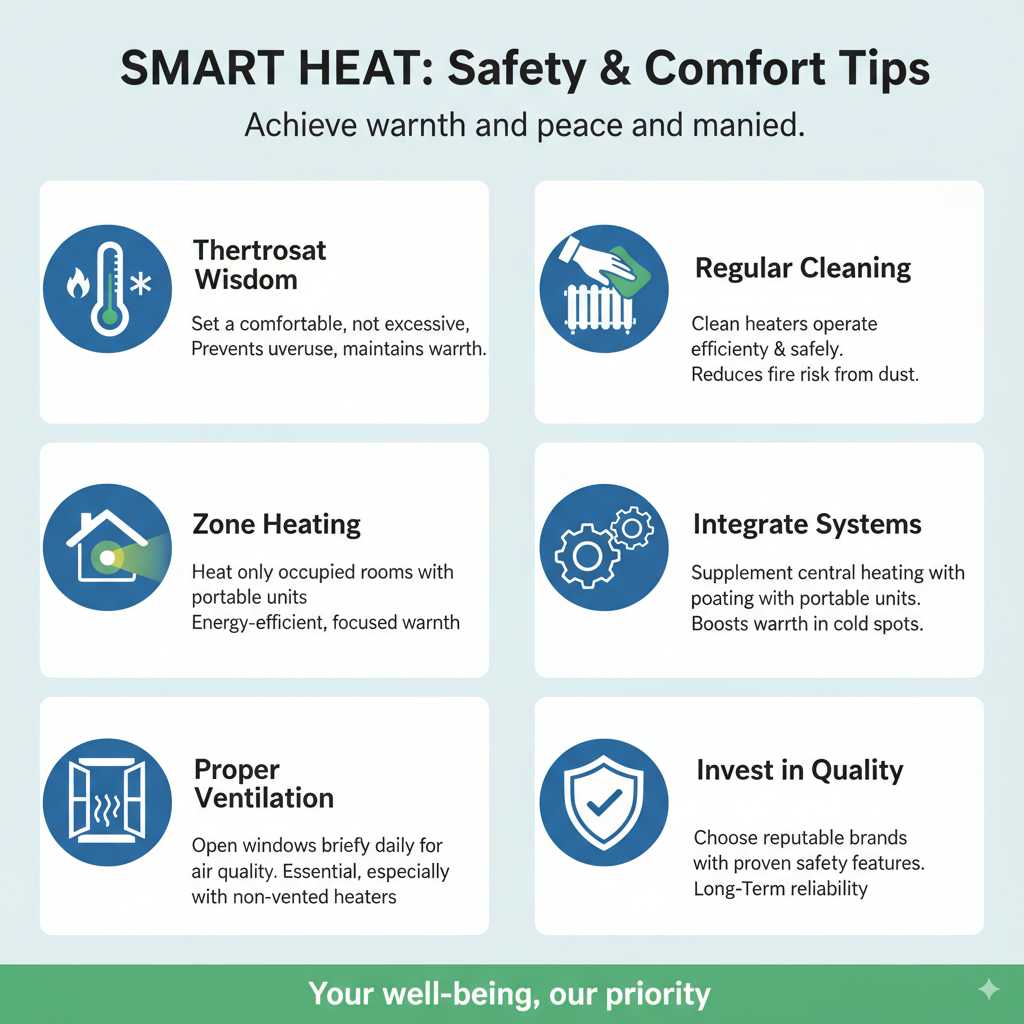
- Use Thermostats Wisely: Set your thermostat to a comfortable, yet not excessively high, temperature. This prevents the heater from running too much and still keeps you warm.
- Zone Heating: Use portable heaters to warm only the room you are in, rather than heating your entire home. This is more energy-efficient and focuses warmth where you need it most.
- Proper Ventilation: While you want to keep the room warm, occasional ventilation is good for air quality. Open windows for a few minutes each day to refresh the air, especially if using a non-vented heater.
- Regular Cleaning: A clean heater operates more efficiently and safely. Dust buildup can hinder performance and create a fire risk.
- Integrate with Whole-Home Heating: Use portable heaters to supplement your main heating system. For example, if your central heating struggles to keep a specific room warm, a portable heater can provide that extra boost without overworking your furnace.
- Invest in Quality: While it might be tempting to go for the cheapest option, investing in a reputable brand with proven safety features is always the best approach.
For more information on home heating safety, resources from the National Fire Protection Association (NFPA) offer valuable insights into preventing home fires related to heating equipment.
FAQ: Your Portable Heater Questions Answered
Here are some common questions beginners have about portable heater safety:
Q1: Can I leave a portable heater on all night?
It is generally not recommended to leave a portable heater running unattended, especially overnight while you are asleep. While modern heaters have safety features, the risk of malfunction remains. Always turn off and unplug your heater when you are not actively in the room or when going to sleep. If you need overnight warmth, consider a timer function or a different, more permanently installed heating solution if safe.
Q2: Are oil-filled radiators safer than ceramic heaters?
Both oil-filled radiators and ceramic heaters can be very safe when used correctly and equipped with modern safety features like tip-over switches and overheat protection. Oil-filled heaters tend to provide more consistent, radiant heat and often have a cooler exterior, which can be slightly safer around children and pets.