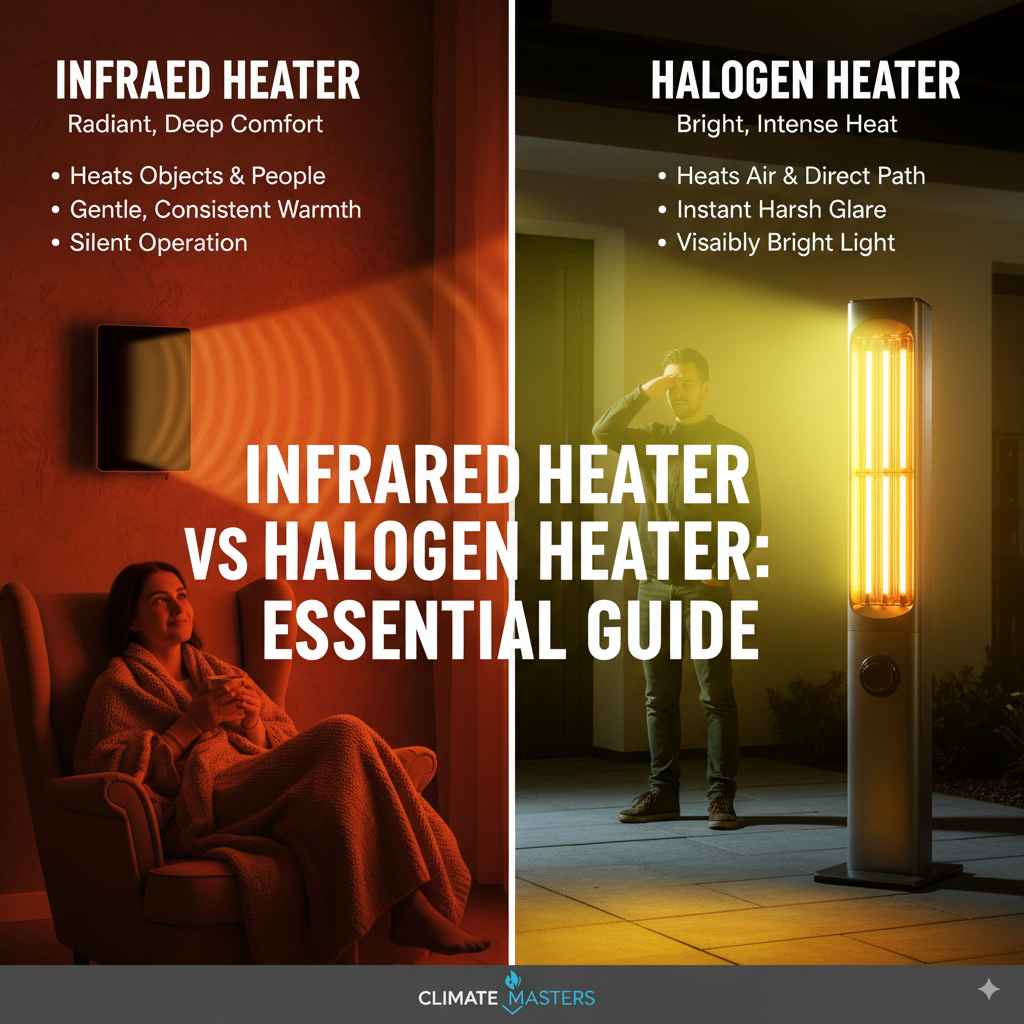
Infrared Heater vs Halogen Heater: Essential Guide
Infrared Heater vs Halogen Heater: Choosing the Best for Your Cozy Home
Choosing between an infrared heater and a halogen heater can feel like a puzzle, especially when you just want to get warm! Both use radiant heat, but they do it differently. Don’t worry, I’m Tanim, and I’ll break down exactly what makes them tick, so you can pick the perfect one for your space. We’ll cover how they work, their pros and cons, and which is best for different needs. Let’s make heating your home simple and effective!
Understanding Radiant Heat: The Common Ground
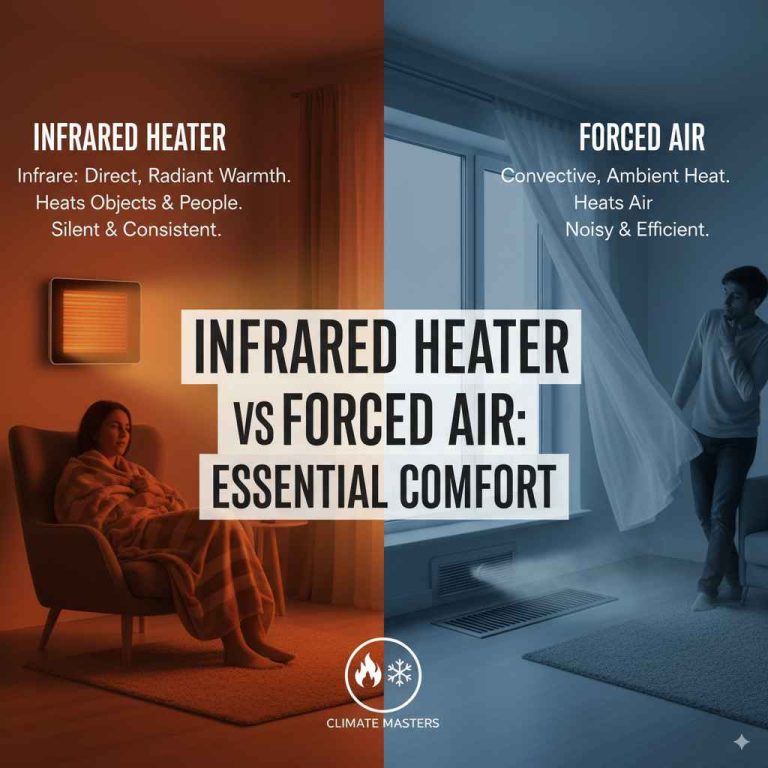
Before we dive into the specifics of infrared and halogen heaters, it’s helpful to understand how they both work. They belong to a category called “radiant heaters.” This means they heat objects directly, including you, rather than the air around them. Think of it like the sun’s warmth – you feel its heat directly, even if the air isn’t particularly warm.
This is different from convection heaters, which warm the air that then circulates around the room. Radiant heat can feel much more immediate and comfortable because it targets you directly. It’s often described as a cozy warmth that penetrates, rather than a blast of hot air.
What is an Infrared Heater?
Infrared heaters are designed to emit infrared radiation, a type of energy that we feel as heat. They work by heating up a heating element, which then radiates this energy outwards. The waves of infrared radiation travel in a straight line and are absorbed by solid objects they encounter, such as people, furniture, and walls. Once these objects absorb the infrared energy, they begin to warm up.
The key benefit here is that infrared heat warms people and objects directly, without needing to heat the air first. This makes them incredibly efficient for targeted heating. You’ll often find infrared heaters used outdoors, in workshops, or in large spaces where heating the entire volume of air would be impractical or wasteful. They are also known for being quiet and producing a gentle, soothing warmth distinct from the heated air produced by fans.
How Do Infrared Heaters Work?
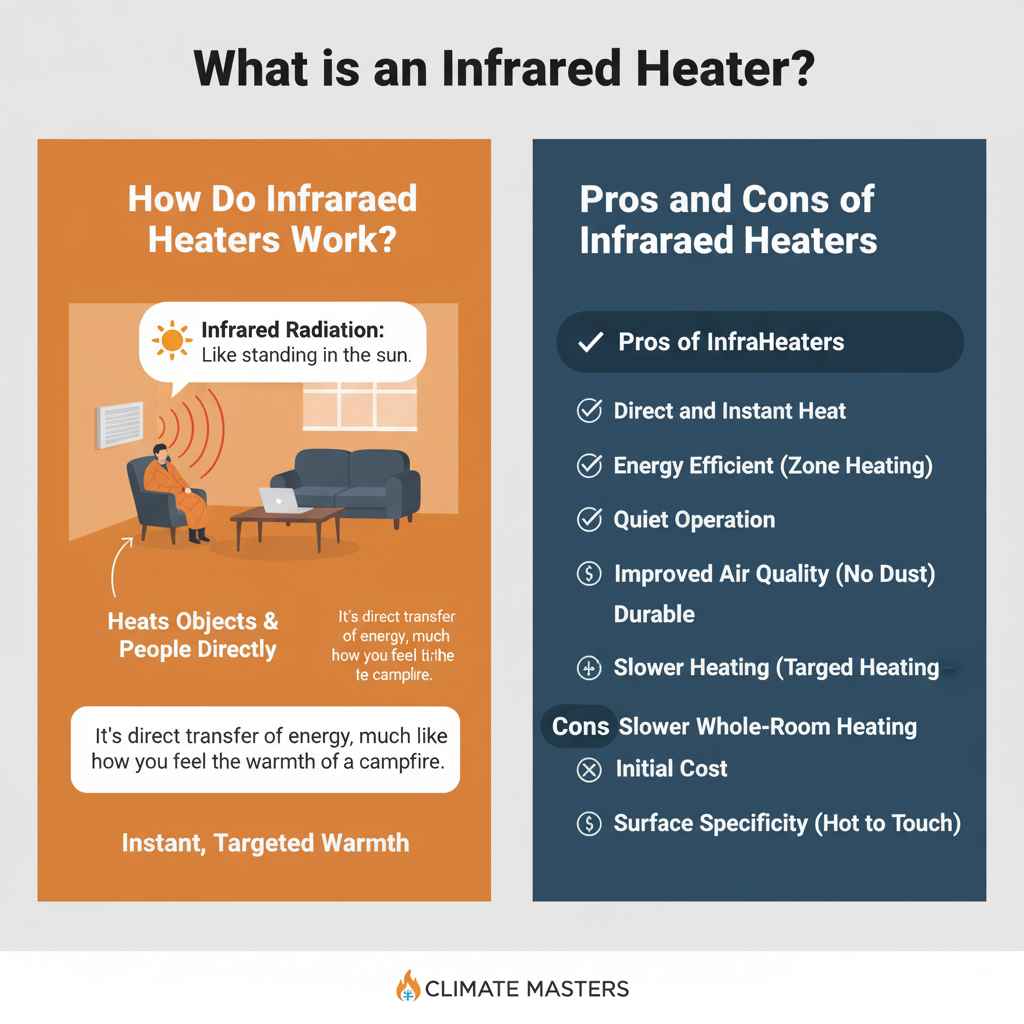
Inside an infrared heater, a heating element (often made of ceramic, quartz, or metal) gets hot when electricity passes through it. This heated element then emits infrared waves. These waves are invisible to the human eye but carry thermal energy. When these waves hit a surface – be it your skin, a desk, or a the floor – the surface absorbs the energy and heats up. It’s a direct transfer of energy, much like how you feel the warmth of a campfire or the sun on a cool day.
Because they don’t rely on circulating air, infrared heaters don’t stir up dust or allergens, making them a great choice for people with respiratory issues. They also maintain a more comfortable humidity level compared to some other heating methods.
Pros and Cons of Infrared Heaters
Let’s look at the good and the not-so-good to help you decide if an infrared heater is the right fit for your home.
Pros of Infrared Heaters
- Direct and Instant Heat: You feel the warmth immediately upon entering the heated zone; no waiting for air to warm up.
- Energy Efficient: They heat objects directly, meaning less energy is wasted heating the air, especially in drafty or open spaces.
- Quiet Operation: Most infrared heaters are silent, as they don’t rely on fans for heat distribution.
- Improved Air Quality: They don’t dry out the air as much as some other heaters and don’t circulate dust and allergens.
- Zone Heating: Ideal for warming specific areas or people, saving energy by not heating unoccupied rooms.
- Durable: Many models are built to last, especially those designed for outdoor or workshop use.
Cons of Infrared Heaters
- Limited to Direct Line of Sight: The heat can be blocked by furniture or other objects. If you move out of the direct beam, you won’t feel as warm.
- Not Ideal for Heating Large Enclosed Spaces Quickly: While they are efficient for their intended use, if your goal is to quickly raise the temperature of an entire room, they might take longer than other types.
- Initial Cost: Some higher-end infrared units can have a higher upfront purchase price, though their energy efficiency can lead to long-term savings.
- Surface Specificity: They heat surfaces, which can sometimes feel too intense if you are very close to the unit.
What is a Halogen Heater?
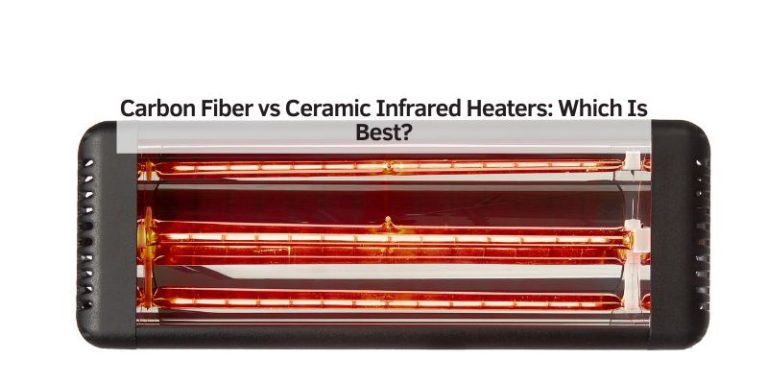
Halogen heaters are a specific type of infrared heater. They use halogen bulbs (similar to those found in some car headlights or high-intensity lighting) as their heating element. When electricity passes through the halogen bulb, it glows brightly and emits a significant amount of infrared radiation.
The defining characteristic of halogen heaters is the visible light they produce along with heat. This means they not only warm you but also provide illumination. This dual function makes them popular for areas where both low-level light and warmth are desired, such as bedside tables, small living areas, or even on patios for a cozy evening glow.
How Do Halogen Heaters Work?
At their core, halogen heaters are very straightforward. They contain one or more halogen bulbs. These bulbs are filled with a halogen gas (like iodine or bromine) and a tungsten filament. When you switch on the heater, current flows through the filament, causing it to heat up and glow intensely. This glow emits radiant energy, primarily in the infrared spectrum. The halogen gas helps to prolong the life of the filament by re-depositing evaporated tungsten back onto it, allowing the bulb to burn hotter and brighter for longer.
The heat generated is very direct and feels warm almost instantly. Because the bulbs are visible and often encased in a protective grill, you can see the elements producing the heat, which some people find reassuring. The light they emit is typically a warm, orange-ish glow.
Pros and Cons of Halogen Heaters
Halogen heaters have their own set of advantages and disadvantages that are important to consider:
Pros of Halogen Heaters
- Instant Heat: Just like other infrared heaters, the warmth is felt almost immediately.
- Dual Functionality: They provide both heat and a light source, which can be convenient and create a cozy ambiance.
- Visible Heating Element: You can see the bulbs glowing, which can be reassuring for some users.
- Good for Spot Heating: Excellent for warming a small area or a single person directly in front of them.
- Affordable to Purchase: Generally, halogen heaters are among the most budget-friendly types of radiant heaters.
- Compact and Portable: Many halogen heater models are small and lightweight, making them easy to move around your home.
Cons of Halogen Heaters
- Visible Light can be Annoying: While some like the light, others may find it too bright or disruptive, especially for sleeping.
- Bulbs are Fragile: The glass bulbs can be delicate and prone to breaking if dropped or mishandled.
- Shorter Lifespan for Bulbs: Halogen bulbs have a finite lifespan and will need replacement over time, adding to running costs.
- Limited Heating Area: Similar to other radiant heaters, their heat is directional and best suited for personal comfort.
- Can Dry Out Air Slightly: The intense heat from the bulbs can, to a lesser extent than some fan heaters, reduce local humidity.
- Safety Concerns with Direct Exposure: The bulbs get extremely hot and can be a burn risk if touched directly, despite protective grills.
Infrared Heater vs. Halogen Heater: Key Differences
While both are radiant heaters, the way they emit heat and their overall features set them apart. Understanding these distinctions is crucial for making the best choice for your needs.
Heating Element and Heat Output
Infrared Heaters: These can utilize various elements like ceramic, quartz, or metal. The radiation can be in different parts of the infrared spectrum (near, mid, or far infrared), affecting how quickly and deeply the heat penetrates. They often heat a larger surface area more evenly.
Halogen Heaters: These exclusively use halogen bulbs. These bulbs are very efficient at converting electricity into both visible light and infrared radiation. The heat output can be intense and very direct from the glowing bulb.
Light Emission
Infrared Heaters: Most infrared heaters (especially far-infrared ones) are designed to heat without producing visible light. This makes them ideal for spaces where you want warmth without significant illumination, like bedrooms.
Halogen Heaters: They produce a noticeable amount of visible, often orange or yellow, light. This is a byproduct of the high-intensity bulb used, and it contributes to their ambiance but can be a drawback if you prefer darkness.
Durability and Lifespan
Infrared Heaters: Depending on the element type (e.g., ceramic or quartz tubes), they can be very durable. Some are built to withstand rougher conditions, like workshops.
Halogen Heaters: The halogen bulbs themselves are the weak point. They are made of glass and can break if dropped or impacted. The bulbs also have a limited number of hours they can operate before needing replacement.
Applications and Best Use Cases
Infrared Heaters: Excellent for general room heating where you want to warm people and objects without drying out the air, workshops, outdoor patios, bathrooms (for quick warming), and spaces where air quality is a concern.
Halogen Heaters: Best for personal spot heating (e.g., at a desk, next to a sofa), providing a little extra warmth and light in a small area, creating a cozy atmosphere in a living room or bedroom (if the light is acceptable), and for those on a tighter budget where affordability is key.
Table: Infrared Heater vs. Halogen Heater at a Glance
Here’s a quick comparison to highlight the main differences:
| Feature | Infrared Heater | Halogen Heater |
|---|---|---|
| Heating Method | Radiant infrared waves | Radiant infrared waves (from halogen bulb) |
| Visible Light Emission | Minimal to none (depending on type) | Noticeable bright glow |
| Heating Element | Ceramic, quartz, metal alloys | Halogen bulb |
| Durability | Generally good, depends on construction | Bulbs can be fragile |
| Lifespan | Long-lasting element | Bulbs require replacement |
| Noise | Silent | Silent |
| Energy Efficiency | High (efficiently heats objects) | Good (efficiently heats objects) |
| Best For | Zone heating, air quality, workshops, general comfort | Personal spot heating, supplemental warmth/light, budget-friendly |
Choosing the Right Heater for Your Needs
Now that we’ve explored the ins and outs of both types, let’s figure out which one is your perfect match. Think about how and where you plan to use the heater.
Consider Your Space
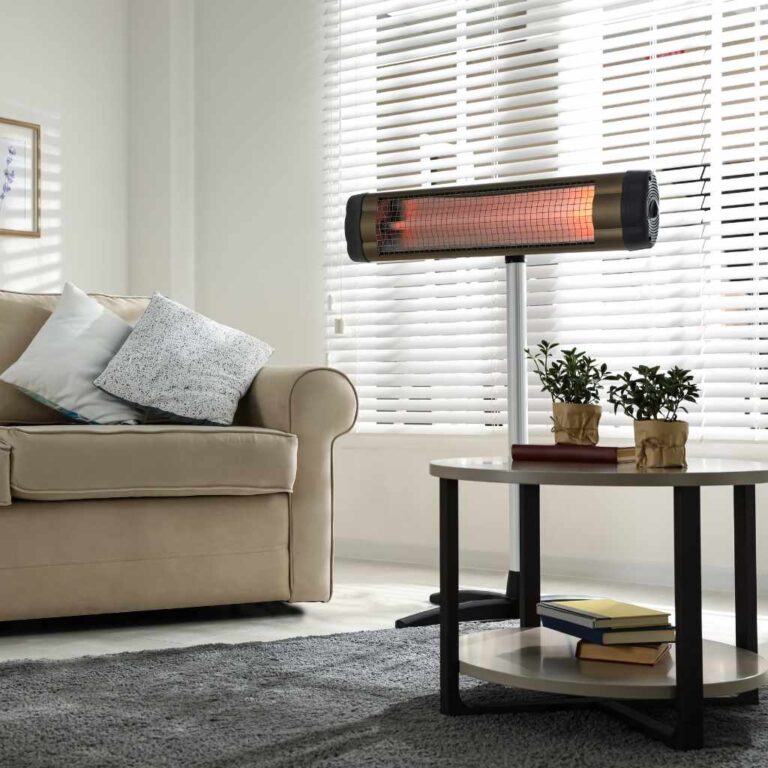
Small Room or Personal Space: If you just need to take the chill off your immediate vicinity or a small desk area, a halogen heater can be a good, affordable choice. Its direct heat and compact size make it ideal for personal comfort.
Larger Rooms or Drafty Areas: For heating a larger living area, a basement, or a workshop where there might be air leaks, an infrared heater is often more effective. It heats objects and people directly, so the warmth isn’t as easily lost to the air, and it can feel more substantial.
Bedrooms: If you prefer complete darkness for sleeping, an infrared heater that doesn’t emit visible light is the better option. Halogen heaters can be too bright.
Bathrooms: Both can work for a quick burst of warmth, but consider safety. Look for models with safety features like tip-over protection. Infrared heaters can heat surfaces quickly, making them great for warming towels before a shower, while halogen heaters offer immediate personal warmth.
Factor in Your Priorities
Budget: Halogen heaters are typically less expensive to buy upfront. However, remember to factor in the cost of replacement bulbs over time.
Ambiance vs. Practicality: Do you enjoy the warm glow of a halogen bulb, or do you need purely efficient, invisible heat? If you want a cozy visual element, halogen wins. If you prioritize an unobtrusive warmth, go for an infrared heater.
Air Quality Concerns: If you or someone in your household suffers from allergies or asthma, an infrared heater is generally preferred. They don’t stir up dust or dry out the air as much as fan-based heaters, and some types are even said to have therapeutic benefits, similar to far-infrared therapy used in medical settings for pain relief.
Energy Savings: Both are more energy-efficient for spot heating than trying to heat an entire room with a central system. However, the efficiency of infrared heaters in heating objects directly can lead to greater overall savings, especially in well-insulated areas or for targeted warmth.
Safety First!
Regardless of which type you choose, always prioritize safety. Look for heaters with features such as:
- Tip-Over Protection: This automatically shuts off the heater if it’s knocked over.
- Overheat Protection: This prevents the unit from getting dangerously hot.
- Cool-Touch Exterior: Some models are designed so the outside remains cooler, reducing burn risks.
- Protective Grills: Ensure any exposed heating elements are behind a sturdy grill to prevent accidental contact.
When placing your heater, always keep it a safe distance from curtains, furniture, pets, and children. Never cover a heater while it’s in use. For more detailed safety guidelines, you can refer to resources from the U.S. Consumer Product Safety Commission.
Installation and Usage Tips
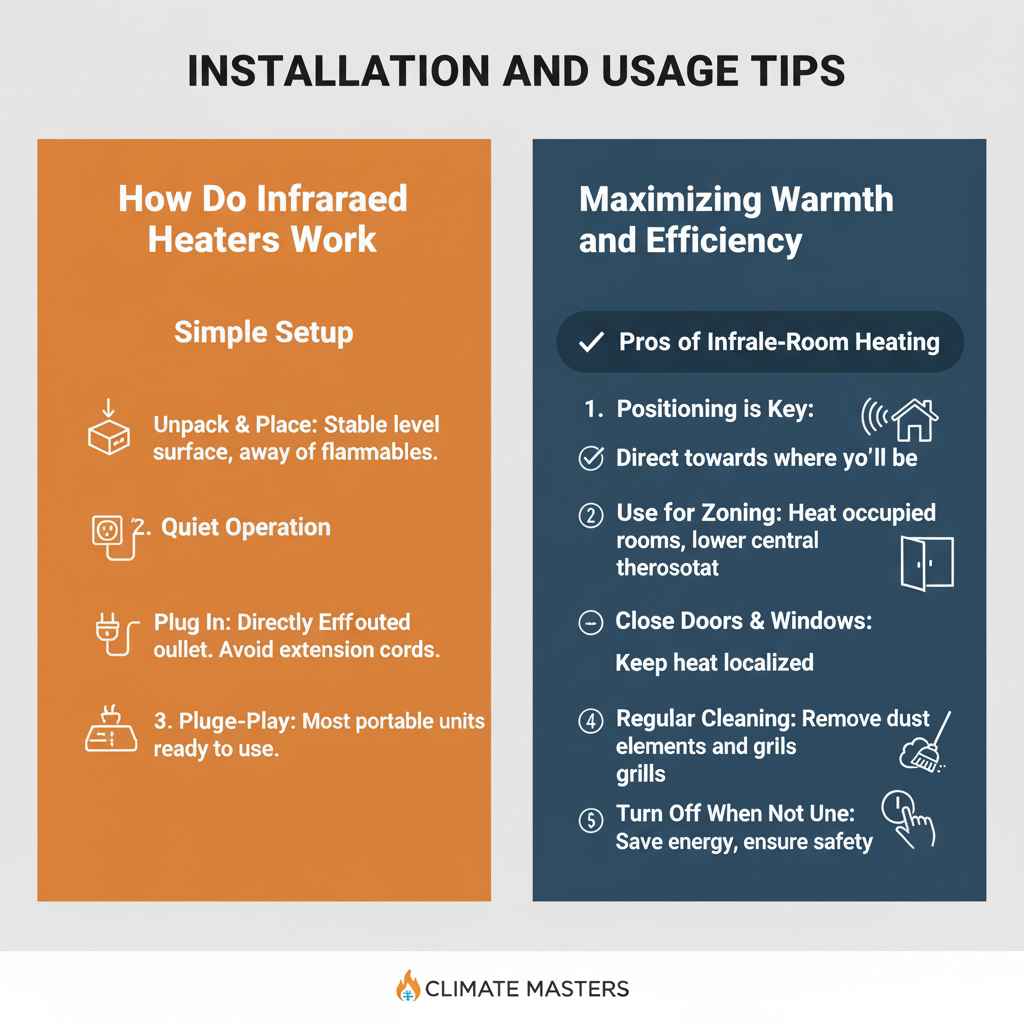
Getting the most out of your new heater is simple with a few best practices. Installation is usually minimal, often just requiring you to plug it in!
Simple Setup
Most portable infrared and halogen heaters come fully assembled. You simply need to:
- Unpack the heater and check for any damage.
- Place it on a stable, level surface, away from flammable materials and out of high-traffic areas.
- Plug it directly into a wall outlet. Avoid using extension cords if possible, as they can sometimes be a fire hazard with high-wattage appliances like heaters.
Some larger or wall-mounted infrared heaters might require more involved installation, but for portable units, it’s as easy as plug-and-play.
Maximizing Warmth and Efficiency
- Positioning is Key: For both types, direct them towards where you’ll be sitting or working. The heat is most effective when it can reach you directly. For infrared heaters, think about heating the surfaces you’ll be near.
- Use Them for Zoning: Instead of trying to heat your entire home, use these as supplemental heat. Turn down your central thermostat slightly and use a portable heater to warm just the room you’re in. This is where they shine for energy savings.
- Close Doors and Windows: To keep the radiant heat localized and prevent warm air from escaping, close doors and windows in the heated area.
- Regular Cleaning: Dust can accumulate on heating elements and grills, reducing efficiency and posing a fire risk. Gently clean your heater according to the manufacturer’s instructions. For halogen bulbs, wipe them gently with a soft, dry cloth if needed.
- Turn Off When Not in Use: Always turn off and unplug your heater when you leave the room, go to sleep, or if there’s a power outage.
Frequently Asked Questions (FAQ)
Q1: Which heater type is more energy-efficient for small spaces?
Both infrared and halogen heaters are very energy-efficient for heating small spaces or specific zones because they heat objects and people directly, rather than wasting energy heating the air. Halogen heaters are often very affordable to purchase, while some infrared models might have a higher upfront cost but can offer long-term savings due to advanced technology.
Q2: Can I use a halogen heater in my bedroom at night?
It’s generally not recommended to use a halogen heater in a bedroom at night, especially if you need complete darkness to sleep, as the glowing bulb can be disruptive.