Can Infrared Heaters Cause Fire Hazards?
Infrared heaters can pose a fire risk if they are placed within about 3 feet of curtains, furniture, bedding, or stored items, or if cords, controls, or gas components fail. If those faults are ignored, they can ignite walls, fabrics, or dust and turn a routine heating setup into a house fire. This guide explains the conditions that make infrared heaters hazardous and gives a room-by-room checklist to reduce ignition risk.
How placement and fuel type affect fire risk
How radiant heat creates scorching and ignition risk
Infrared heaters send heat outward in a straight path. That makes them efficient for warming people and objects, but it also means the hot face, grill, or emitter can heat nearby material without much warning.
Combustible materials are the issue: curtains, bedding, clothing, paper, and furniture. If those items sit too close, they can dry out, discolor, scorch, or ignite. The risk rises fast when a heater is aimed at drapes, a sofa arm, a pile of laundry, or a bookcase.
Why electric and gas-fired models fail in different ways
Infrared heaters can be electric or gas-powered devices, and the hazard profile is not the same. Electric units usually fail through overheated surfaces, damaged cords, loose plugs, failed controls, or blocked clearances. Gas-fired units add flame-related concerns, ventilation needs, and fuel-system faults.
Heat-lamp-style products deserve special care too. Their exposed hot face can be much closer to fabrics than a typical furnace outlet, so placement matters more than many people expect. Treat the product type as part of the safety decision, not a label detail.
What the 3-foot safety zone is meant to prevent
A 3-foot safety zone is a practical minimum gap between a heater and anything that can burn. It is meant to keep radiant heat from drying, scorching, or igniting nearby items before the surface temperature or airflow becomes a problem. Some manuals require more space, and the manual wins. (CPSC)
Baseboard heater guidance warns to keep at least 12 inches of space between the heater and objects. Infrared units often need more than that, especially when the front face is hot and directly visible. Use the distance printed for that model.
Infrared heater risk checklist
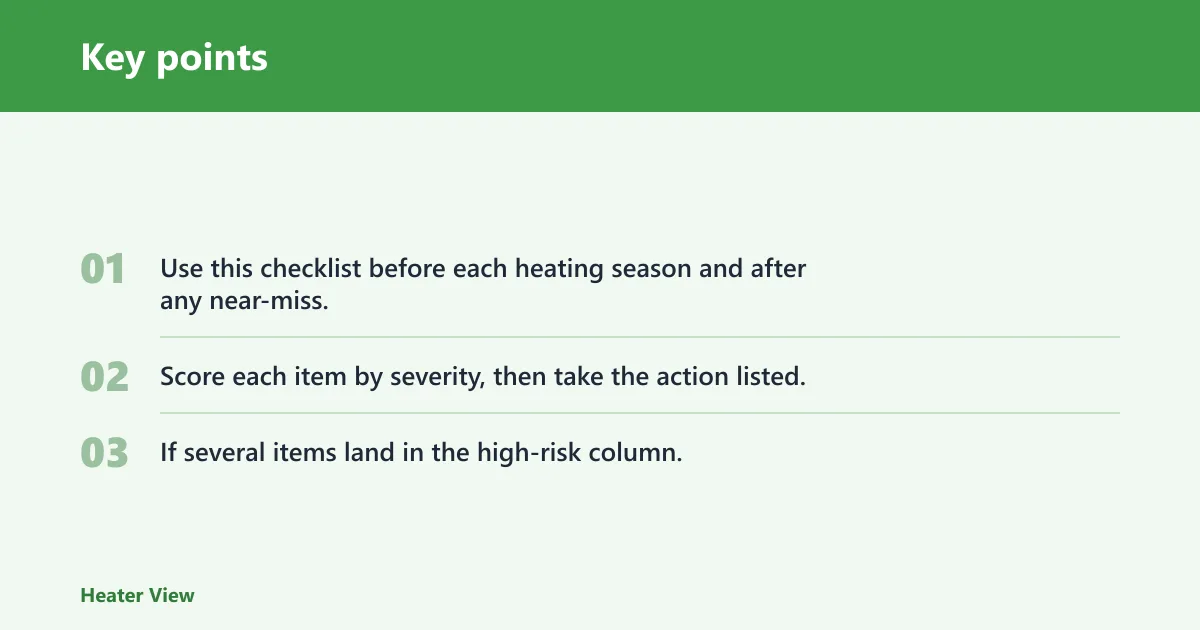
Use this checklist before each heating season and after any near-miss. Score each item by severity, then take the action listed. If several items land in the high-risk column, do not keep using the heater until the problem is fixed.
| Condition | What to look for | Risk level | Action |
|---|---|---|---|
| Clearance to combustibles | Curtains, bedding, clothing, paper, or furniture within the heater’s required space | High | Keep those items outside the heater’s required clearance zone; stop using if the room is too tight |
| Outlet type | Power strip, extension cord, loose receptacle, or shared outlet with heavy loads | High | Plug directly into a wall outlet on an appropriate circuit |
| Cord condition | Fraying, cuts, warmth at the plug, cracked insulation, or bent prongs | High | Unplug and replace or repair as directed by the manufacturer |
| Tip-over stability | Wobbly base, uneven floor, pet traffic, or a spot where someone can bump it | Medium to high | Place on a flat, stable surface away from traffic; use tip-over shutoff as backup only |
| Surface temperature | Housing or front face stays extremely hot after a short run | Medium | Keep hands, fabrics, and stored items far away; follow the model’s placement rules |
| Dust buildup | Lint, pet hair, dust on the grill, reflector, or vents | Medium | Clean and inspect before use; stop if buildup returns quickly or smells burn |
| Unattended use | Running while asleep, away from the room, or during overnight operation | High | Turn it off when leaving the room or sleeping |
| Room type | Bedroom, garage, workshop, bathroom, or cluttered room with limited space | Medium to high | Match the heater to the room and the room to the heater’s ratings |
| Nearby fabrics | Drapes, throw blankets, pet beds, or laundry near the heat path | High | Move soft items away from the heat path and keep the front face clear |
| Ventilation needs | Gas-fired unit in a tight or poorly ventilated space | High | Follow the ventilation and indoor-use rules exactly; do not improvise |
| Model type | Indoor unit used outdoors, outdoor unit used indoors, or wall heater mounted wrong | High | Use only where the rating allows |
| Shutoff features and labels | Missing, disabled, or repeatedly tripping shutoff features, or warnings ignored | Medium to high | Do not treat shutoff features as a substitute for clearance or supervision |
Do infrared heaters need clearance from furniture?
Yes. Infrared heaters need clearance from furniture because their radiant output heats whatever sits in the line of fire. A sofa, chair, dresser, or bed frame can become a heat sink if it is too close, and fabric surfaces can scorch before anyone notices.
Curtains, bedding, clothing, paper, and upholstery
Keep curtains, bedding, clothing, paper, and upholstery outside the heater’s required clearance zone. Soft goods dry out fast and ignite easily. If a blanket hangs near the front face or a chair blocks the side, move both away.
Suppose a 12-by-14-foot bedroom has a wall-mounted infrared heater across from a bed. If the bedding hangs within the heater’s heat path, the first fix is not a louder alarm or a fan. Move the bed, reroute the drape, or use a different heater location.
Why the front face and sides both matter
The front face gets the most attention, but sides and rear clearances matter too. Some units shed heat into the housing, mounting area, or nearby wall material. A unit that looks fine from the front can still overheat a corner, baseboard, or curtain edge.
Manufacturer instructions should set the minimum gap. Follow that number, even if the room feels roomy enough. If the manual says more than 3 feet, use the larger distance.
How to measure a safe gap in small rooms
Measure from the hottest exposed surface to the nearest combustible object. Then check the heater’s arc of heat, not just the straight-line distance. In small rooms, aim for open space in front of the heater and no drapes, racks, or shelves in the beam.
When the room is too tight to keep the required gap, do not “watch it closely.” Move the heater or choose a different heating method for that space.
Can wiring and outlets turn a heater into a fire risk?
Yes. Wiring and outlets can turn a heater into a fire risk when the circuit is overloaded, the receptacle is loose, or the cord runs hot. Portable infrared heaters often pull enough power to expose weak outlets and poor connections quickly.
Why direct wall outlet use matters
Plug the heater directly into a wall outlet. That reduces added resistance and connection points, which can heat up under load. A heater that is already drawing heavily should not also be pushing current through a strip or daisy-chained extension.
Why power strips and extension cords are a bad fit
Power strips and extension cords are a bad fit for most portable infrared heaters because they add another failure point. The plug can loosen, the cord can warm, and the heater can draw more current than the accessory was meant to carry.
If the heater is far from the outlet, the right fix is a better outlet location or a model made for that installation. Do not stretch the cord to make the room layout work.
What damaged plugs, loose outlets, and heat at the receptacle mean
A damaged plug, a loose outlet, or warmth at the receptacle means the connection is failing under load. That is not a minor annoyance. It can become arcing, melting, or ignition at the wall.
Unplug the heater if the plug looks scorched, the outlet feels hot, or the cord bends sharply at the entry point. Then have the outlet and the appliance checked before reuse.
How room type changes the hazard
Room type changes the hazard because clutter, fabrics, moisture, and traffic all shape what can catch fire first. The heater may be the same, but the room can make its failure mode more likely.
Bedrooms and sleep use
Bedrooms are high-risk because bedding, curtains, clothing, and nighttime use all stack the odds. Do not run an infrared heater while sleeping unless the manufacturer specifically allows that use and the room still meets clearance rules. A heater that is fine while supervised can become a problem overnight.
Garages and workshops with dust or solvents
Garages and workshops are risky because dust, pet hair, cardboard, sawdust, and solvent containers often sit close together. Dust and pet hair buildup can ignite on a heater. Keep combustible liquids away, and do not set a heater near rags, paper, or tool storage.
Living rooms with drapes and soft furnishings
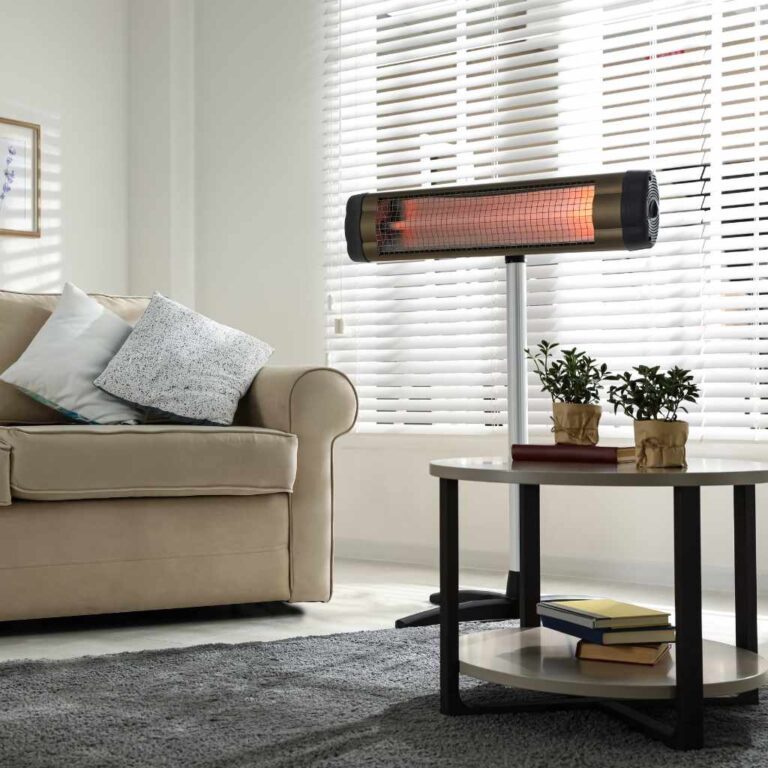
Living rooms often have drapes, upholstered furniture, throws, and decorative clutter. That gives radiant heat many things to warm. Aim the heater so the front face does not point at fabric edges, and keep the unit clear of side tables, baskets, and media stands.
Bathrooms and damp spaces
Bathrooms are a poor place for many portable heaters because moisture and limited floor space create separate hazards. Use only a unit specifically rated for that setting, and follow the installation instructions exactly. If the model is not rated for wet or damp locations, keep it out.
Patios and outdoor-rated units only
Patios generally call for outdoor-rated units only. Indoor heaters are not built for weather exposure, wind shifts, or different clearances around patio furniture and coverings. A gas or electric infrared heater used outdoors must match the label for outdoor use.
What safety features can and cannot do
Safety features help, but they do not cancel bad placement. Tip-over shutoff and overheat protection are backup systems, not permission slips for crowded rooms or blocked surfaces.
Tip-over shutoff as a stability safeguard
Tip-over shutoff is a stability safeguard for portable heaters. If the unit tilts or falls, the switch should stop operation. That can reduce the chance of a floor fire after a bump, pet contact, or accidental knock.
It does not make an unstable setup safe. Put the heater on a flat surface, away from traffic, cords, and furniture legs.
Overheat protection and blocked-airflow failure modes
Overheat protection stops a heater when internal temperatures climb too far. That helps when airflow is blocked or the unit is stressed. It does not make a heater safe against drapes, bedding, or furniture sitting too close.
Fire risk rises when furniture blocks airflow around a heater. If a unit keeps shutting off, that is a warning sign, not a reason to keep resetting it.
Auto shutoff is not a clearance rule
Auto shutoff is not a clearance rule. It cannot stop radiant heat from drying fabric at the edge of the beam, and it cannot fix a cord that is already overheating. The safest heater is still the one with proper space around it.
When should you unplug, repair, or replace it?
Unplug the heater at once if you see scorch marks, smell burning, hear repeated shutoff cycles, or notice visible damage. Those signs point to a fault or unsafe placement. Do not keep using it to “see if it happens again.”
Scorch marks, odor, or repeated shutoff
Scorch marks on a wall, floor, or nearby object mean the heater is too close to combustibles or aiming heat where it should not. A burning odor can mean dust, insulation, or a control failure. Repeated shutoff can mean overheating or a blocked path.
After any of those signs, unplug the unit and inspect the area around it first. If the heater itself shows heat damage, replace it or have it serviced before reuse.
Frayed cord, cracked housing, or loose plug
A frayed cord, cracked housing, or loose plug is a replacement-level problem for many portable heaters. Do not tape over damage and do not assume a tighter outlet fit will solve it. The appliance needs repair, replacement, or both.
After a tip-over, impact, or water exposure
After a tip-over, impact, or water exposure, do not restart the heater right away. Internal damage can show up later as a hot plug, a short, or a failed safety switch. Keep it out of service until it is inspected and cleared for use.
Frequently asked questions
Can infrared heaters cause fire hazards?
Yes. Infrared heaters can cause fire hazards when they are too close to curtains, bedding, clothing, paper, or furniture, or when cords, plugs, controls, or gas parts fail. The hazard comes from high surface temperatures, direct radiant heat, poor placement, and faulty shutdown behavior.
How safe are infrared heaters?
They are safe only within their design limits. That means correct clearance, a stable surface, a sound cord and outlet, proper ventilation for gas-fired models, and no unattended use where the manual forbids it. Safety features help, but they do not replace placement rules.
Are infrared heaters safe for your health?
For most people, the main concerns are burn risk, dryness, and room air quality, not a special infrared-specific health hazard. The bigger issue is whether the unit is used indoors or outdoors as rated, whether it produces combustion gases, and whether it is placed too close to people or objects.
Can infrared heaters tip over and start a fire?
Yes, especially portable models placed on uneven floors, rugs, or high-traffic paths. A tip-over shutoff helps, but it is a backup, not a cure. If the heater falls onto a rug or lands near fabric, the safest move is to unplug it and check for heat damage.
Are infrared wall heaters safe?
They can be safe when they are installed to the manufacturer’s mounting and clearance instructions. Wall units still need space around the front and sides, and nearby drapes or furniture can create a scorching risk. A wall mount does not erase the need for clearance.
Do infrared heaters create harmful emfs?
Infrared heaters do create electromagnetic fields while operating, as do many electrical devices. For typical household use, there is no strong evidence in this article’s scope that normal household exposure from a properly used heater is a fire concern or a proven cancer cause. The practical safety issues are placement, wiring, and heat.
Can infrared heaters cause cancer?
There is no clear evidence here that a household infrared heater causes cancer through ordinary use. The more immediate and established danger is fire or burn risk from heat, clearance violations, or electrical faults. If a unit is gas-fired, follow its indoor-use and ventilation rules carefully.
Are infrared heaters safer than space heaters?
Infrared heaters are a kind of space heater, so the comparison is really between heater types and designs. Some units run cooler at the housing than others, but any space heater can become a fire risk if placed too close to combustibles, left unattended, or connected poorly.
Infrared heaters vs electric heaters
Electric infrared heaters are electric heaters, but they warm differently from fan-forced models. Infrared units send radiant heat toward objects; many other electric heaters move air. The safety question is less about the label and more about surface temperature, clearance, wiring, and whether the model is used in the right room.